How to Help Students Write in Complete Sentences
A step-by-step sentence writing routine using I Do, We Do, You Do
If your students can read words… but struggle to write complete sentences, you’re not alone.
This is one of the most common challenges in early literacy.
Students often:
- Write fragments
- Forget key parts of a sentence
- Struggle with spacing and punctuation
- Or rely on copying instead of generating their own ideas
In a Science of Reading classroom, writing isn’t separate from reading.
It’s connected.
Students need explicit instruction, structured practice, and repeated opportunities to build complete sentences.
In This Post, You’ll Learn:
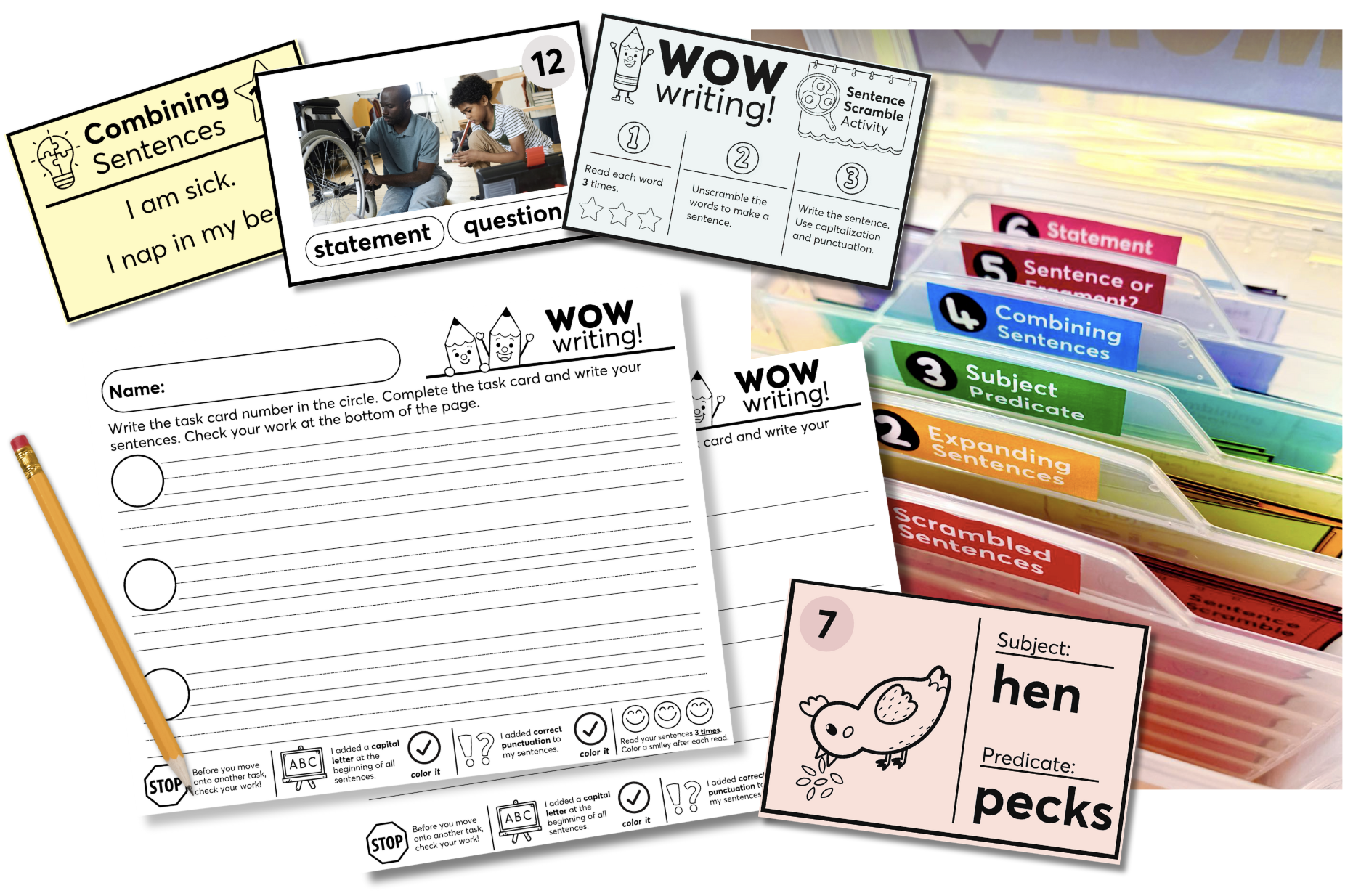
- A clear, step-by-step sentence writing routine
- How to use I Do, We Do, You Do during writing
- How to build independence through consistent structure
Sentence Writing Learning Objective
Students will write complete sentences using correct structure, phonics knowledge, and basic conventions.
Materials Needed
- Sentence writing page or prompt
- Pencil or dry erase board
- Optional: picture prompts, word banks, or sentence stems
What Is Sentence Writing Instruction?
Sentence writing instruction is a structured process where students learn how to:
- Build a complete thought
- Apply phonics to spelling
- Organize ideas into a sentence
Instead of saying “write a sentence,” we guide students through how to do it.
Sentence Writing Procedure (I Do, We Do, You Do)
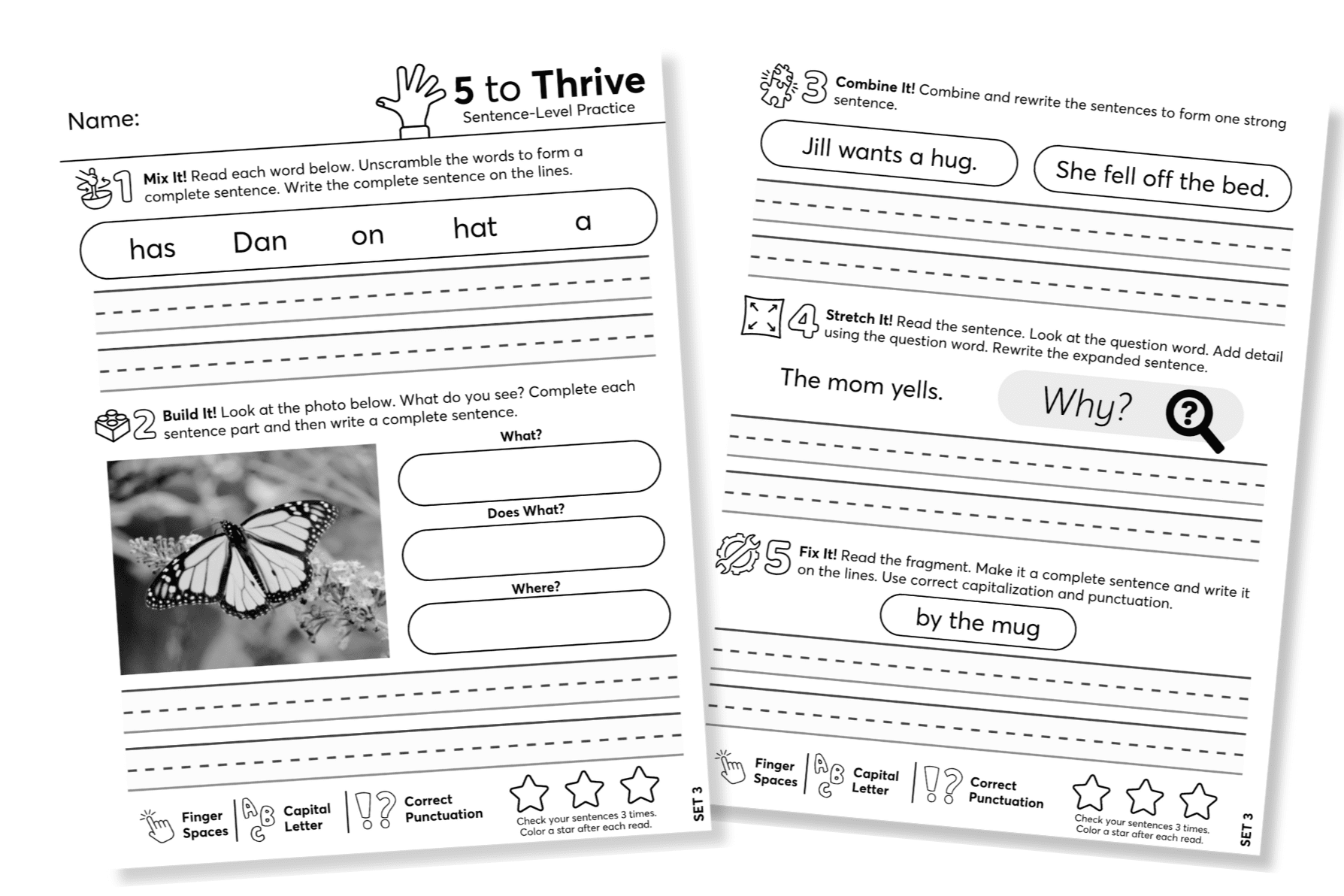
This routine follows a consistent 5-step structure that helps students move from supported practice to independence.
Here Are Your Materials for This Routine
You can use the free materials below to try this sentence writing routine with your students today.
- Sentence Writing System – Free Download (PDF)
- Differentiated Sentence Writing Pages – Free Download (PDF)
- Sentence Writing Task Cards – Free Download (PDF)
- Sentence Writing System (Yearlong Set) – Member Only (PDF)
- Differentiated Sentence Writing Pages (Yearlong Set) – Member Only (PDF)
- Sentence Writing Task Cards (Complete Set) – Member Only (PDF)
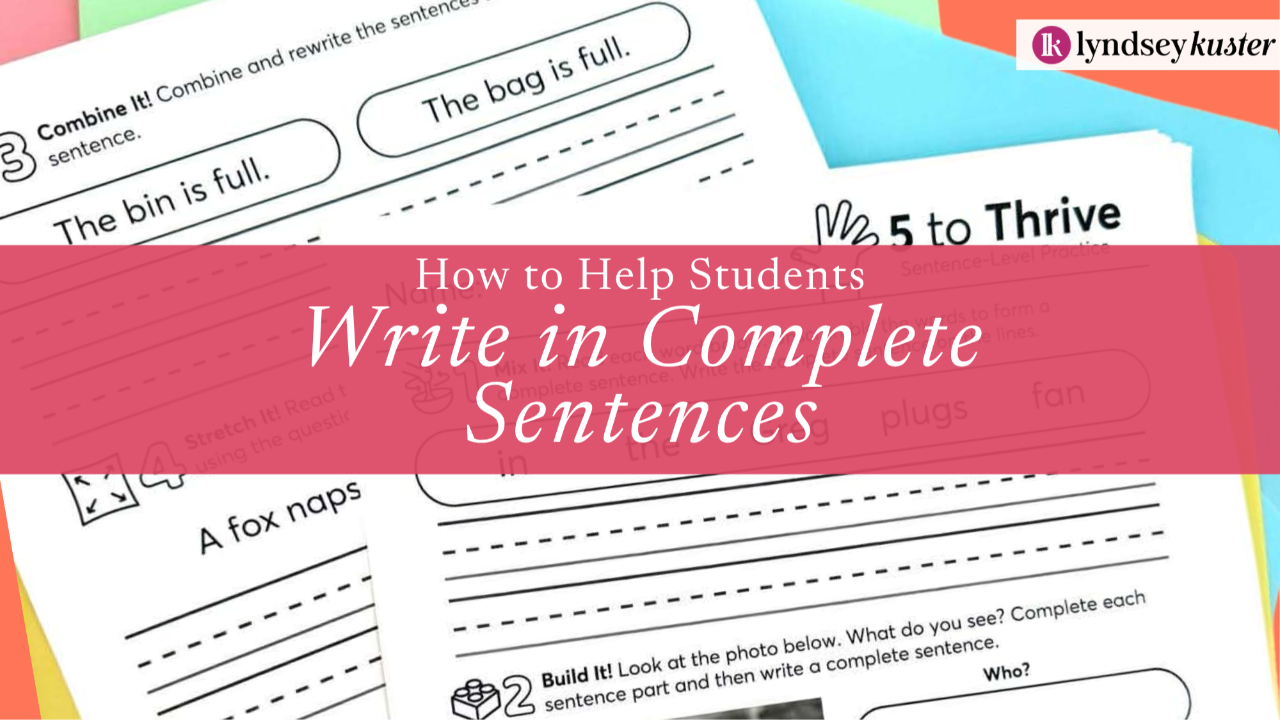
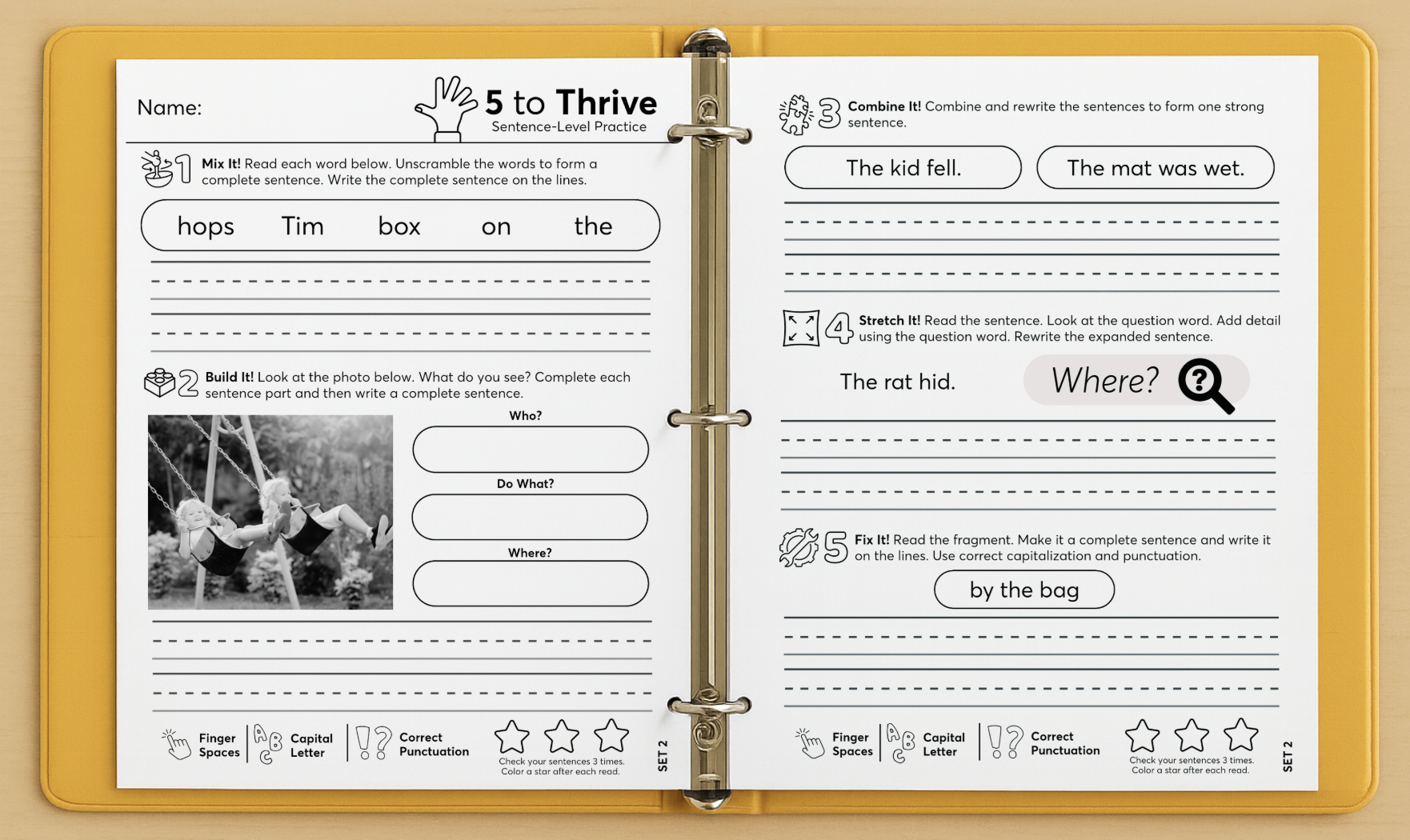
Step 1: Mix It (Build the Sentence)
Students are given a set of words to unscramble.
Example:
hops – Tim – box – on – the
I Do
Model how to read each word and think aloud as you arrange them into a sentence.
We Do
Work through a second example together, guiding student thinking.
You Do
Students independently build a sentence.
👉 What this builds: sentence structure and word order
Step 2: Build It (Generate a Sentence)
Students look at a picture and create a sentence using:
- Who?
- Did what?
- Where?
I Do
Model how to turn the picture into a sentence.
We Do
Create a sentence together using student responses.
You Do
Students write their own sentence.
👉 What this builds: idea generation and sentence formation
Step 3: Combine It (Strengthen the Sentence)
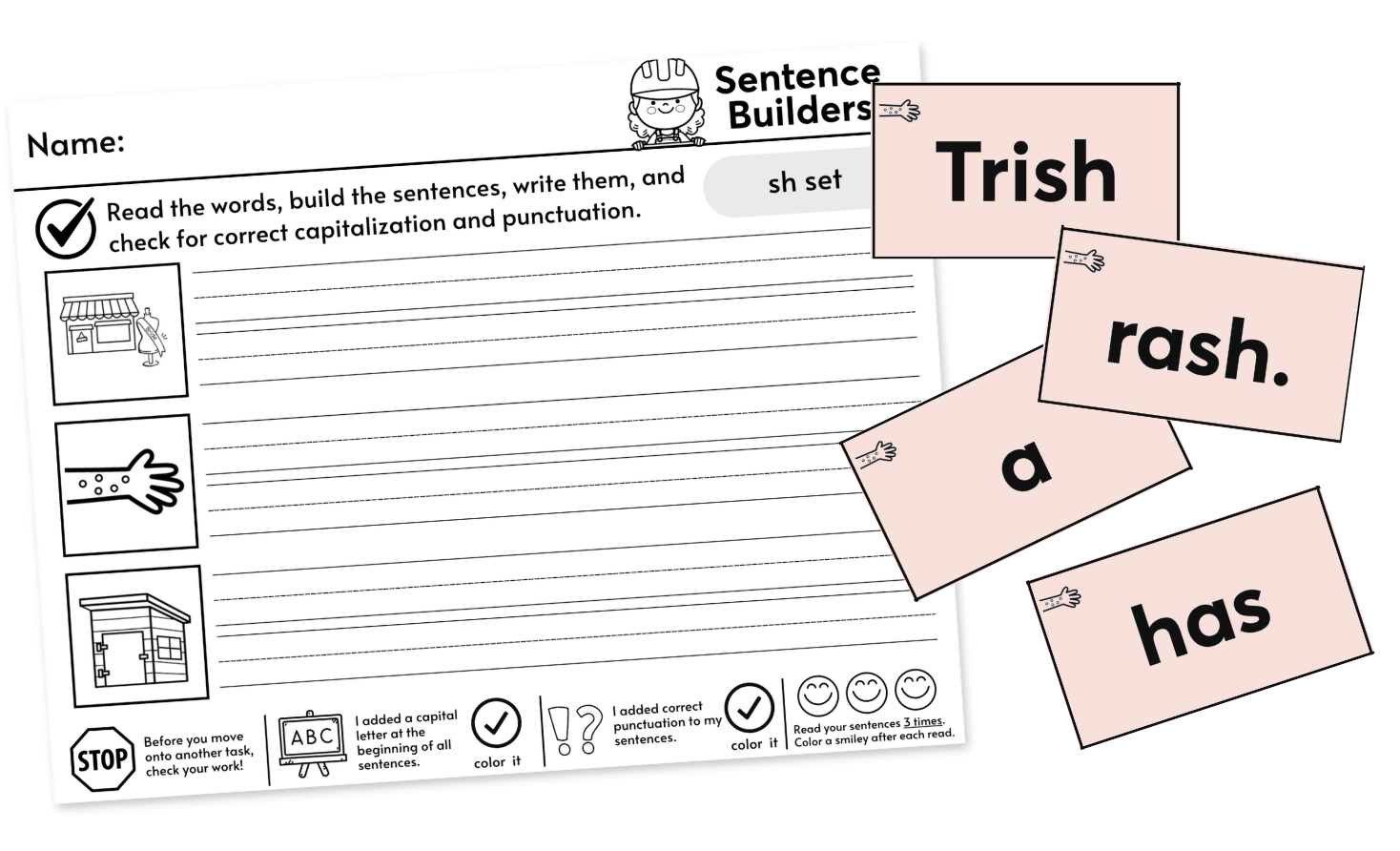
Students combine two simple sentences into one.
I Do
Model how to connect ideas.
We Do
Guide students through combining sentences.
You Do
Students try independently.
👉 What this builds: sentence fluency and complexity
Step 4: Stretch It (Add Detail)
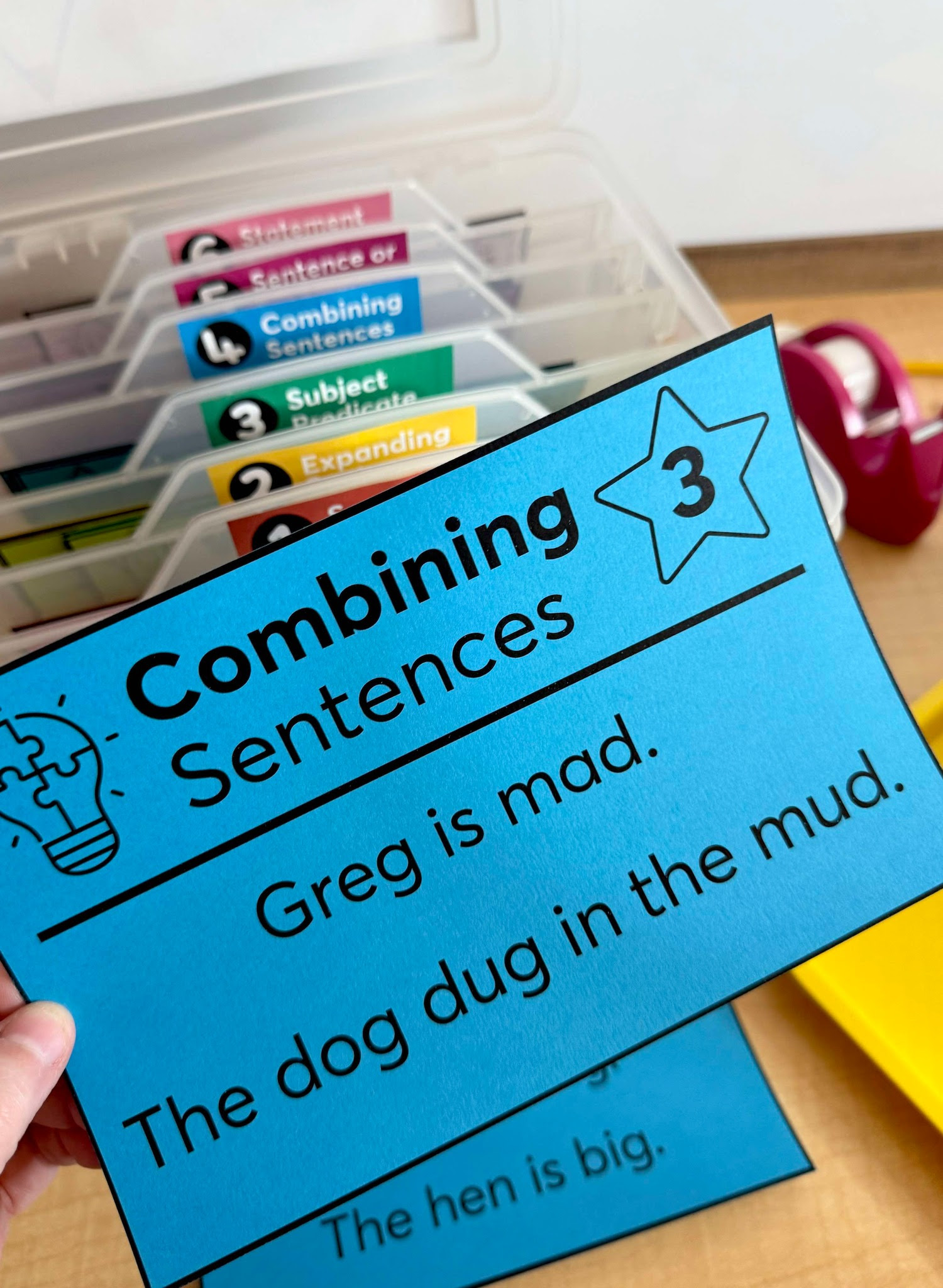
Students expand a simple sentence by answering a question:
- Where?
- When?
- How?
I Do
Model how to add detail.
We Do
Expand a sentence together.
You Do
Students expand on their own.
👉 What this builds: elaboration and descriptive writing
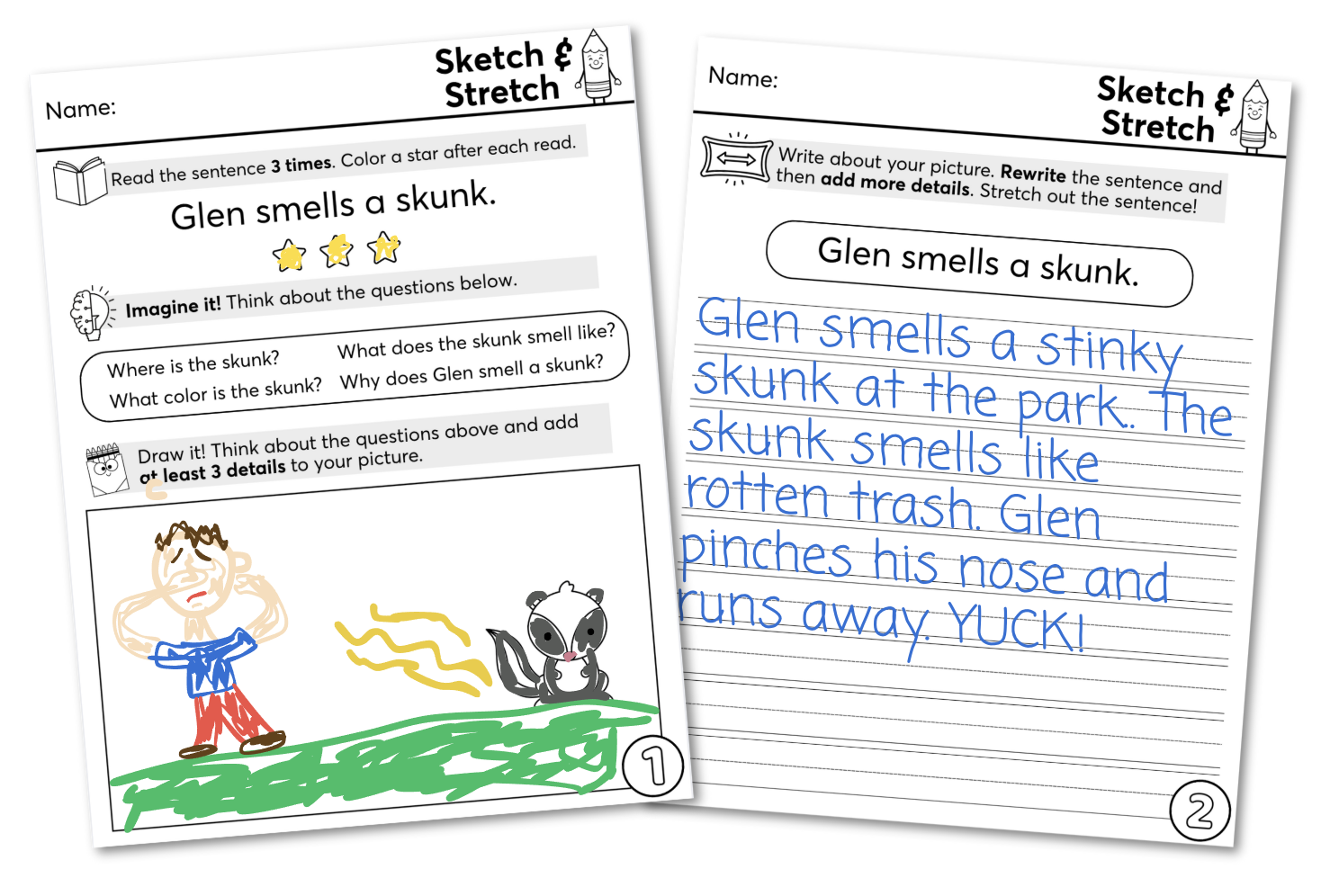
Step 5: Fix It (Edit the Sentence)
Students are given a fragment or incorrect sentence.
I Do
Model how to fix it.
We Do
Correct a sentence together.
You Do
Students edit independently.
👉 What this builds: grammar, conventions, and editing skills
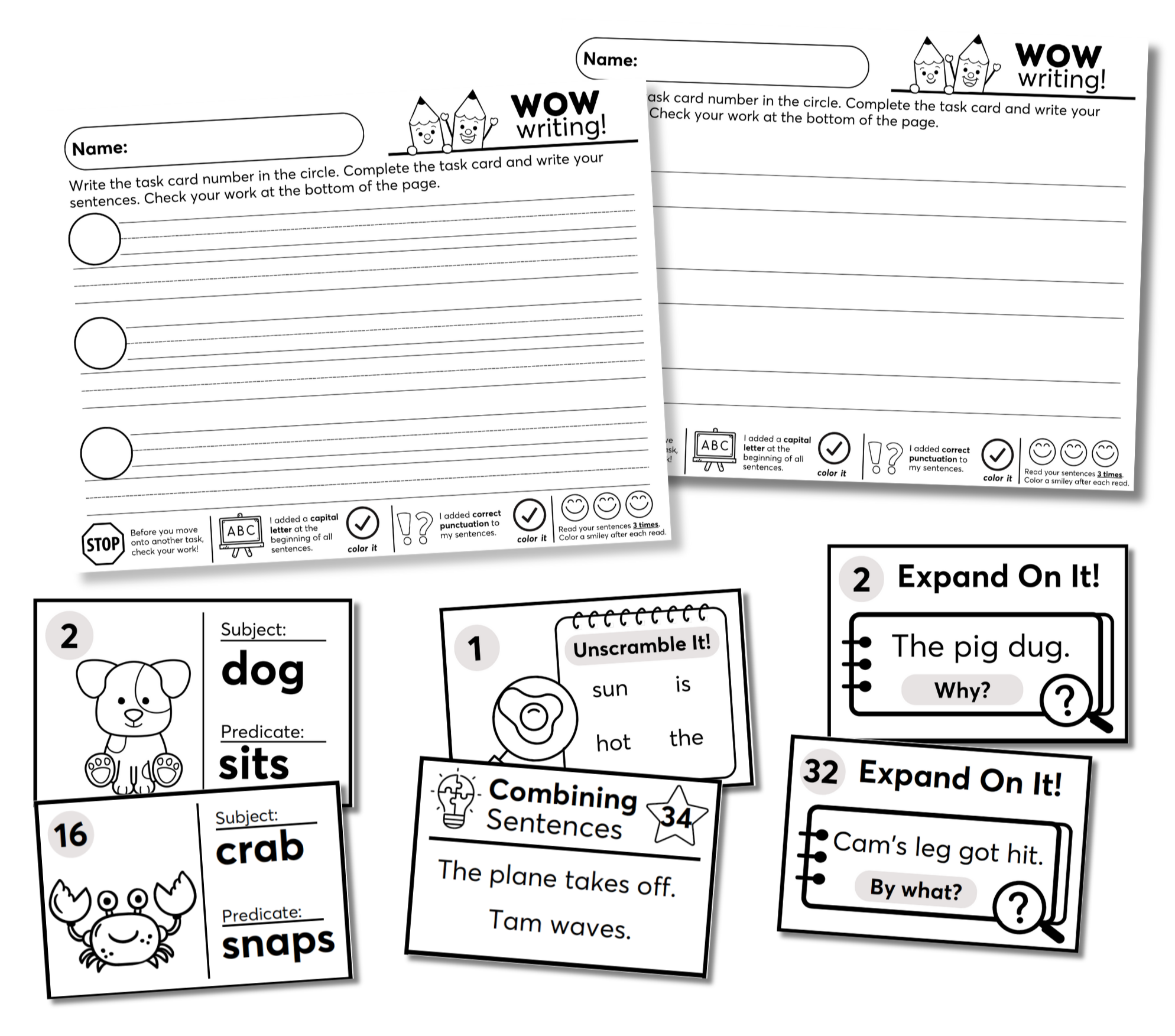
Step 6: Write and Reread
Students write their final sentence and check:
- Capital letter
- Spacing
- Punctuation
I Do
Model how to reread and check.
We Do
Check a sentence together.
You Do
Students check their own work.
👉 What this builds: independence and self-monitoring
Why This Routine Works
This routine works because it removes the guesswork.
Students:
- See exactly what to do
- Practice with support
- Apply skills independently
The consistent structure allows students to focus on the skill instead of figuring out directions.
And the I Do, We Do, You Do model ensures that students are supported before being expected to work independently.
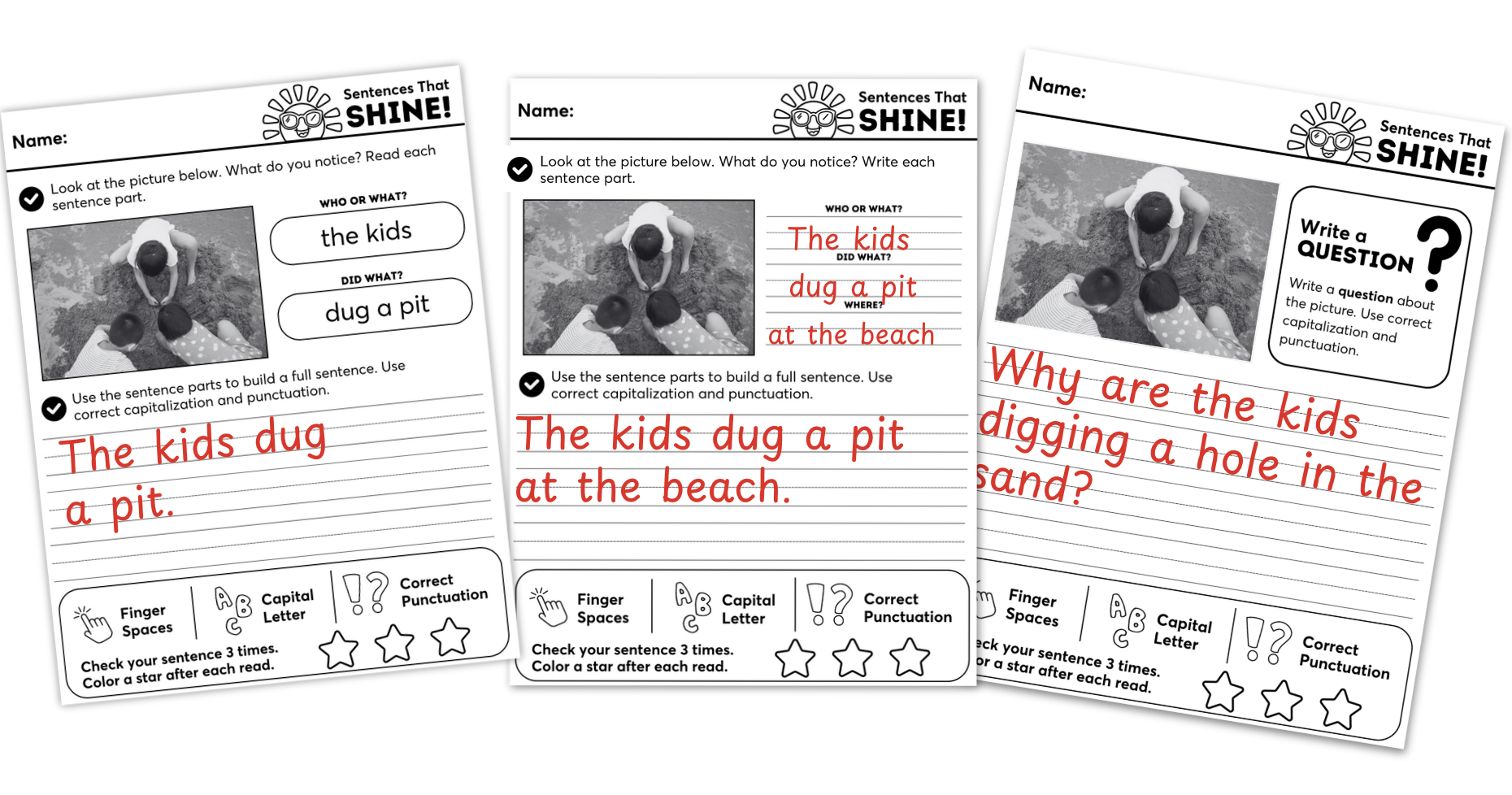
How to Use This Routine in Your Classroom
This sentence writing routine can fit into your literacy block in several ways.
Whole Group Instruction
Model each step and complete examples together.
This is where you establish expectations and teach the routine.
Small Group Instruction
Use the routine to provide targeted support.
You can slow down, model more, and guide students through each step.
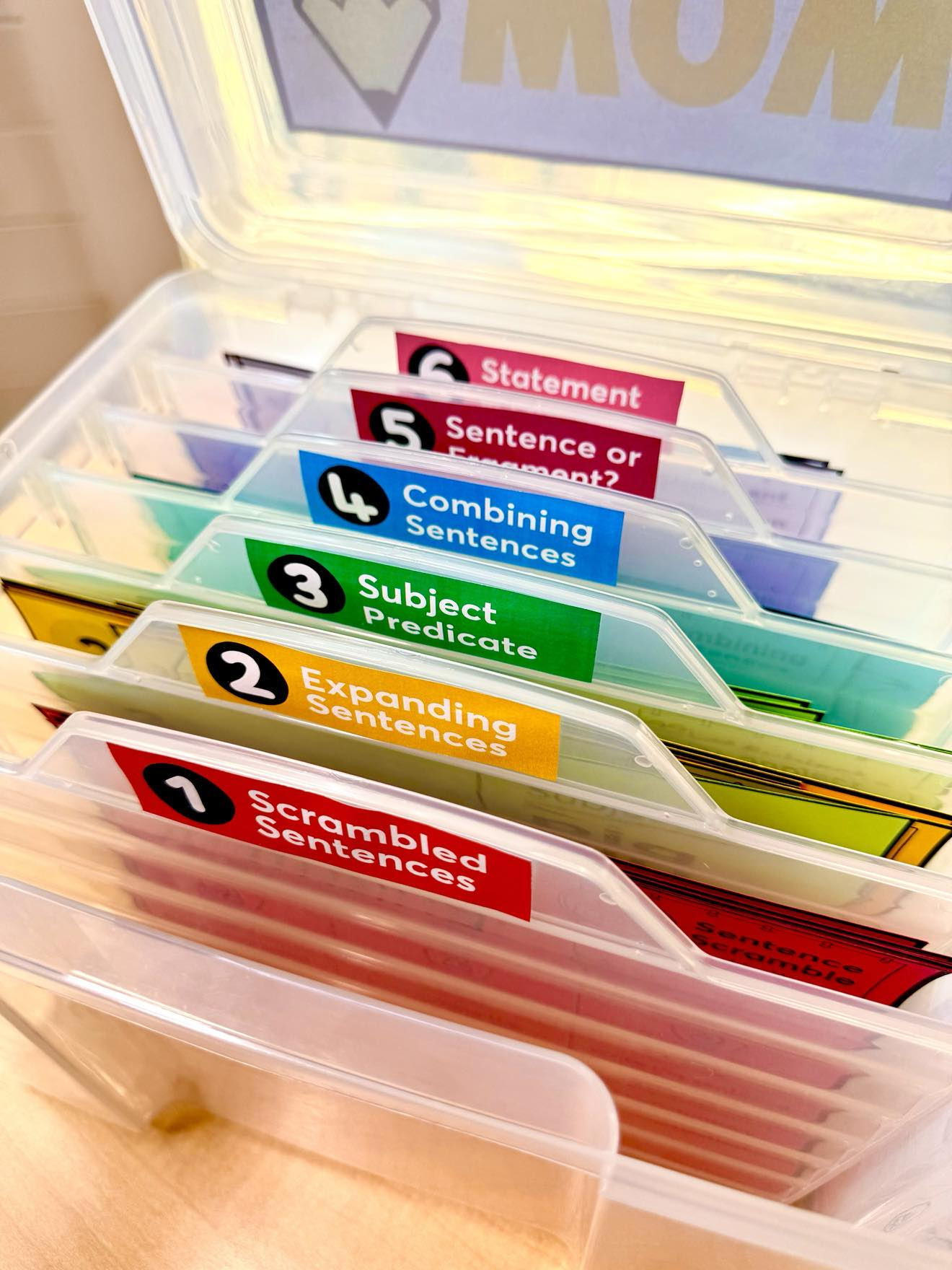
Literacy Centers
Once students are familiar with the routine, they can complete steps independently.
Because the structure stays the same, students know what to do without constant teacher support.
Intervention
Focus on one step at a time and provide additional modeling and guided practice.
Daily Routine Option
You can also break the routine into a weekly structure:
- Monday: Mix It
- Tuesday: Build It
- Wednesday: Combine It
- Thursday: Stretch It
- Friday: Fix It
This creates a predictable rhythm that helps students build confidence and independence.
Here Are Your Materials for This Routine
You can use the free materials below to try this sentence writing routine with your students today.
- Sentence Writing System – Free Download (PDF)
- Differentiated Sentence Writing Pages – Free Download (PDF)
- Sentence Writing Task Cards – Free Download (PDF)
- Sentence Writing System (Yearlong Set) – Member Only (PDF)
- Differentiated Sentence Writing Pages (Yearlong Set) – Member Only (PDF)
- Sentence Writing Task Cards (Complete Set) – Member Only (PDF)
Final Thoughts
Helping students write complete sentences isn’t about giving more writing time.
It’s about giving:
👉 clear models
👉 structured steps
👉 consistent practice
When students know exactly what to do, they become more confident and successful writers.
To gain unlimited access to all of our literacy and writing content, join the Literacy Teacher Community!
Here you will find hundreds of literacy and writing lessons, a community of teachers for support, and literacy and writing materials that are always up to date with the latest research.
Simply click the image below to get all of our lessons and resources.
If you’d like access to the resources I share about in this blog post, along with all of my other literacy and writing resources, you can find everything inside Literacy All-Access.
Inside the membership, you’ll find a wide range of structured, engaging literacy resources designed to support your phonics instruction—from decodable passages and targeted practice activities to small group tools and lesson supports—so you can spend less time creating and more time teaching.