How to Support Your Child with Phonics at Home (Without Feeling Overwhelmed)
A step-by-step phonics routine parents can use to build decoding, fluency, and confidence at home
If you’ve ever sent phonics practice home and wondered…
👉 “Are they actually doing this correctly?”
👉 “Do parents know what to do?”
👉 “Why aren’t I seeing progress from take-home work?”
You’re not alone.
At-home practice can either reinforce everything you’re teaching…
Or accidentally build guessing habits.
The difference comes down to structure.
In a Science of Reading classroom, students need clear, connected practice, not random worksheets.
That’s exactly what this routine provides.
Below is a step-by-step routine you can use to support phonics practice at home.
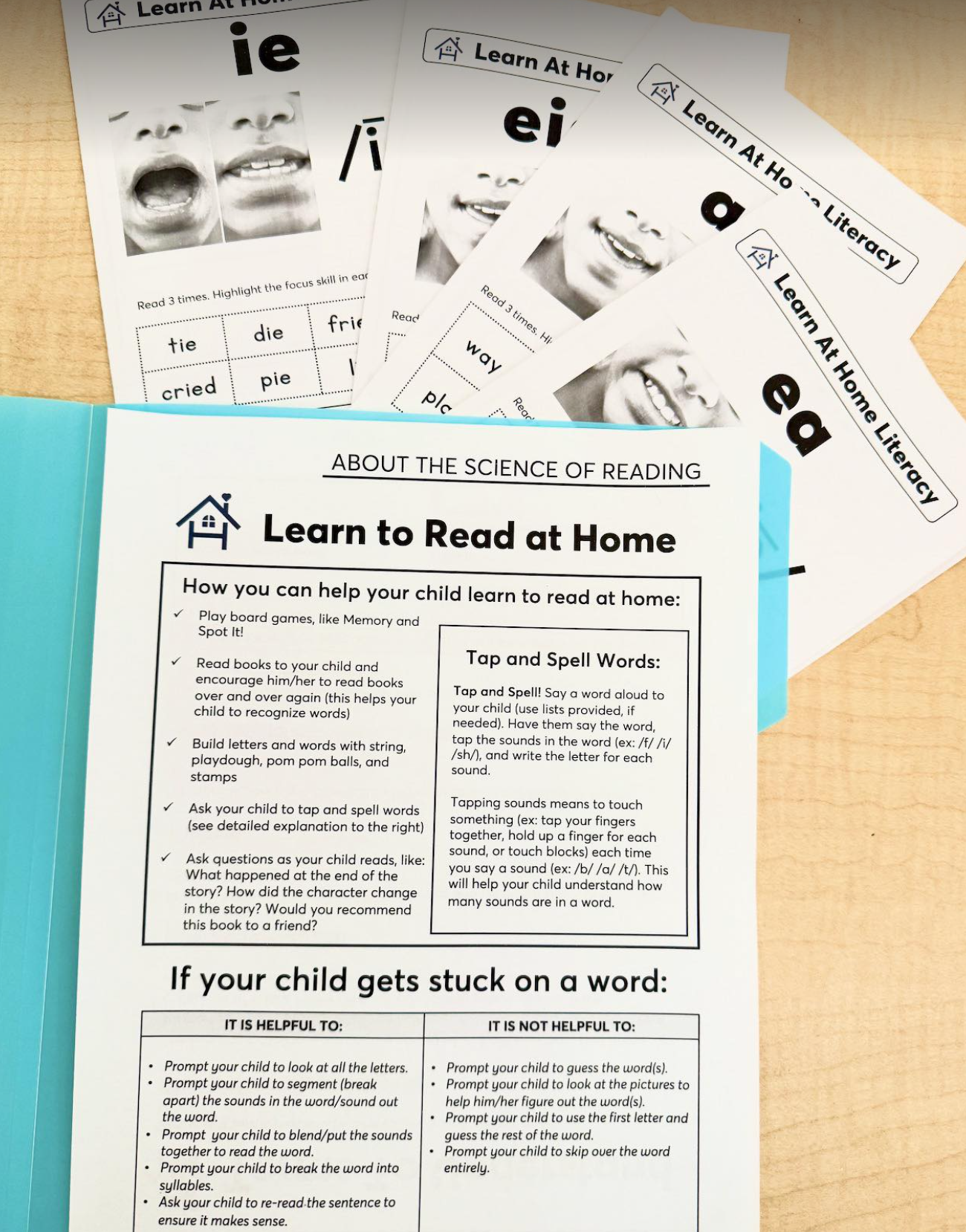
Learn at Home Phonics Routine
Learning Objective
Students will apply phonics skills by connecting sounds to letters, reading words, and applying those skills in connected text.
Materials Needed
Here are the materials you will need for this activity:
- Phonics skill page (ex: short a)
- Word list or word reading grid
- Word ladder or word-building activity
- Sound boxes (mapping activity)
- Short decodable passage
Optional:
- Highlighter or crayon
- Pencil
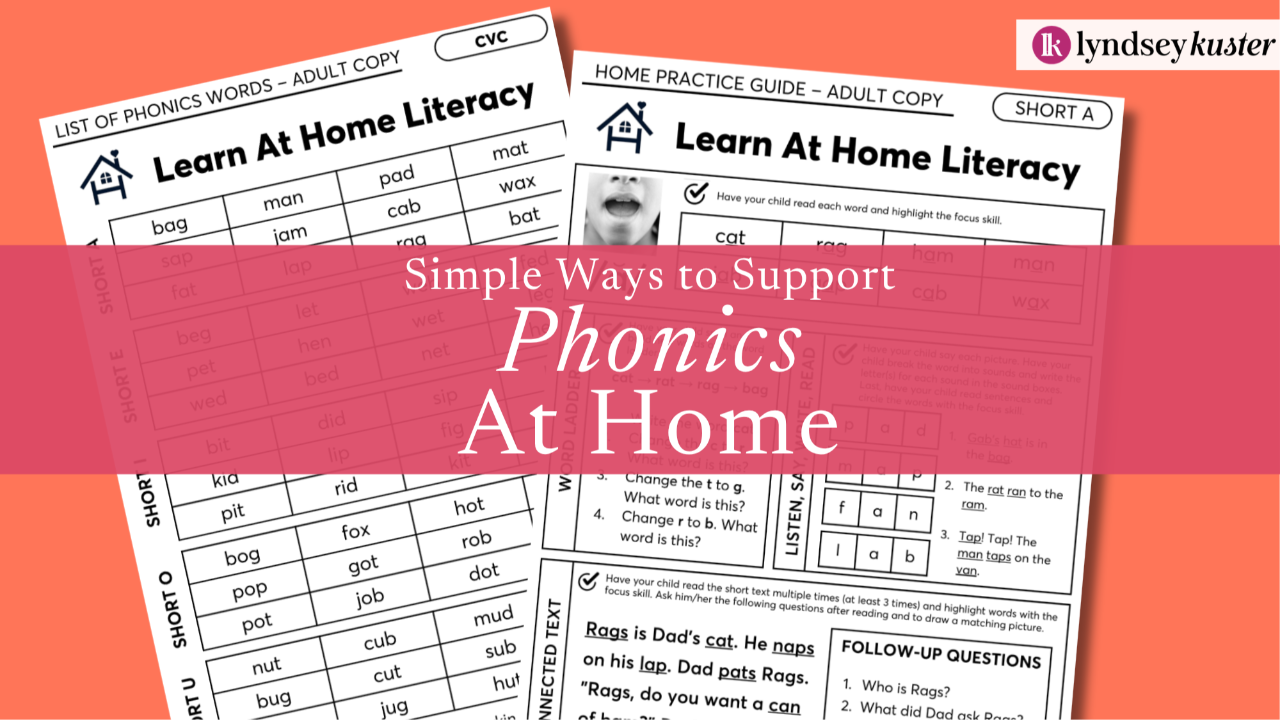
📥 Here are your downloadable resources for supporting phonics at home:
- Short A Learn at Home Literacy Pages – Free Download (PDF)
- Short E Learn at Home Literacy Pages – Member Only (PDF)
- Short I Learn at Home Literacy Pages – Member Only (PDF)
- Short O Learn at Home Literacy Pages – Member Only (PDF)
- Short U Learn at Home Literacy Pages – Member Only (PDF)
- Blends & Digraphs Learn at Home Pages – Member Only (PDF)
- Long Vowels Learn at Home Pages – Member Only (PDF)
- Vowel Teams Learn at Home Pages – Member Only (PDF)
- R-Controlled Vowels Learn at Home Pages – Member Only (PDF)
What Is a Learn at Home Phonics Routine?
A Learn at Home phonics routine is a structured sequence of activities that guides students through:
- Sound practice
- Word reading
- Word building
- Sound mapping
- Connected reading
Instead of isolated practice, students move through a connected routine that builds decoding, fluency, and comprehension together.
Learn at Home Phonics Routine Procedure
Step 1: Practice the Focus Sound
Start with the phonics skill.
Students:
- Look at the mouth picture
- Say the sound
- Repeat it several times
Teacher/Parent prompt:
👉 “Say the sound. What does your mouth do?”
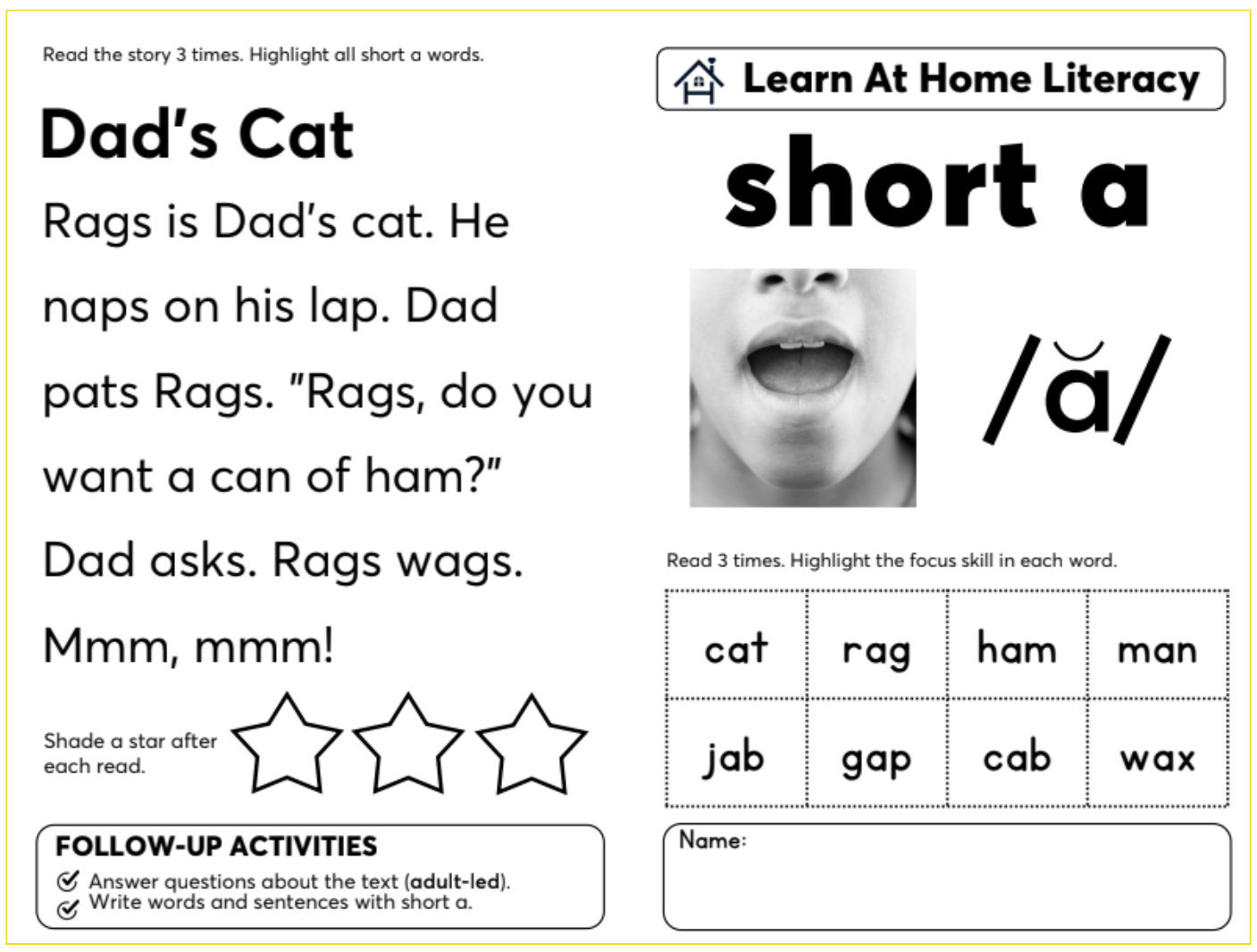
Step 2: Read Words with the Pattern
Students:
- Read each word in the word grid
- Identify the focus sound in each word
Teacher/Parent prompt:
👉 “Read each word. Find the sound we’re learning.”
Students may highlight or underline the focus sound.
Step 3: Build and Change Words (Word Ladder)
Students:
- Start with one word (cat)
- Change one sound at a time (cat → rat → rag → bag)
Teacher/Parent prompt:
👉 “Change one sound. What’s the new word?”
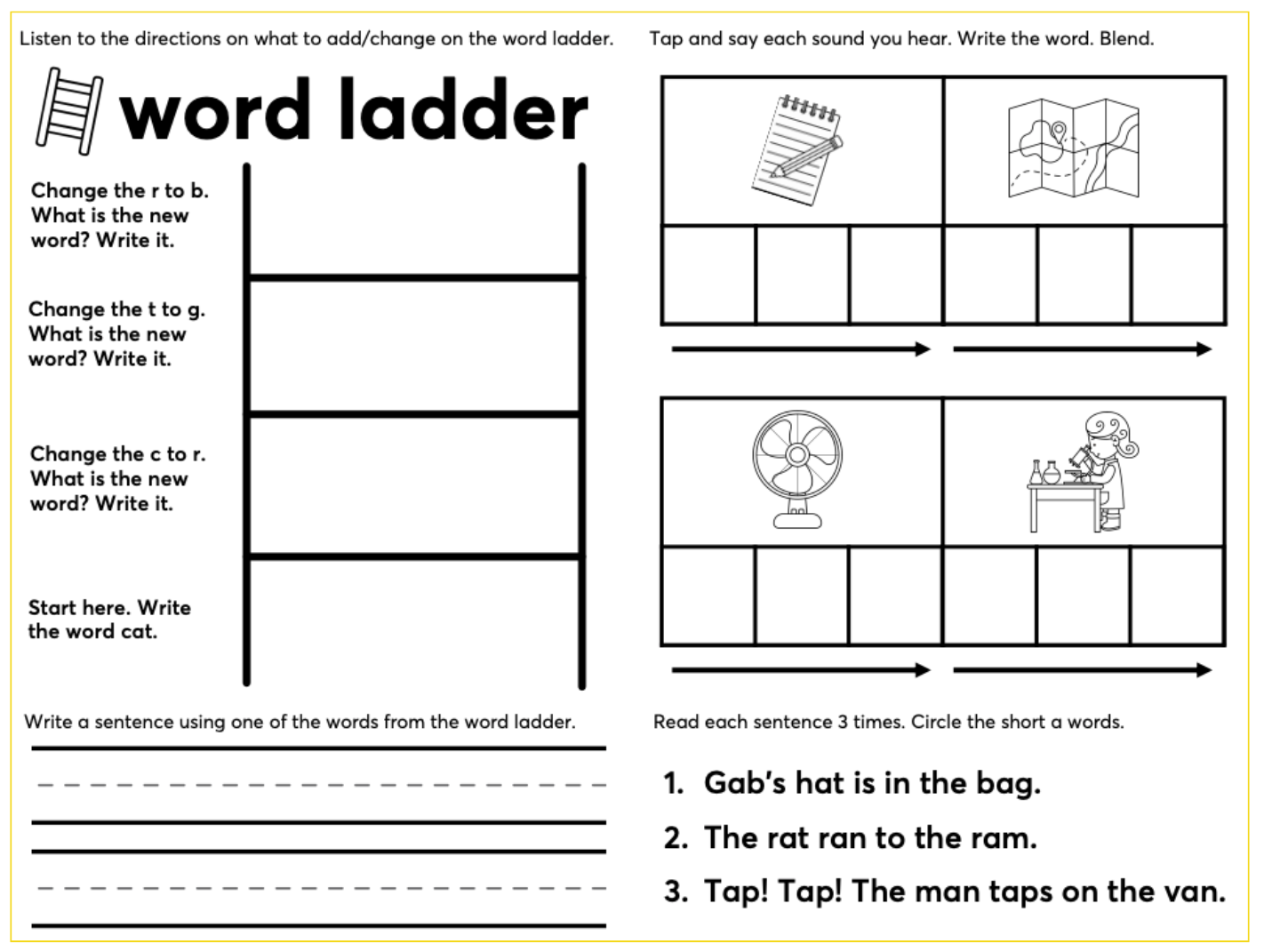
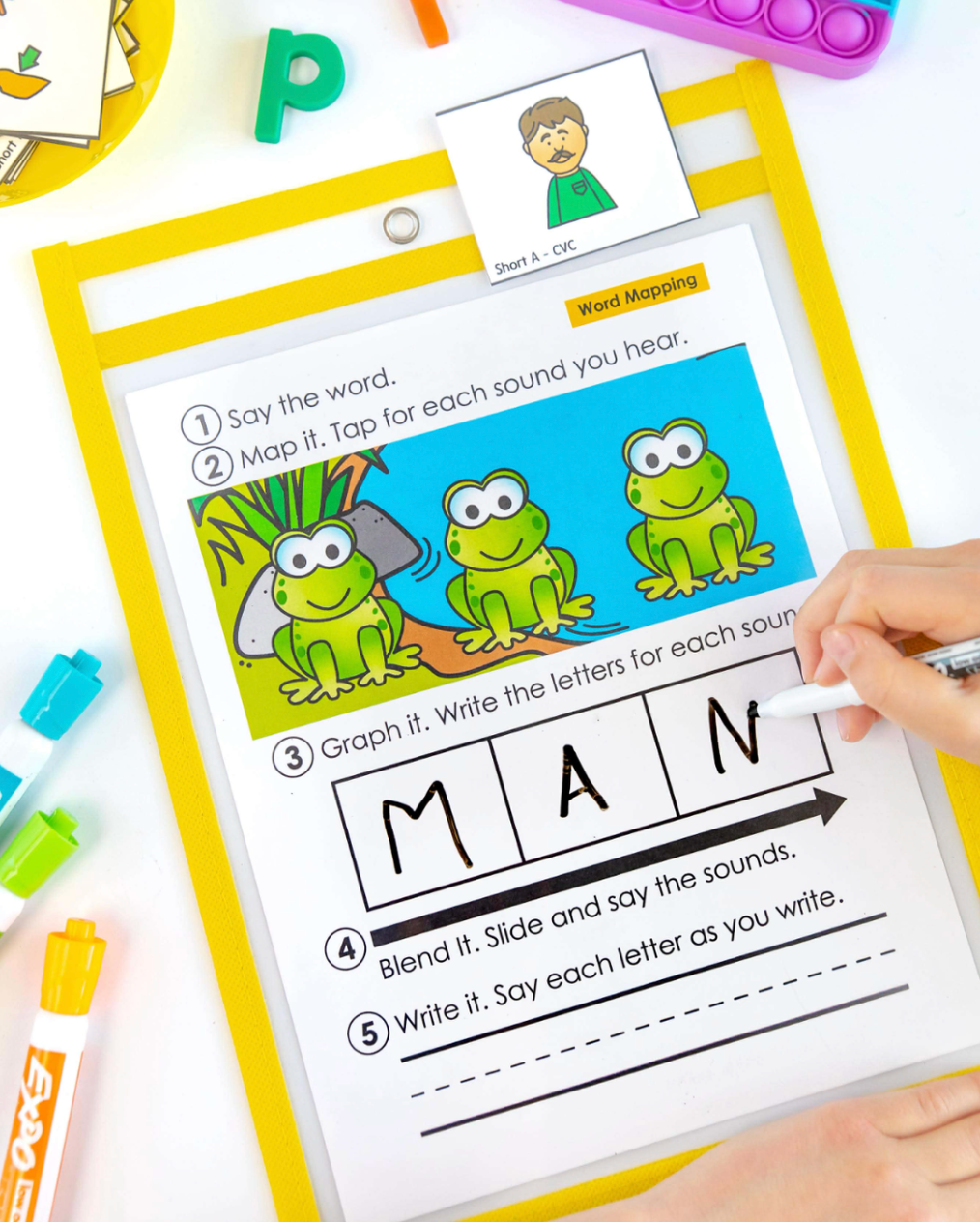
Step 4: Map the Sounds
Students:
- Say the word
- Break it into sounds
- Write one letter for each sound
👉 One sound = one box
Teacher/Parent prompt:
👉 “Say the word slowly. What sounds do you hear?”
Step 5: Read and Apply in Sentences
Students:
- Read simple sentences
- Circle or underline words with the focus skill
Teacher/Parent prompt:
👉 “Read the sentence. Can you find our sound?”
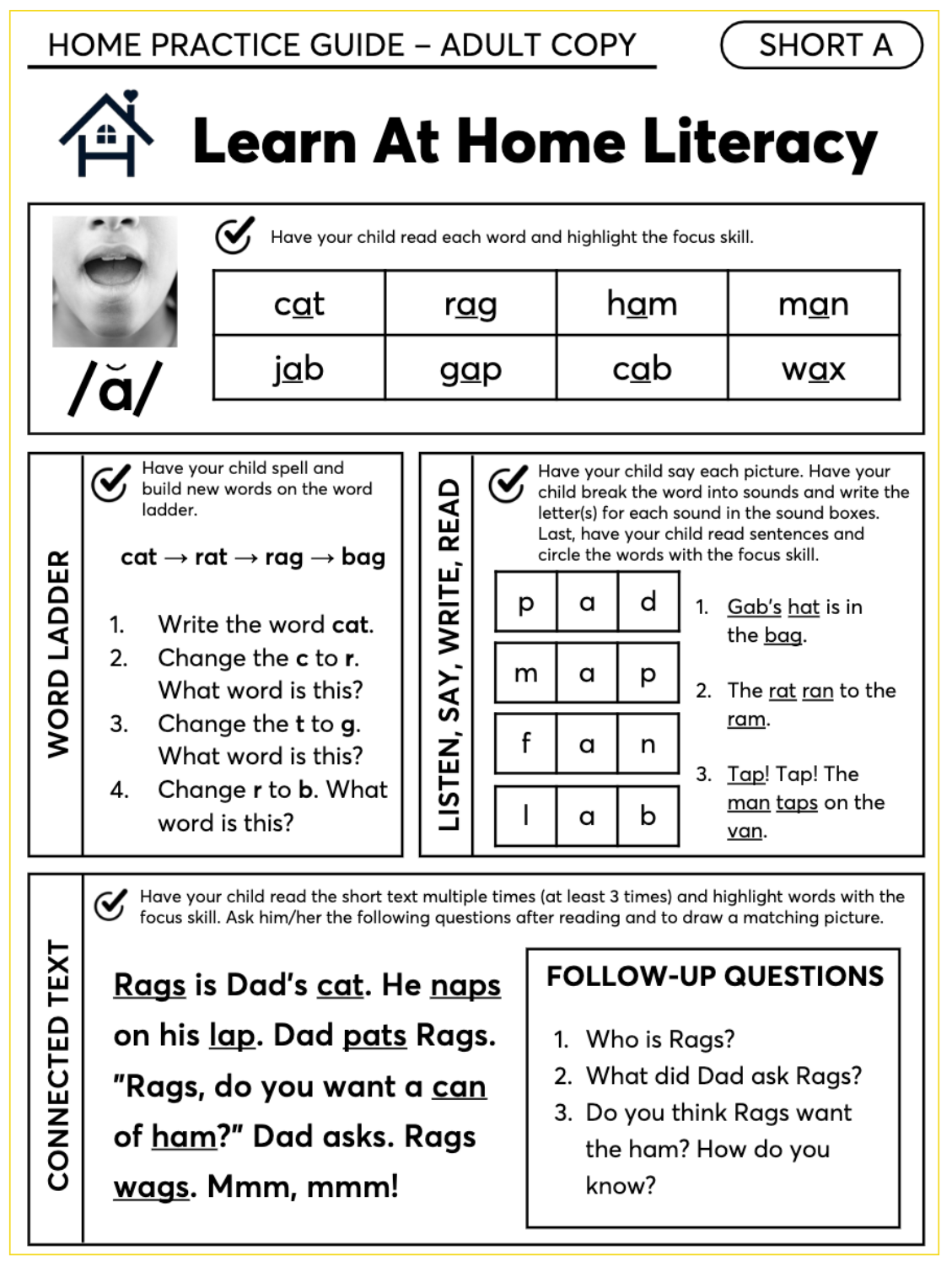
Step 6: Read a Short Passage (3 Times)
Students read the passage three times:
- First read → focus on accuracy
- Second read → smoother reading
- Third read → read like talking
Then:
- Answer questions or discuss the text
Teacher/Parent prompt:
👉 “Let’s read it again and make it sound smooth.”
Why This Routine Works
This routine follows how the brain learns to read.
Students are:
- Practicing phoneme-grapheme connections
- Repeatedly applying the same skill
- Moving from isolated words to connected text
- Strengthening decoding and fluency together
Instead of guessing, students are learning to read through words accurately and confidently.
Tips for Supporting This Routine At Home
When sending this routine home, it’s important to set parents up for success.
Most parents want to help… they just aren’t always sure how.
Here’s what to communicate clearly:
✔ Keep it short and consistent
Encourage families to spend just 10–15 minutes a day. Let them know consistency matters more than long practice sessions.
✔ Follow the routine in order
Remind parents that each step is intentional and builds on the next. Skipping steps can lead to gaps in understanding.
✔ Prompt, don’t tell
Guide parents to support their child by prompting:
- “Say the sounds.”
- “What sound does that letter make?”
- “Blend it together.”
Instead of giving the word right away, we want students doing the thinking.
✔ Focus on sounds, not guessing
Let parents know that looking at pictures or guessing from context can actually slow reading progress. The goal is to look at the letters and connect sounds.
✔ It’s okay to slow down
Encourage parents to pause and spend extra time on tricky parts. Mastery is more important than moving quickly.
✔ Rereading builds fluency
Help parents understand that repeated reading is a good thing. Each read supports smoother, more confident reading.
✔ Keep it positive and low-pressure
Remind parents that confidence matters. Celebrating effort goes a long way in keeping kids engaged.
✔ No teaching background required
Reassure parents that they don’t need to explain rules or “teach.” Simply following the routine and using the prompts is enough.
Final Thoughts
At-home practice is only effective when parents and students know what to do.
When you provide clear structure and simple guidance…
You’re not just sending practice home
You’re building consistency between school and home
And that’s where real progress happens.
📥 Here are your downloadable resources for supporting phonics at home:
- Short A Learn at Home Literacy Pages – Free Download (PDF)
- Short E Learn at Home Literacy Pages – Member Only (PDF)
- Short I Learn at Home Literacy Pages – Member Only (PDF)
- Short O Learn at Home Literacy Pages – Member Only (PDF)
- Short U Learn at Home Literacy Pages – Member Only (PDF)
- Blends & Digraphs Learn at Home Pages – Member Only (PDF)
- Long Vowels Learn at Home Pages – Member Only (PDF)
- Vowel Teams Learn at Home Pages – Member Only (PDF)
- R-Controlled Vowels Learn at Home Pages – Member Only (PDF)
To gain unlimited access to all of our literacy and writing content, join the Literacy Teacher Community!
Here you will find hundreds of literacy and writing lessons, a community of teachers for support, and literacy and writing materials that are always up to date with the latest research.
Simply click the image below to get all of our lessons and resources.
If you’d like access to the resources I share about in this blog post, along with all of my other literacy and writing resources, you can find everything inside Literacy All-Access.
Inside the membership, you’ll find a wide range of structured, engaging literacy resources designed to support your phonics instruction—from decodable passages and targeted practice activities to small group tools and lesson supports—so you can spend less time creating and more time teaching.