How to Teach Blending Lines in a Science of Reading Classroom
Have you ever had a student who knows all their letter sounds… but still struggles to read words smoothly?
They can say:
/c/ … /a/ … /t/
But when it’s time to blend, they pause, hesitate, or guess.
This is incredibly common.
Blending is not automatic for many early readers. It must be explicitly taught and practiced. Blending lines are a simple and powerful way to help students move from isolated sounds to connected word reading.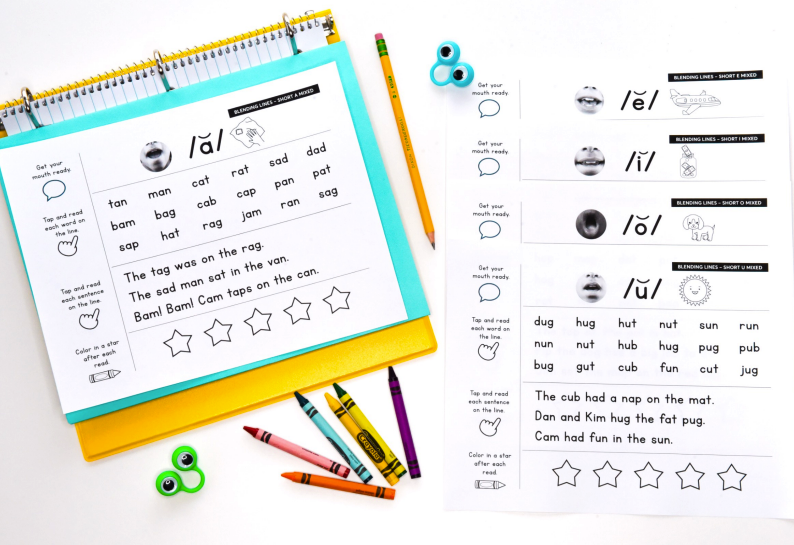
When used intentionally, they build:
- smooth decoding
- automaticity
- confidence
Below is a step-by-step blending lines routine you can use in your classroom.
Blending Lines Learning Objective
Students will blend individual phonemes together to read words smoothly and accurately using successive blending.
Materials Needed
Here are the materials you will need for this activity:
- blending lines pages (see below, they are organized by skill)
- pointer, finger, or tracking tool
- whiteboard or student recording sheet
- dry erase marker or pencil
Optional:
- sound boxes
- phoneme tapping tools
- blending lines slides or printable cards
Here Are Your Materials for This Blending Routine
You can use the free materials below to try this routine with your students today.
- Short Vowel Blending Lines – Free Download (PDF)
- Blends – Member Only (PDF)
- Floss Words – Member Only (PDF)
- 3-Letter Blends – Member Only (PDF)
- Digraphs – Member Only (PDF)
- Silent E (CVCe) – Member Only (PDF)
- Vowel Teams – Member Only (PDF)
- R-Controlled Vowels – Member Only (PDF)
- Diphthongs – Member Only (PDF)
What Are Blending Lines?
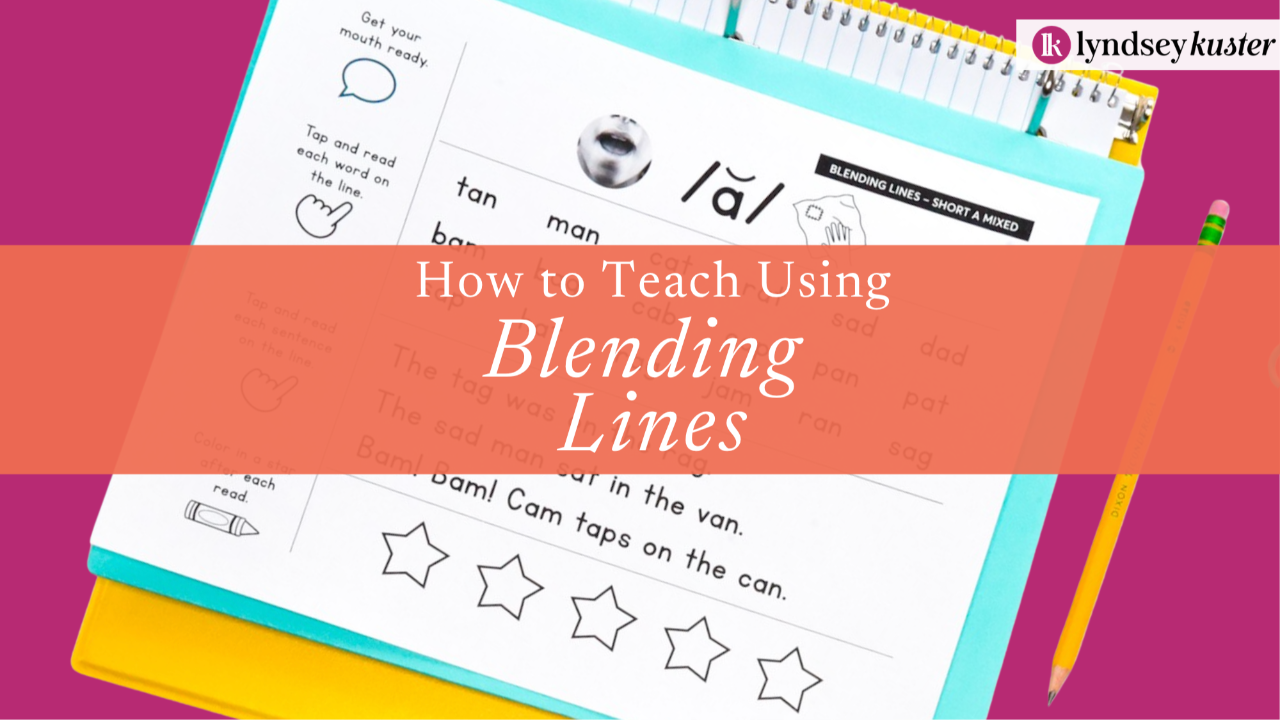
Blending lines are structured lists of words that allow students to practice combining sounds into words.
They are typically organized by phonics skill and follow a controlled pattern, such as:
cat
map
sat
ran
Instead of reading random words, students practice blending within a focused phonics pattern, which helps build accuracy and fluency.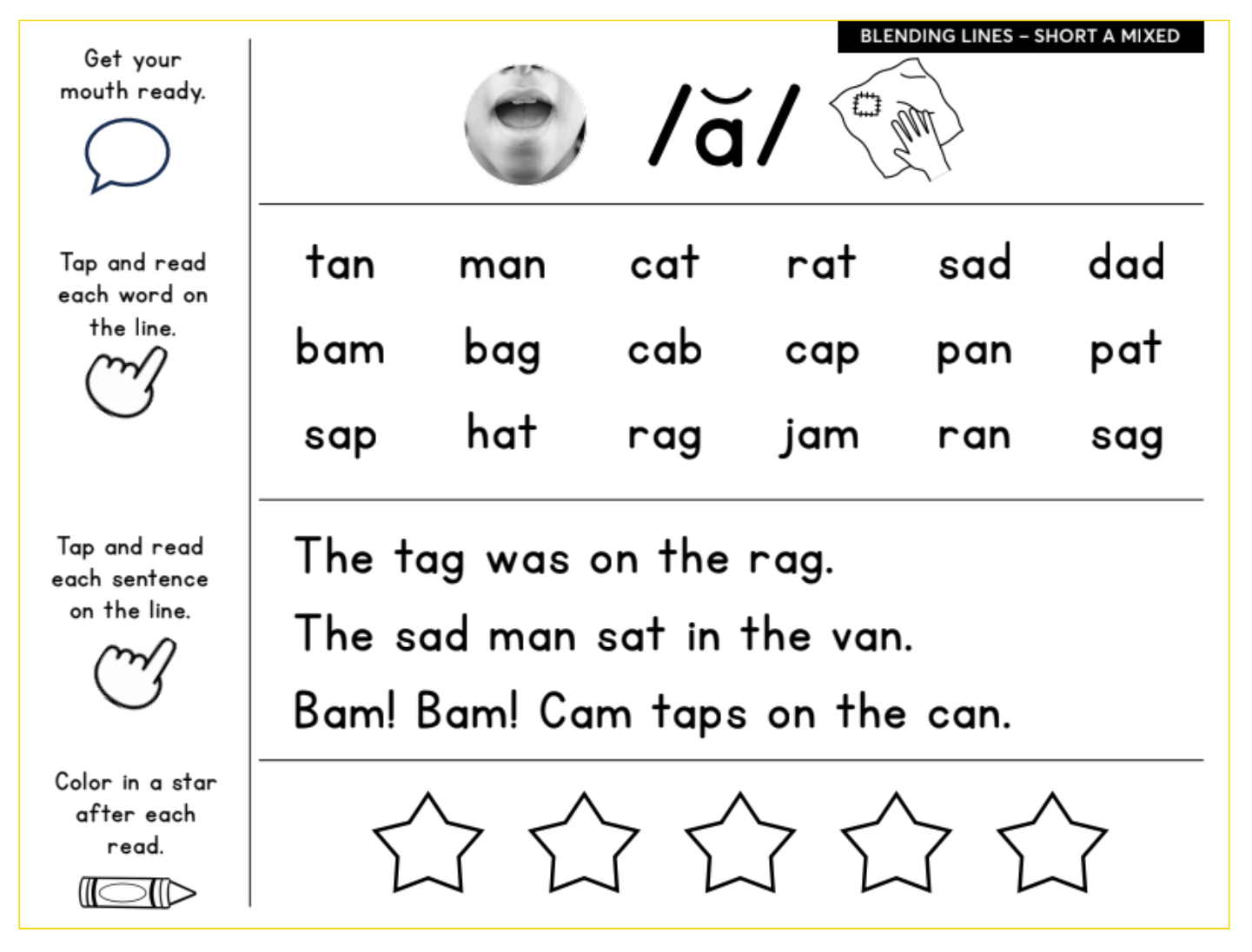
Blending Lines Activity Procedure
Step 1: Model Successive Blending
Begin by modeling successive blending, one of the most effective strategies for helping students blend sounds smoothly. Instead of stopping between each sound, gradually add each sound to the previous one.
For example:
/c/
/ca/
/cat/
You might say:
“We don’t stop after each sound. We keep adding the next sound.”
This helps students hold sounds in their working memory and blend them more successfully.
Step 2: Blend Together as a Group
Practice successive blending together.
Guide students through the process:
/m/
/ma/
/map/
Repeat with several words.
Blending together builds confidence and allows students to practice in a supported setting.
Step 3: Move Toward Smooth, Automatic Reading
As students become more comfortable, begin to increase the pace.
Move from:
/s/ → /sa/ → /sat/
to:
sat
The goal is to move from successive blending → smooth blending → automatic reading.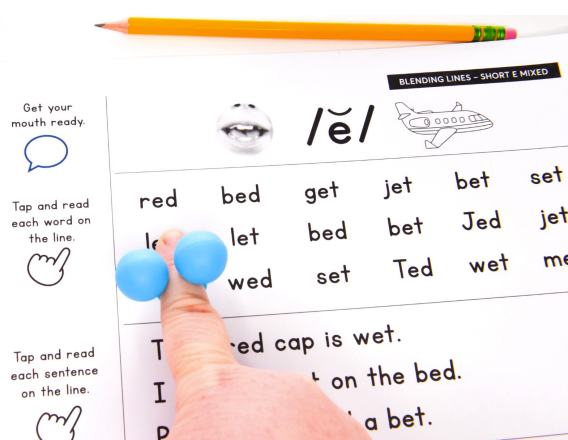
Step 4: Practice Independently
Have students read a line of words on their own using successive blending.
Encourage them to:
- start with the first sound
- add the next sound
- continue building the word
If they get stuck, prompt:
“Start at the beginning and keep adding the sounds.”
This reinforces decoding instead of guessing.
Step 5: Add Repeated Reading for Fluency
After students read the line once, have them read it again.
Repeated reading builds:
- automaticity
- speed
- confidence
You can use:
- choral reading
- partner reading
- echo reading
- timed rereads
Step 6: Connect to Writing (Optional)
Have students write one or two words from the blending line.
As they write, they can say the sounds and think about how the word is built.
This strengthens the connection between decoding and encoding.
Why This Routine Works
This routine gives students a clear and repeatable strategy for blending.
Successive blending helps students:
- hold sounds in memory
- connect sounds smoothly
- avoid choppy reading
- build confidence with unfamiliar words
Blending lines provide structured practice, while successive blending gives students the tool they need to be successful readers.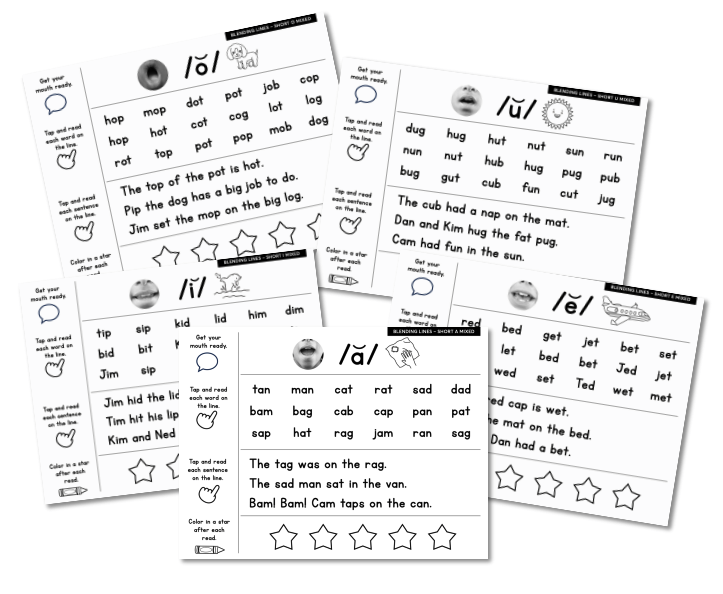
Tips for Using Blending Lines in the Classroom
This routine works well in a variety of settings.
Whole Group
Model successive blending and practice together.
Small Group
Provide targeted support and listen closely to student responses.
Intervention
Slow the routine down and focus heavily on successive blending.
Centers or Independent Work
Students can practice blending lines once they understand the routine.
Here Are Your Materials for This Blending Routine
You can use the free materials below to try this routine with your students today.
- Short Vowel Blending Lines – Free Download (PDF)
- Blends – Member Only (PDF)
- Floss Words – Member Only (PDF)
- 3-Letter Blends – Member Only (PDF)
- Digraphs – Member Only (PDF)
- Silent E (CVCe) – Member Only (PDF)
- Vowel Teams – Member Only (PDF)
- R-Controlled Vowels – Member Only (PDF)
- Diphthongs – Member Only (PDF)
Final Thoughts
Blending is a foundational skill, but many students need explicit instruction to develop it.
Successive blending provides a bridge between sounding out individual phonemes and reading words smoothly.
When students learn to build sounds together instead of stopping between them, their reading becomes more fluent and confident.
Blending lines, paired with a strong blending strategy, give students the tools they need to become successful readers.
Want More Literacy Support and Resources?
To gain unlimited access to all of our literacy and writing content, join the Literacy Teacher Community!
Here you will find hundreds of literacy and writing lessons, a community of teachers for support, and literacy and writing materials that are always up to date with the latest research.
Simply click the image below to get all of our lessons and resources.
If you’d like access to the resources I share about in this blog post, along with all of my other literacy and writing resources, you can find everything inside Literacy All-Access.
Inside the membership, you’ll find a wide range of structured, engaging literacy resources designed to support your phonics instruction—from decodable passages and targeted practice activities to small group tools and lesson supports—so you can spend less time creating and more time teaching.