How to Teach Orthographic Mapping with Word Mapping Mats (Step-by-Step Routine)
A step-by-step routine to help students store words for instant, automatic recognition
If your students can read a word one minute… but forget it the next, you’re not alone.
You taught it.
They decoded it.
They read the word correctly.
And then the next day… it’s like they’ve never seen it before.
That’s because reading a word once does not mean it’s stored in memory.
In a Science of Reading classroom, we’re not just teaching students to read words. We’re teaching them how to store words so they can be recognized instantly.
That process is called orthographic mapping.
And the good news is, we can make that process visible and teachable using a simple routine: word mapping.
What Is Orthographic Mapping?
Orthographic mapping is the mental process the brain uses to store written words for instant recognition.
In simple terms, it’s how a word goes from:
👉 “I have to sound this out”
to
👉 “I know this word right away”
Once a word is mapped, students no longer need to decode it. It becomes automatic.
Orthographic mapping happens when students connect:
- the sounds in a word (phonemes)
- the letters that represent those sounds (graphemes)
- the meaning of the word
When these connections are strong, the word gets stored in long-term memory.
Orthographic Mapping: How Words Become “Sight Words”
When students first learn to read, they rely heavily on decoding.
They look at each letter, say each sound, and blend it together.
Over time, something shifts.
Those same words that once required effort become instant.
That’s what we call sight words.
But sight words are not memorized as whole shapes.
They become automatic through orthographic mapping.
When a student reads a word, their brain connects:
- the sounds in the word
- the letters that represent those sounds
- the meaning of the word
If those connections are strong enough, the word gets stored.
The next time the student sees that word, they recognize it immediately without sounding it out.
What’s Actually Happening in the Brain
When a student encounters a new word, they start by decoding it.
They:
- look at the letters
- match them to sounds
- blend the sounds together
But decoding alone doesn’t guarantee the word will be remembered.
For a word to “stick,” the brain has to anchor the spoken word (which the student already knows) to the correct letter sequence.
This is the moment orthographic mapping happens.
The Process in Simple Terms
Here’s what that looks like in action:
- The student hears or says a word
- They break it into individual sounds
- They connect each sound to a letter or letters
- They link the word to its meaning
When this happens accurately and repeatedly, the word becomes stored for instant recognition.
Here Are Your Materials for This Routine
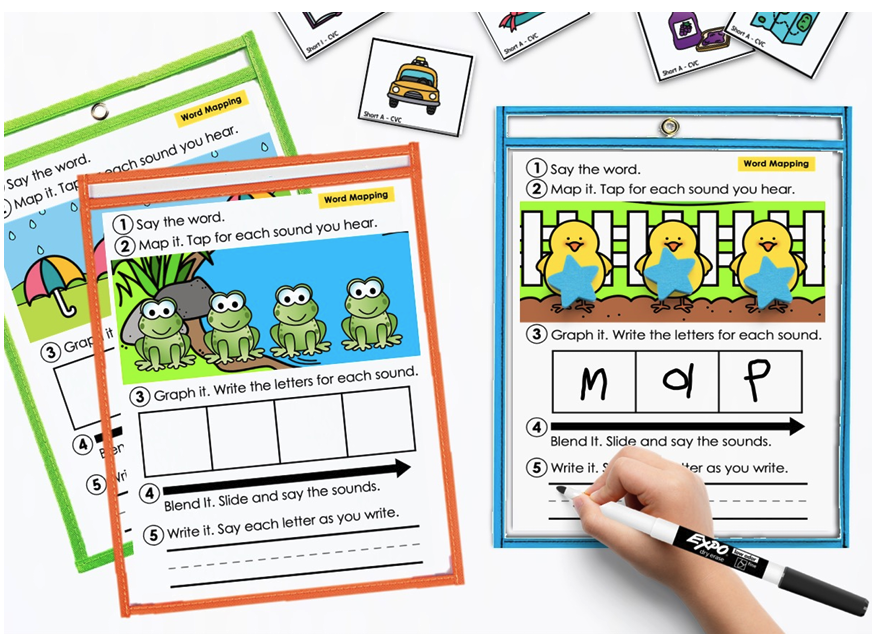
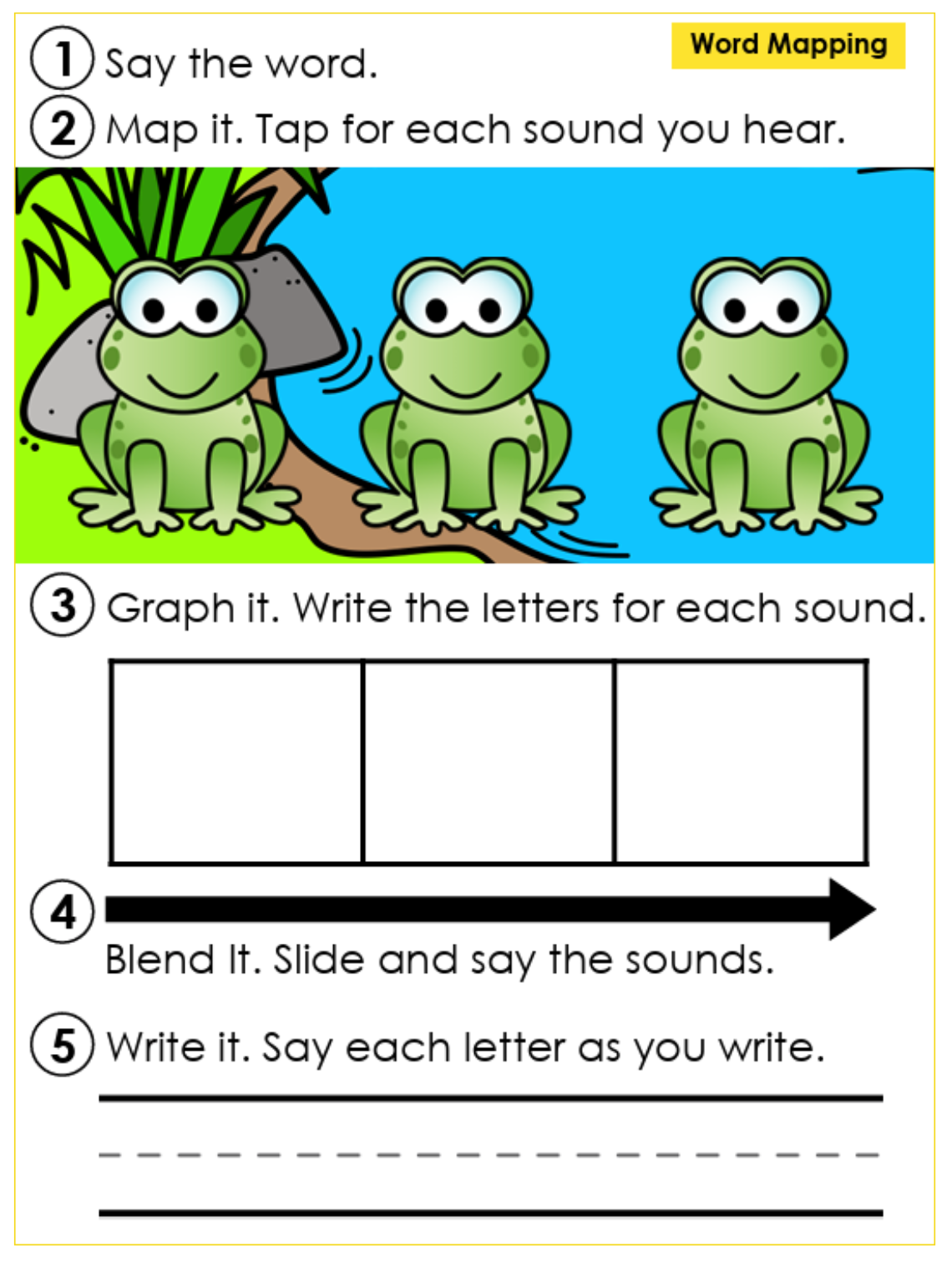
You can use these word mapping materials below to try this routine with your students today.
- Summer Word Mapping Mats – Free Download (PDF)
- Fall Word Mapping Mats – Free Download (PDF)
- Winter Word Mapping Mats – Free Download (PDF)
- Spring Word Mapping Mats – Free Download (PDF)
- Summer Word Mapping Mats – Member Only (PDF)
- Fall Word Mapping Mats – Member Only (PDF)
- Winter Word Mapping Mats – Member Only (PDF)
- Spring Word Mapping Mats – Member Only (PDF)
- Anytime Word Mapping Mats – Member Only (PDF)
Why This Matters in a Science of Reading Classroom
Students don’t build a large reading vocabulary by memorizing words visually.
They build it by:
- hearing the sounds in words
- connecting those sounds to letters
- practicing those connections
This is how students move from:
slow, effortful decoding
to
fluent, automatic reading
And this is exactly what we are supporting when we use word mapping mats.
Below is a step-by-step routine you can use in your classroom.
Word Mapping Routine
Learning Objective
Students will map phonemes to graphemes to store words for automatic recognition.
Materials Needed
Here are the materials you will need for this activity:
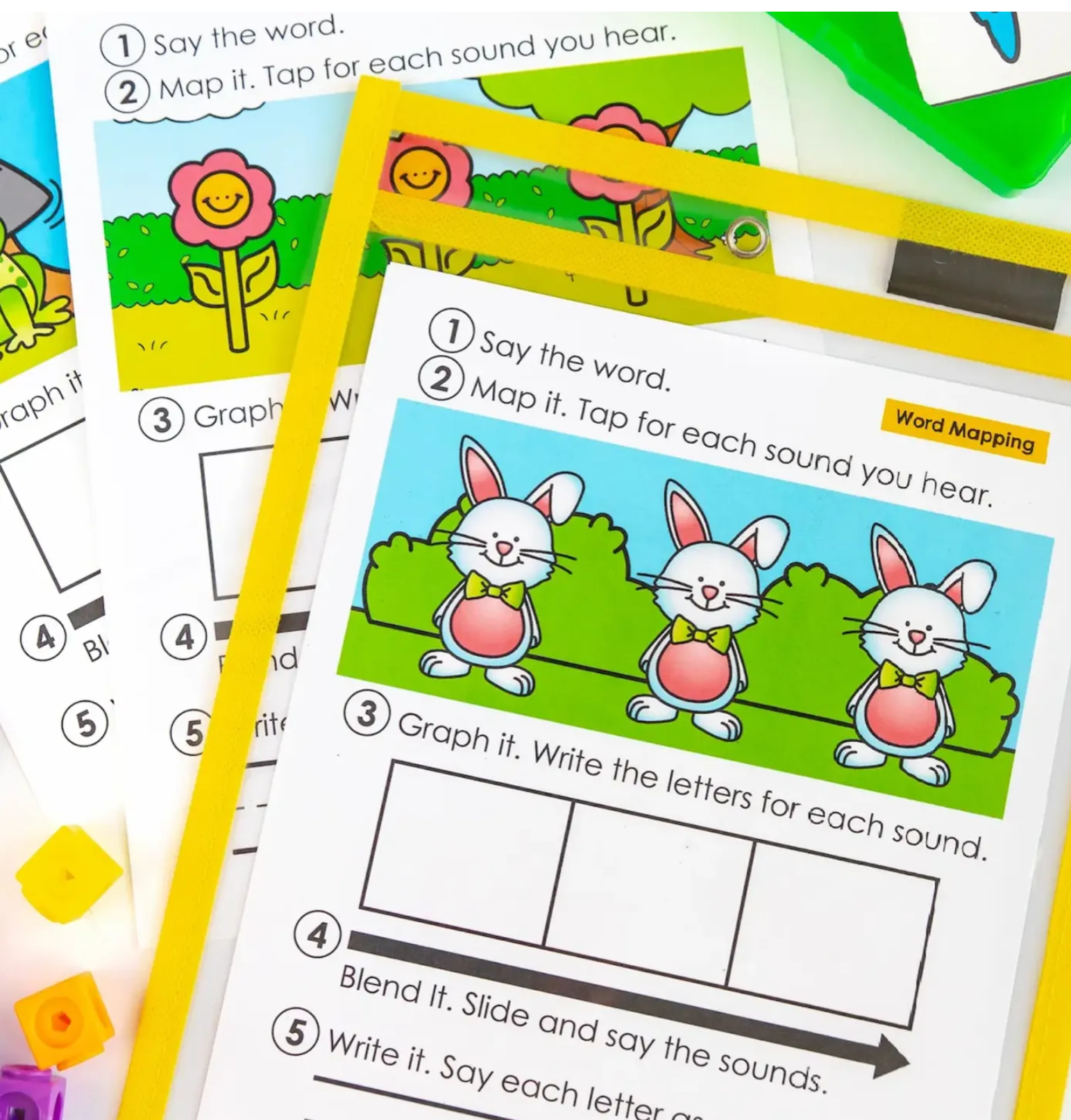
- Word mapping mats
- Picture cards or word list
- Counters or manipulatives (for tapping sounds)
- Dry erase markers
Optional:
- Magnetic letters or letter tiles
- Sound boxes (Elkonin boxes)
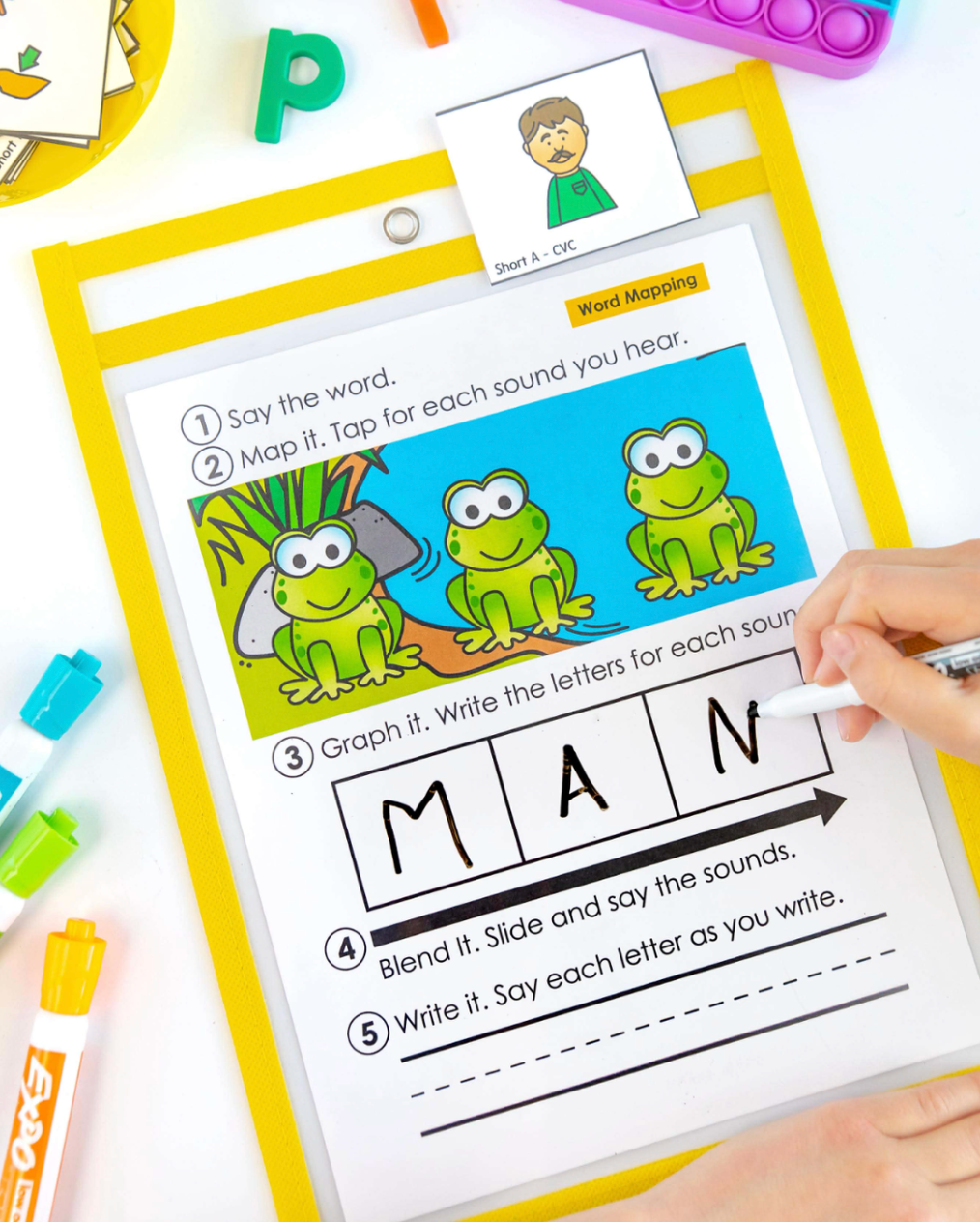
What Is Word Mapping?
Orthographic mapping is what happens in the brain.
Word mapping is what we do in instruction to support it.
Word mapping gives students a clear, structured routine to practice how words are stored.
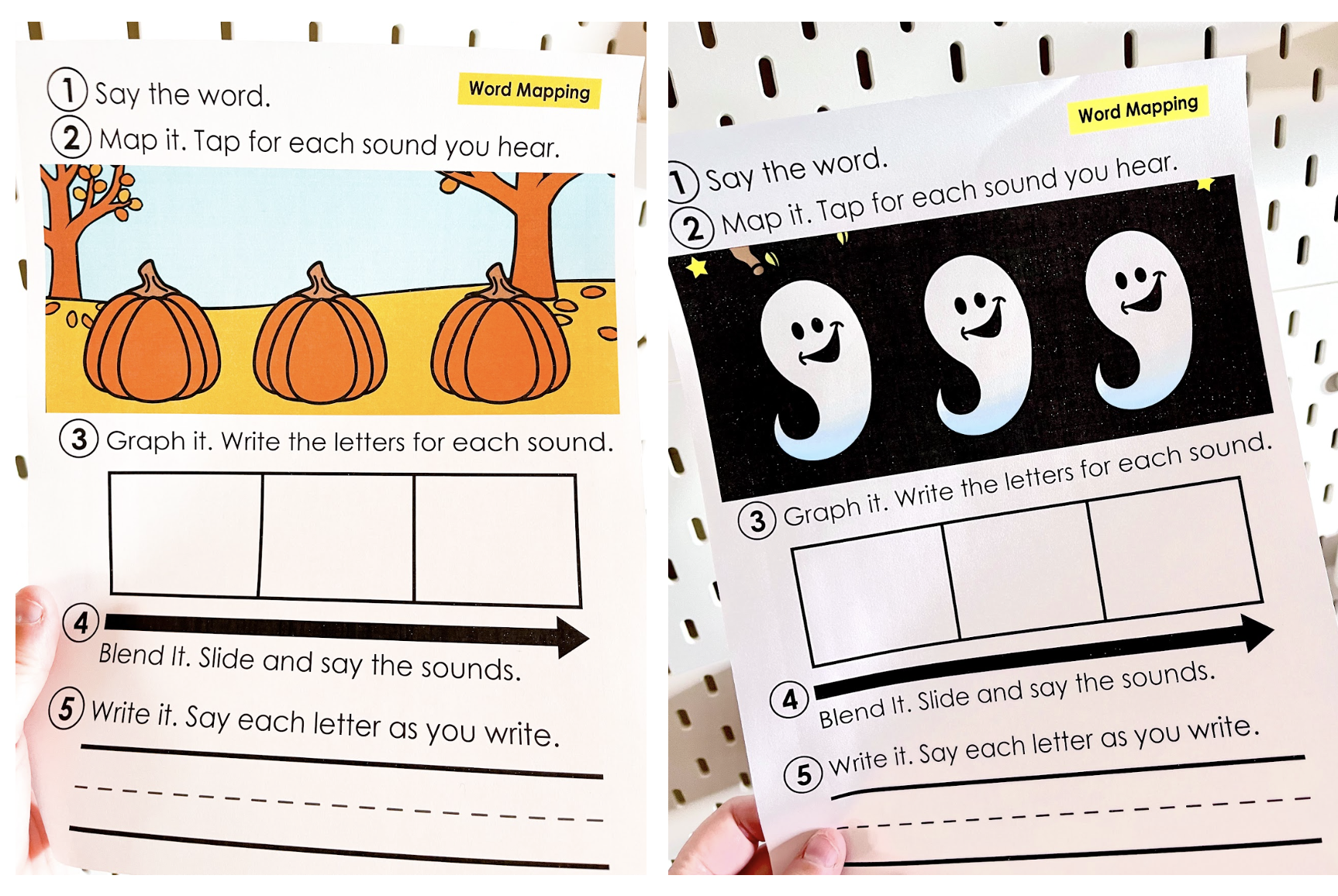
Instead of just looking at a word, students:
- say the word
- tap each sound
- connect each sound to a letter
- blend and write the word
This makes the invisible process of orthographic mapping visible and concrete.
Word Mapping Procedure
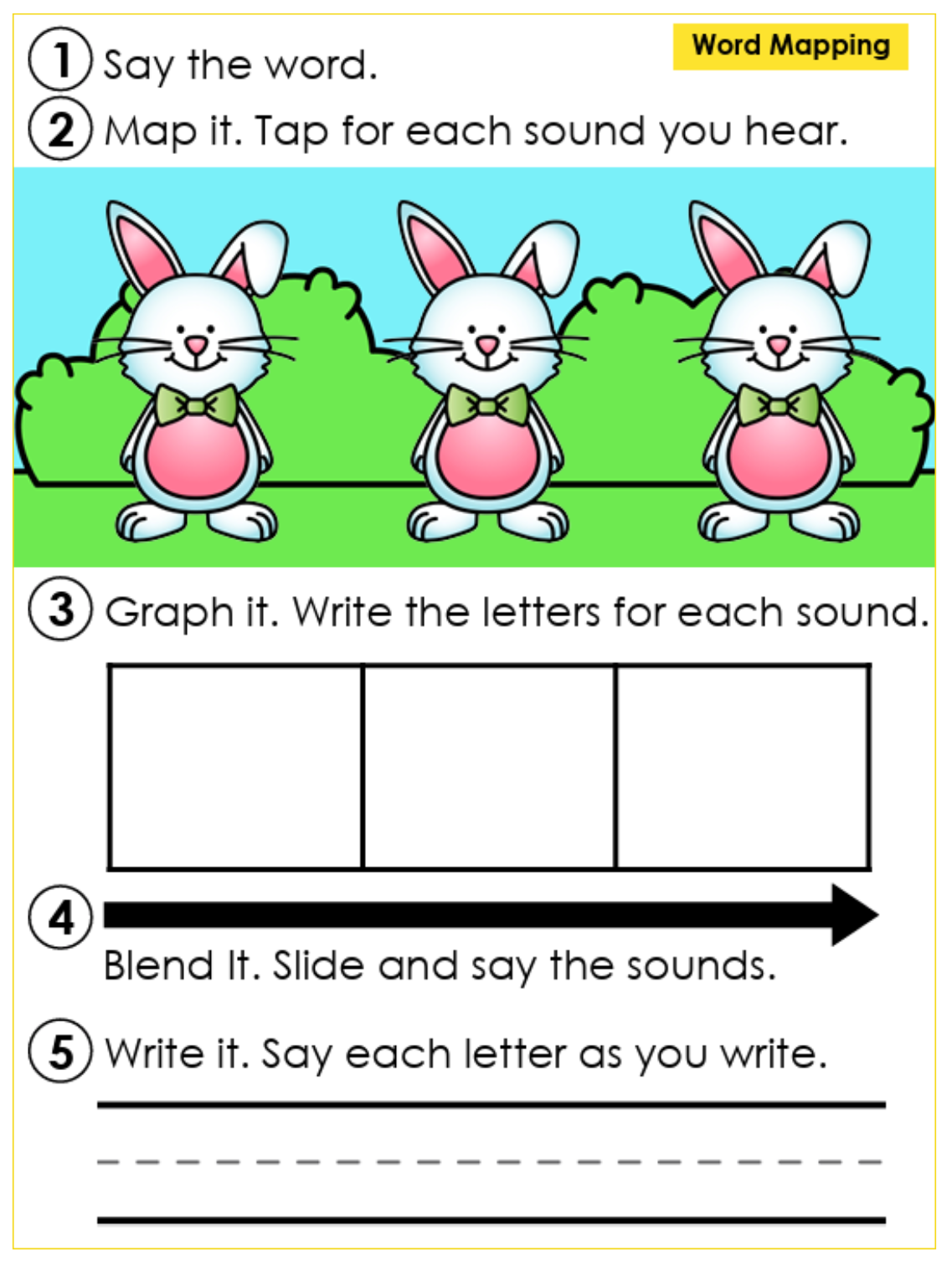
Step 1: Say the Word
Show a picture or say the word aloud.
Example: frog
Students repeat the word.
Quick meaning check:
“What is a frog?”
Step 2: Map the Sounds (Tap It)
Students tap a counter for each sound they hear.
/f/ /r/ /o/ /g/
One counter per sound.
Step 3: Graph the Sounds (Write It)
Students write the letters for each sound in the boxes on the mat.
This is where sound meets print.
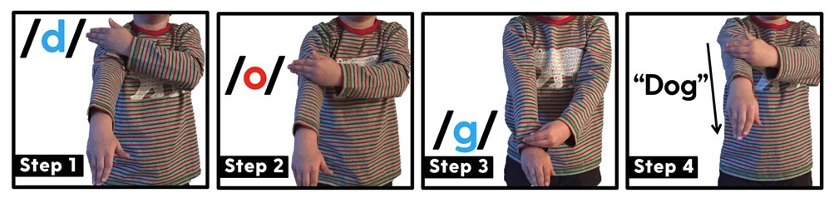
Step 4: Blend the Word
Students slide their finger and blend the word:
/ffrrrooog/ → frog
Encourage smooth blending.
Step 5: Write the Word
Students write the full word on the line.
They say each sound as they write.
Step 6: Repeat with Additional Words
Repeat the routine with 3–5 words.
Short, consistent practice helps words stick.
Why This Routine Works
This routine directly supports orthographic mapping.
Students are:
- Connecting phonemes to graphemes explicitly
- Strengthening phonemic awareness
- Linking words to meaning
- Building automatic word recognition
Instead of memorizing, students are building a system for learning words.
Tips for Using This Routine in the Classroom
This routine works well in a variety of settings.
Whole Group
Model the routine using a large mat or board.
Small Group
Provide immediate feedback and adjust pacing.
Intervention
Slow it down and increase support with tapping and segmenting.
Centers or Independent Work
Students can work with partners using picture cards and mats.
Here Are Your Materials for This Routine
You can use these word mapping materials below to try this routine with your students today.
- Summer Word Mapping Mats – Free Download (PDF)
- Fall Word Mapping Mats – Free Download (PDF)
- Winter Word Mapping Mats – Free Download (PDF)
- Spring Word Mapping Mats – Free Download (PDF)
- Summer Word Mapping Mats – Member Only (PDF)
- Fall Word Mapping Mats – Member Only (PDF)
- Winter Word Mapping Mats – Member Only (PDF)
- Spring Word Mapping Mats – Member Only (PDF)
- Anytime Word Mapping Mats – Member Only (PDF)
Final Thoughts
If students are forgetting words, it’s not a memory problem.
It’s a mapping problem.
Orthographic mapping is what allows words to move from:
effortful decoding → instant recognition
And word mapping gives students a clear, repeatable way to make that happen.
This is how we move from sounding out words to automatic, fluent reading.
To gain unlimited access to all of our literacy and writing content, join the Literacy Teacher Community!
Here you will find hundreds of literacy and writing lessons, a community of teachers for support, and literacy and writing materials that are always up to date with the latest research.
Simply click the image below to get all of our lessons and resources.
If you’d like access to the resources I share about in this blog post, along with all of my other literacy and writing resources, you can find everything inside Literacy All-Access.
Inside the membership, you’ll find a wide range of structured, engaging literacy resources designed to support your phonics instruction—from decodable passages and targeted practice activities to small group tools and lesson supports—so you can spend less time creating and more time teaching.