How to Teach Syllable Types and Syllable Division (Step-by-Step Routine)

A clear, structured routine for teaching syllables using I Do, We Do, You Do
If your students struggle with longer words, the issue often starts here:
👉 They don’t fully understand syllables.
Without this foundation, students:
- Guess at longer words
- Skip parts of words
- Struggle with decoding accuracy
In a Science of Reading classroom, syllables are not optional.
They are a core part of decoding instruction.
Below is a step-by-step routine you can use in your classroom.
Syllable Instruction Learning Objective
Students will identify syllables, understand vowel patterns, and apply this knowledge to decode words.
Here Are Your Syllable Instruction Materials
You can use the resources below to begin teaching syllable awareness, types, and division.
- Syllable Awareness Lesson + Practice Pages – Free Download (PDF)
- Closed Syllable Lesson + Practice Pages – Free Download (PDF)
- Open Syllables – Member Only (PDF)
- Silent e (VCE) Syllables – Member Only (PDF)
- Vowel Team Syllables – Member Only (PDF)
- R-Controlled Syllables – Member Only (PDF)
- Consonant-le Syllables – Member Only (PDF)
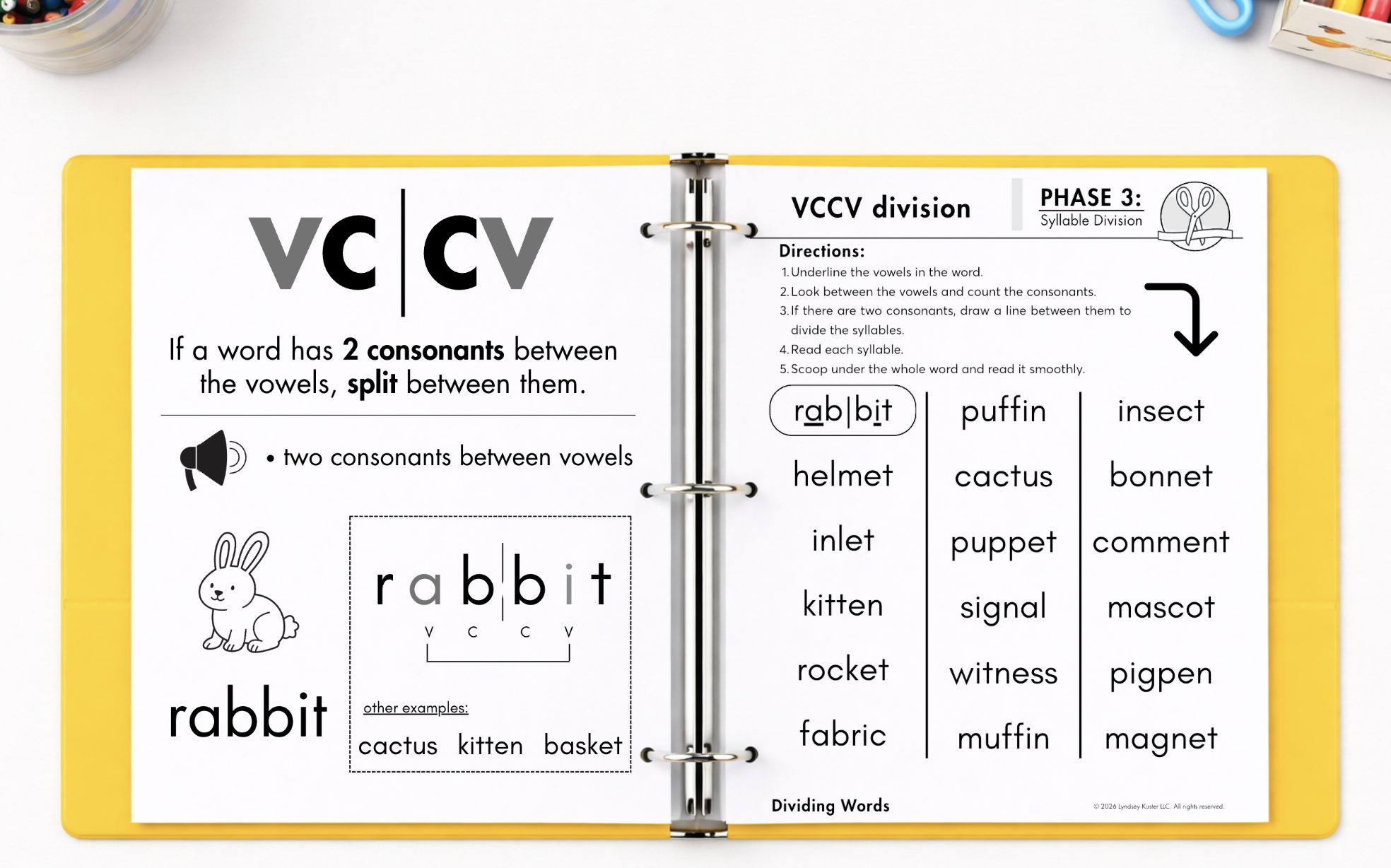
- VCCV Division – Member Only (PDF)
- V/CV Division – Member Only (PDF)
- VC/V Division – Member Only (PDF)
- Consonant + le Division – Member Only (PDF)
- VCCCV Division – Member Only (PDF)
- Syllable Practice Game – Member Only (PDF)
- Syllable Assessments – Member Only (PDF)
Materials Needed
Here are the materials you will need for this activity:
- Word list (1–2 syllable words)
- Whiteboard or paper
- Pencil
Optional:
- Mirror (for mouth movement awareness)
- Counters or fingers for tapping
- Syllable practice pages
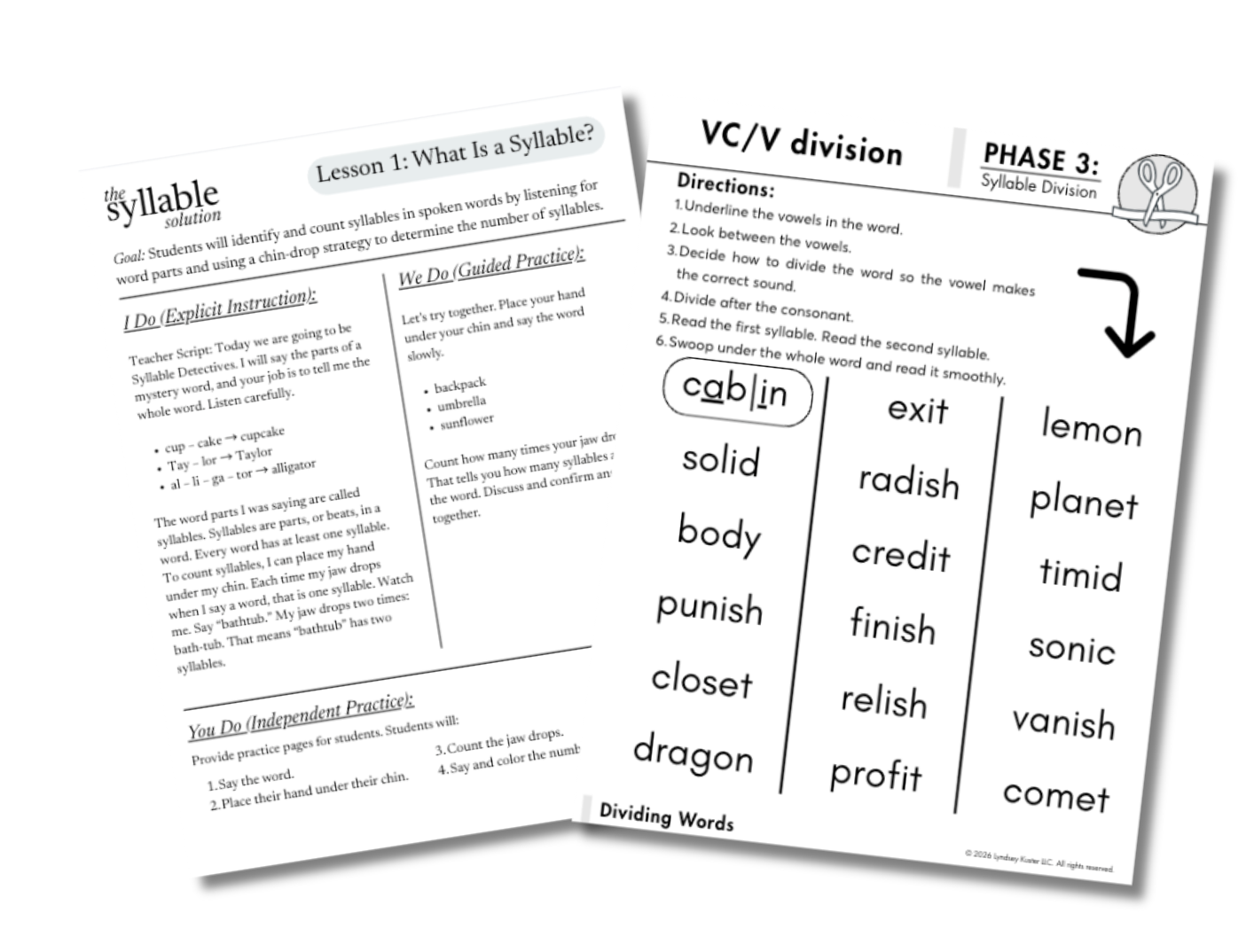
What Is a Syllable?
A syllable is one unit of sound in a word.
👉 Every syllable has a vowel sound.
Syllable Awareness Routine
Below is a simple routine to build syllable awareness.
Step 1: Chin Counting
Have students place their hand under their chin.
Say a word:
👉 “napkin”
Students feel their chin drop:
👉 nap – kin (2 drops = 2 syllables)
Step 2: Clap or Tap
Students:
- Clap each syllable
- Tap each syllable
👉 This builds auditory awareness.
Step 3: Connect to Vowels
Show the word:
👉 napkin
Ask:
👉 “How many vowels do we see?”
Students identify:
👉 a, i → 2 syllables
Closed Syllable Lesson (Example Routine)
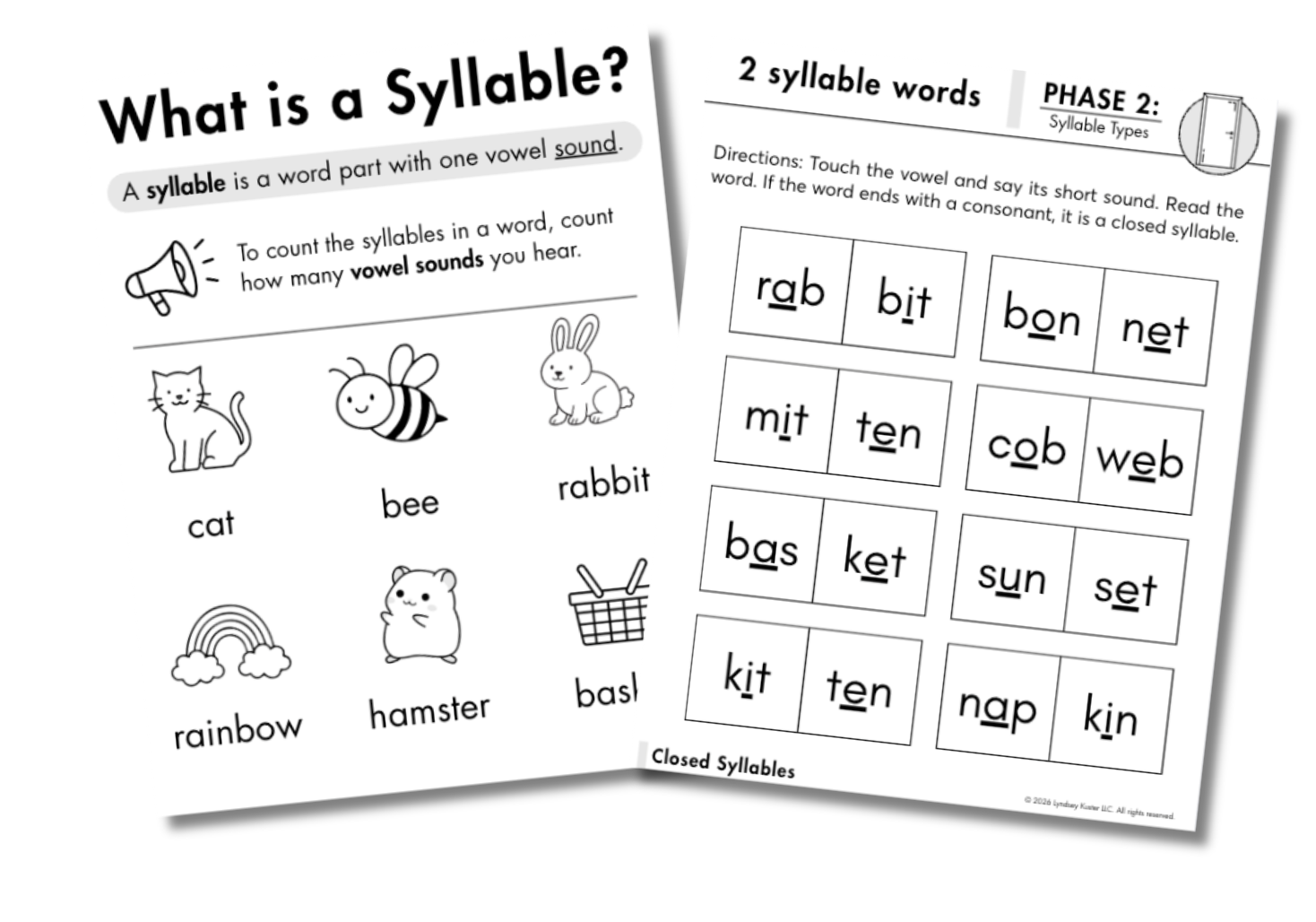
Now we move into actual instruction.
Step 1: Teach the Pattern
Explain:
👉 A closed syllable has a vowel followed by a consonant
👉 The vowel is short
Example:
👉 cat
👉 nap
👉 sit
Step 2: Model the Thinking (I Do)
Say:
“Watch me.”
Write:
👉 cat
Think aloud:
- I see one vowel
- It is followed by a consonant
- That makes it a closed syllable
- The vowel is short
Read:
👉 /c/ /a/ /t/ → cat
Step 3: Practice Together (We Do)
Write:
👉 map
Ask:
- “What vowel do we see?”
- “Is it followed by a consonant?”
Guide students to:
👉 closed syllable → short vowel
Read together:
👉 map
Step 4: Student Practice (You Do)
Give students a word:
👉 lip
Students:
- Identify vowel
- Determine syllable type
- Read the word
How This Builds Over Time
Once students understand syllables, instruction expands into three phases.
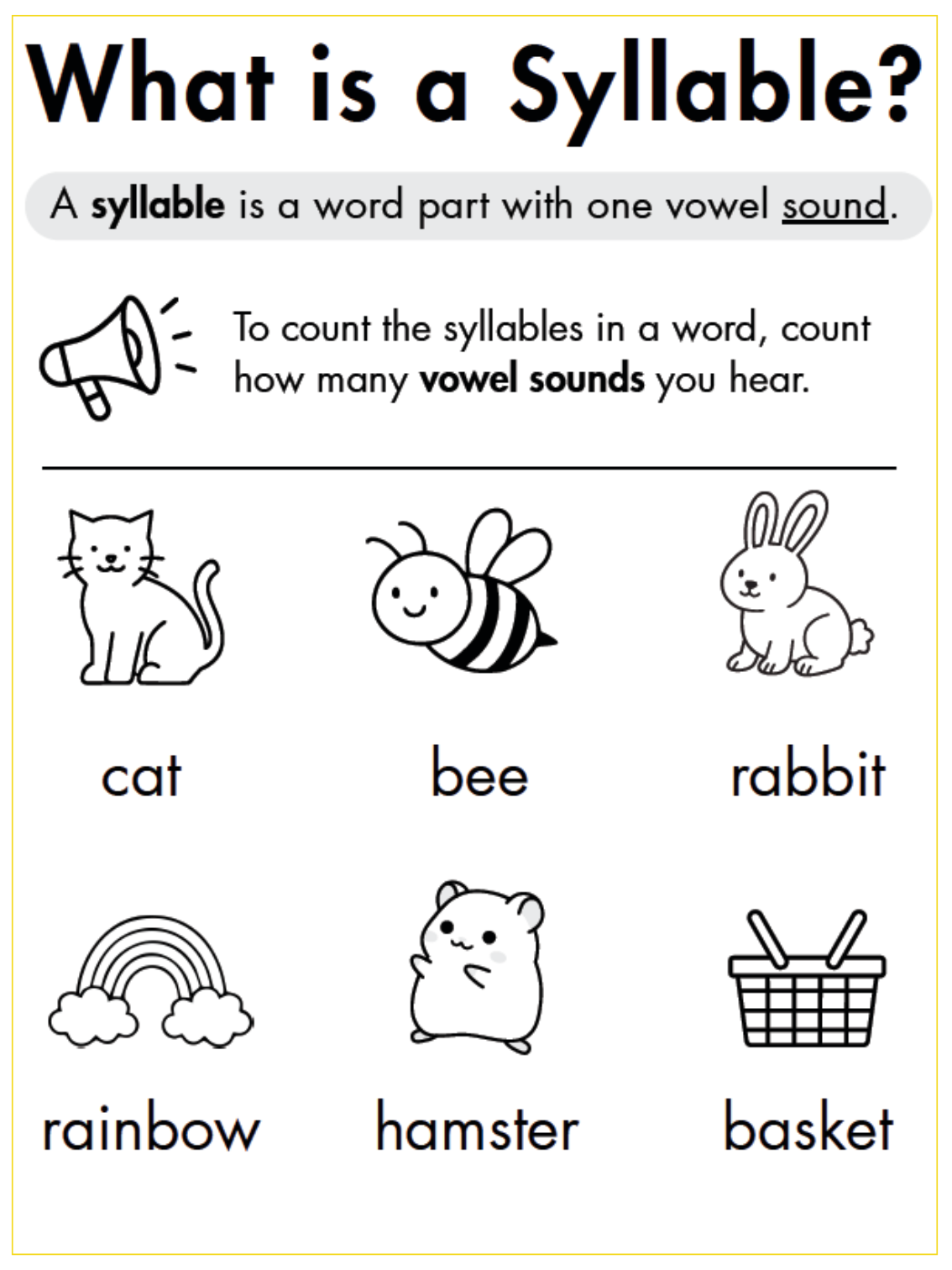
Phase 1: Syllable Awareness
Students learn:
- What a syllable is
- How to count syllables
- That each syllable has a vowel sound
Phase 2: Syllable Types
Students learn:
- Closed syllables
- Open syllables
- Silent e (VCE)
- Vowel teams
- R-controlled
- Consonant-le
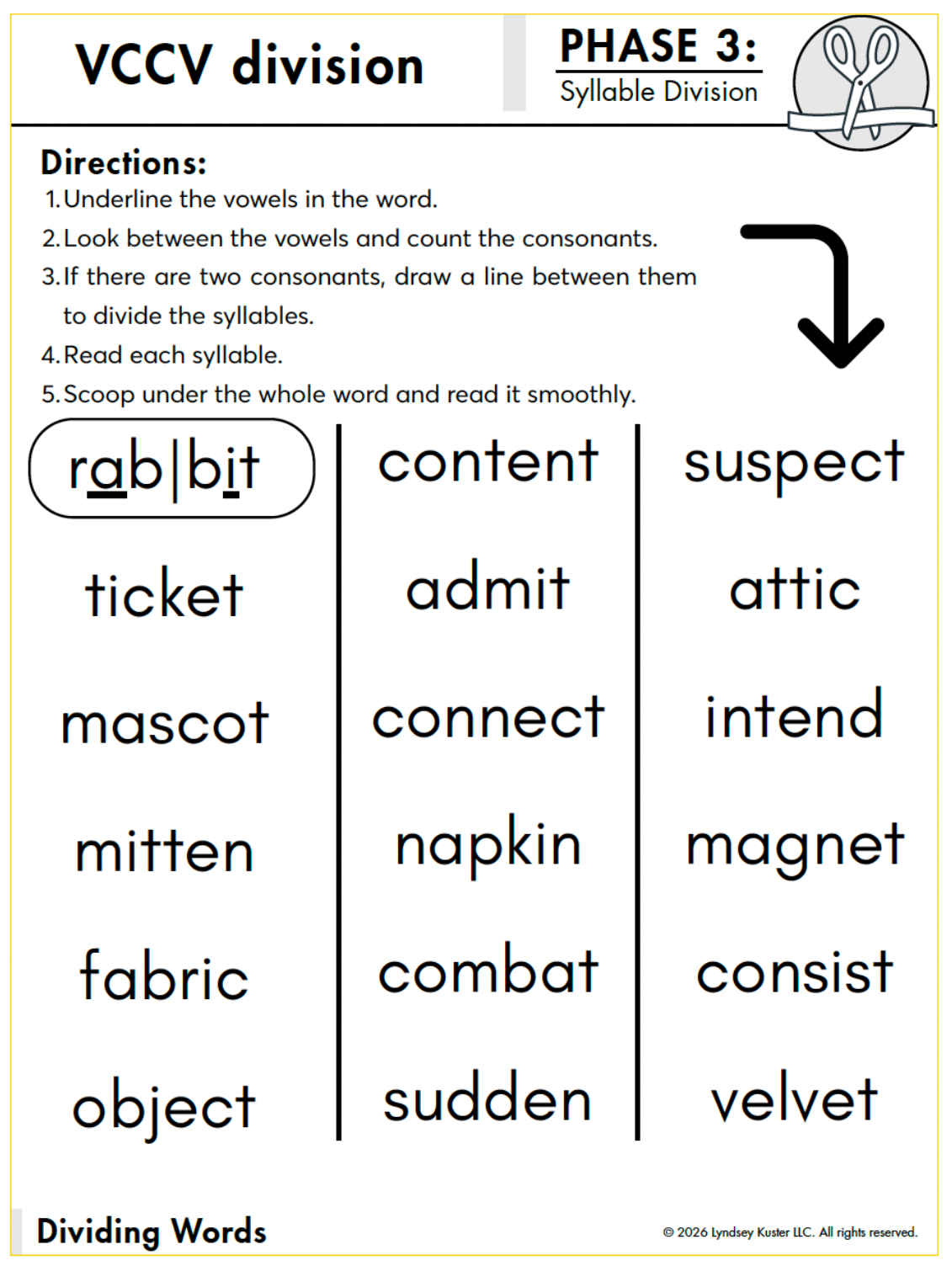
Phase 3: Syllable Division
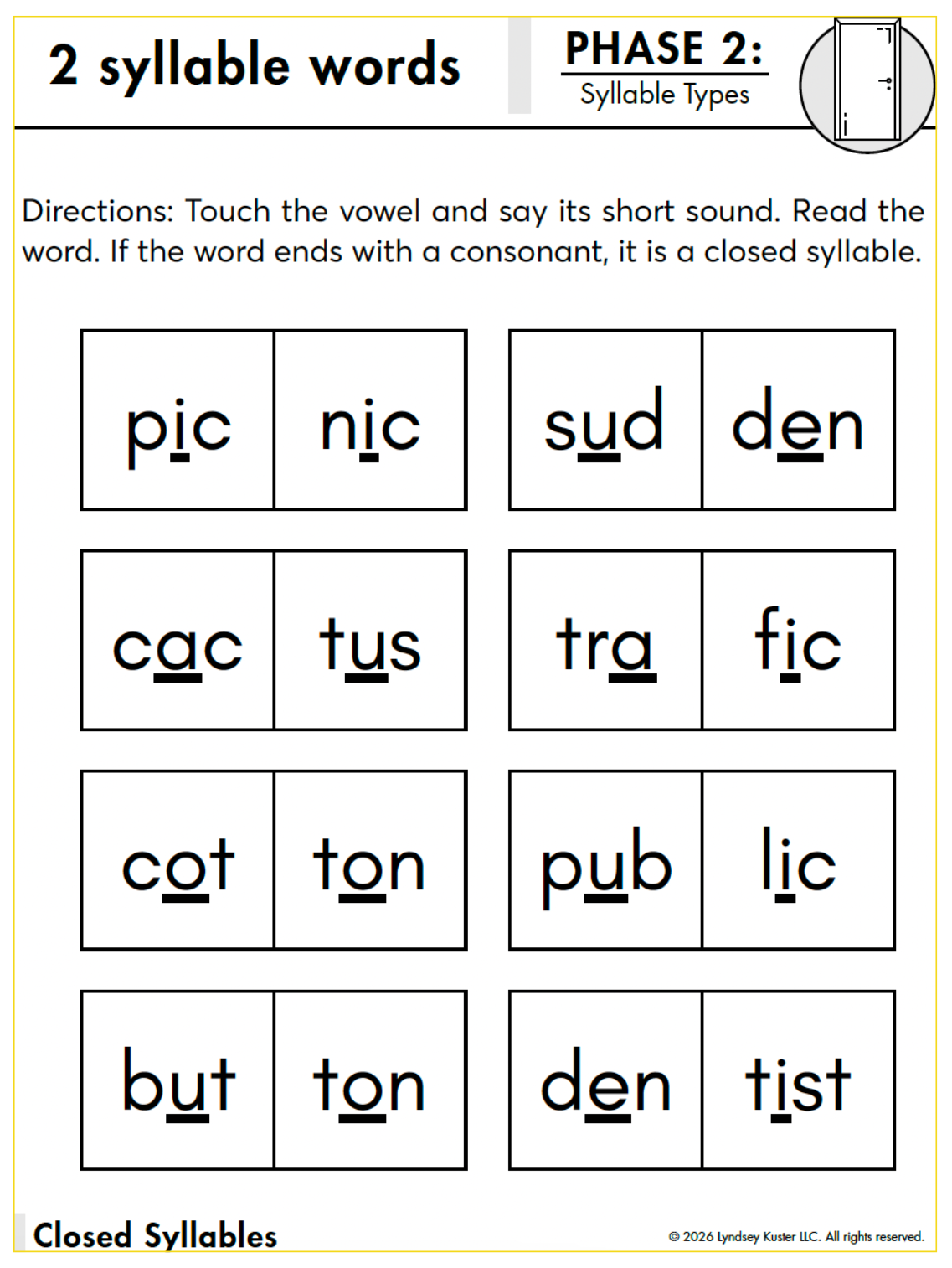
Students learn how to break apart longer words using patterns:
- VCCV
- V/CV
- VC/V
- Consonant + le
- VCCCV
👉 This is where students begin decoding multisyllabic words.
Why This Routine Works
This routine works because it is:
- Explicit
- Structured
- Repeatable
Students:
- See exactly what to do
- Practice with support
- Apply skills independently
The I Do, We Do, You Do model ensures students are never expected to do something they haven’t seen first.
Tips for Using This Routine in the Classroom
This routine works across your literacy block.
Whole Group
Introduce and model new syllable concepts.
Small Group
Provide targeted support and guided practice.
Intervention
Focus on one concept at a time (especially awareness + closed syllables).
Centers or Independent Work
Students practice identifying syllables and reading words.
Final Thoughts
Syllable instruction is the bridge between:
👉 simple words
👉 and fluent reading of longer words
When students understand:
- what a syllable is
- how vowels work
- how to apply patterns
They gain the tools they need to decode with confidence.
Here Are Your Syllable Instruction Materials
You can use the resources below to begin teaching syllable awareness, types, and division.
- Syllable Awareness Lesson + Practice Pages – Free Download (PDF)
- Closed Syllable Lesson + Practice Pages – Free Download (PDF)
- Open Syllables – Member Only (PDF)
- Silent e (VCE) Syllables – Member Only (PDF)
- Vowel Team Syllables – Member Only (PDF)
- R-Controlled Syllables – Member Only (PDF)
- Consonant-le Syllables – Member Only (PDF)
- VCCV Division – Member Only (PDF)
- V/CV Division – Member Only (PDF)
- VC/V Division – Member Only (PDF)
- Consonant + le Division – Member Only (PDF)
- VCCCV Division – Member Only (PDF)
- Syllable Practice Game – Member Only (PDF)
- Syllable Assessments – Member Only (PDF)
Want More Literacy Support and Resources?
To gain unlimited access to all of our literacy and writing content, join the Literacy Teacher Community!
Here you will find hundreds of literacy and writing lessons, a community of teachers for support, and literacy and writing materials that are always up to date with the latest research.
Simply click the image below to get all of our lessons and resources.
If you’d like access to the resources I share about in this blog post, along with all of my other literacy and writing resources, you can find everything inside Literacy All-Access.
Inside the membership, you’ll find a wide range of structured, engaging literacy resources designed to support your phonics instruction—from decodable passages and targeted practice activities to small group tools and lesson supports—so you can spend less time creating and more time teaching.