How to Use Phonics Assessments to Guide Your Instruction
A simple, step-by-step routine for assessing phonics skills and using the data to plan instruction
If you’ve ever given a phonics assessment and thought…
👉 “Okay… now what?”
You’re not alone.
Many teachers collect data but aren’t sure how to:
- Interpret it
- Use it to group students
- Turn it into clear next steps
Phonics assessments should not feel overwhelming or time-consuming.
When used well, they become one of the most powerful tools in your literacy block.
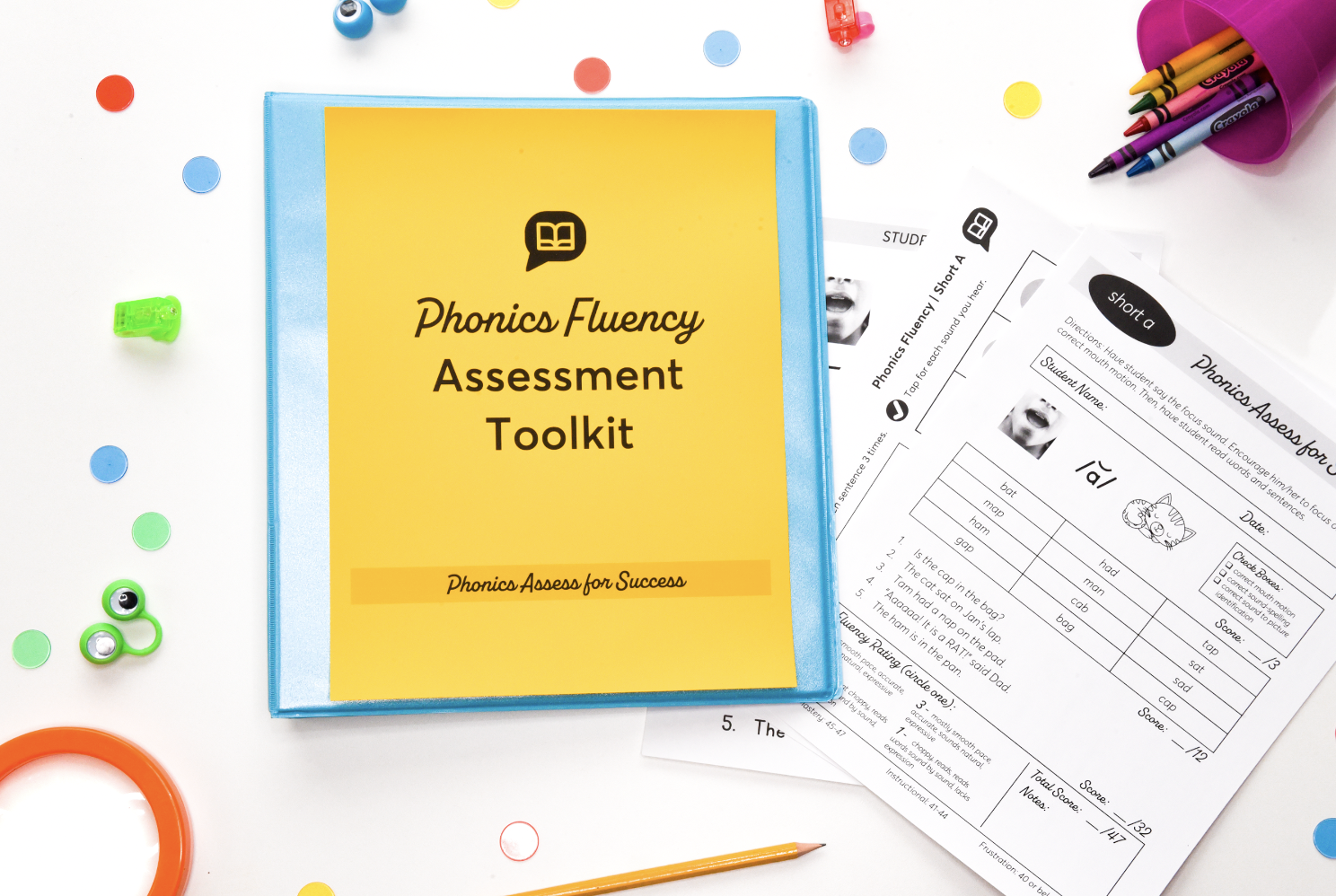
Phonics Assessment Learning Objective
Students will demonstrate their ability to apply phonics skills in isolation and connected text, allowing the teacher to identify strengths and instructional needs.
Materials Needed
Here are the materials you will need for this routine:
- Phonics assessment sheets (word list + sentence reading)
- Teacher recording sheet
- Pencil or clipboard
- Timer (optional)
Optional:
- Data tracking sheet
- Small group planning template
What Are Phonics Assessments?
Phonics assessments are quick, targeted tools used to understand:
- What phonics skills students have mastered
- What skills they are still developing
- How well they apply those skills in reading
Instead of guessing where to start instruction, assessments give you a clear starting point.
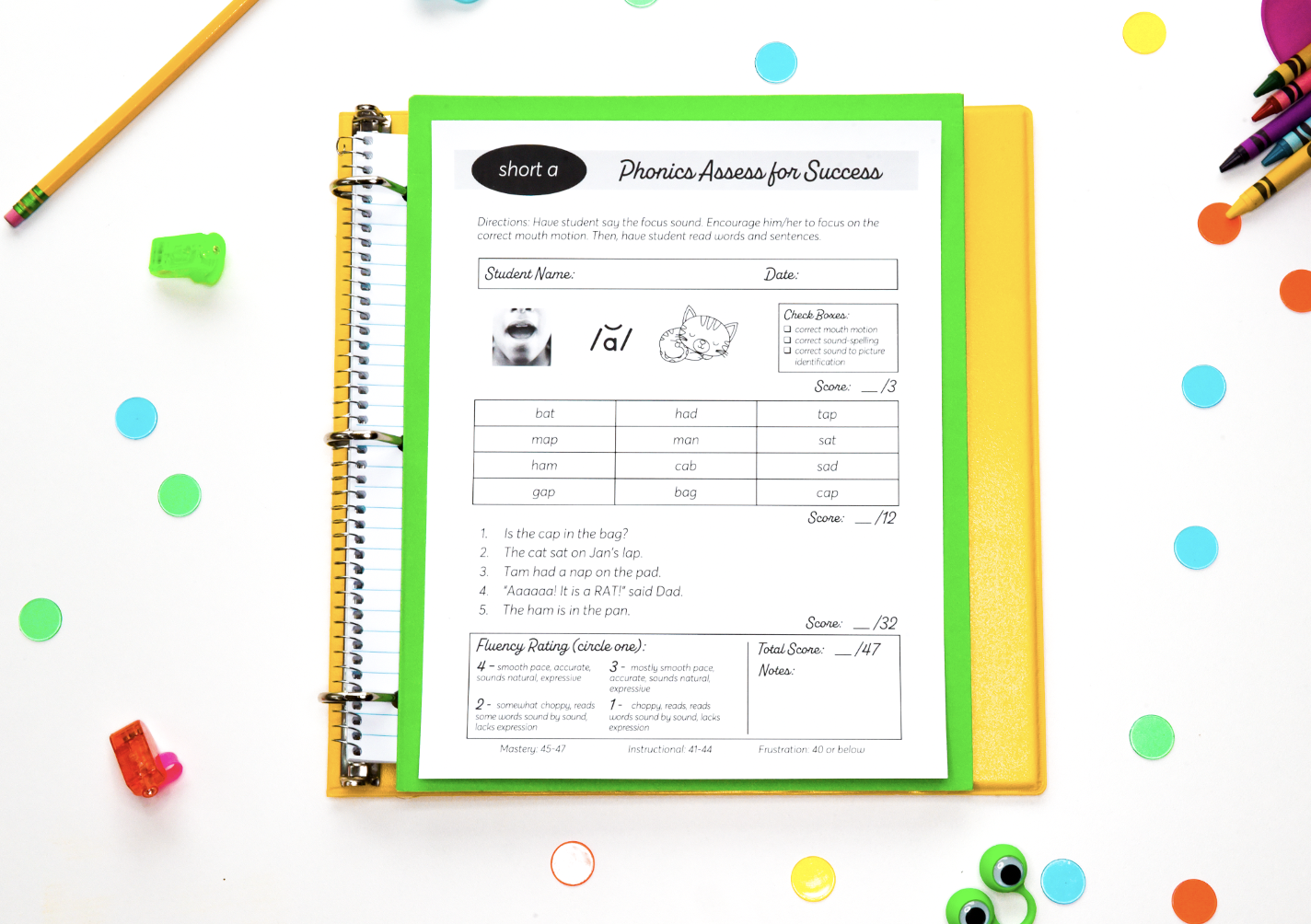
Phonics Assessment Procedure
Below is a step-by-step routine you can use to assess your students and immediately apply the data.
Step 1: Choose the Type of Assessment
There are two main types of phonics assessments:
Diagnostic (Beginning of Year or Unit)
Used to determine where students are in your scope and sequence.
Skill Check (After Instruction)
Used to measure how well students learned a specific skill.
👉 This step ensures your assessment has a clear purpose.
Here are your downloadable phonics assessments:
- Short A Assessments - Free Download (PDF)
- Short E Assessments - Free Download (PDF)
- Other CVC Assessments - Member Only (PDF)
- Beginning and Ending Blends - Member Only (PDF)
- Digraphs - Member Only (PDF)
- Long Vowels - Member Only (PDF)
- Vowel Teams - Member Only (PDF)
- R-Controlled Vowels - Member Only (PDF)
- Diphthongs - Member Only (PDF)
Step 2: Assess Students One-on-One
Sit with each student individually.
Have the student:
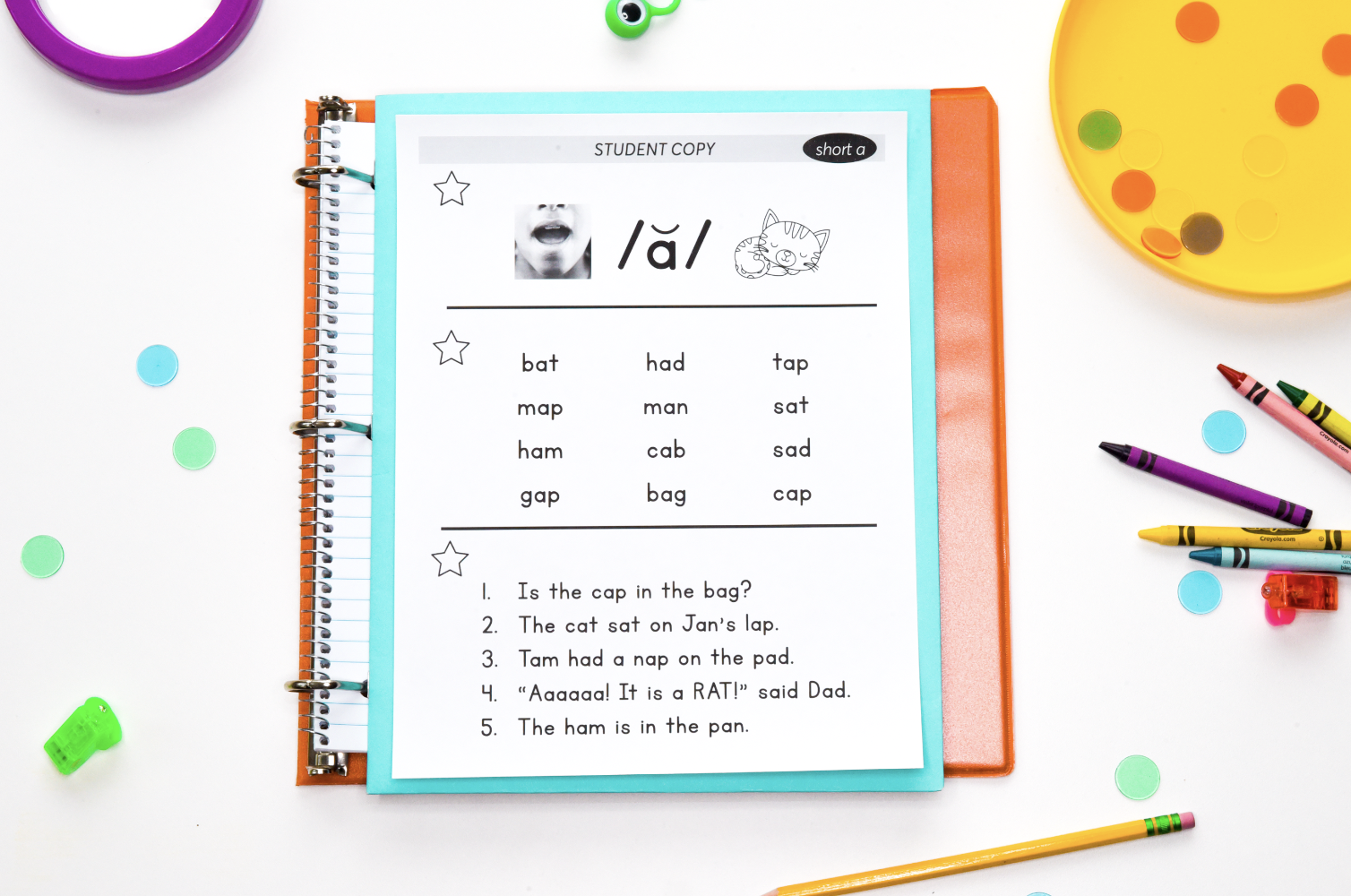
- Read words from their copy
- While you follow along on your teacher sheet
Avoid giving help unless necessary.
👉 This gives you an accurate picture of what the student can do independently.
Step 3: Use Two Types of Tasks
A strong phonics assessment includes:
Word Reading (controlled, decodable words)
- Shows decoding accuracy
- Reveals how well students are applying phonics skills
- Keeps the focus on patterns students have been explicitly taught
Sentence Reading (decodable text)
- Shows application of skills
- Gives insight into fluency and automaticity
This combination shows both skill + application
You may see some assessments use nonsense words.
In this routine, we focus on controlled, decodable words so students are applying real phonics skills within meaningful reading.
What This Looks Like in Practice
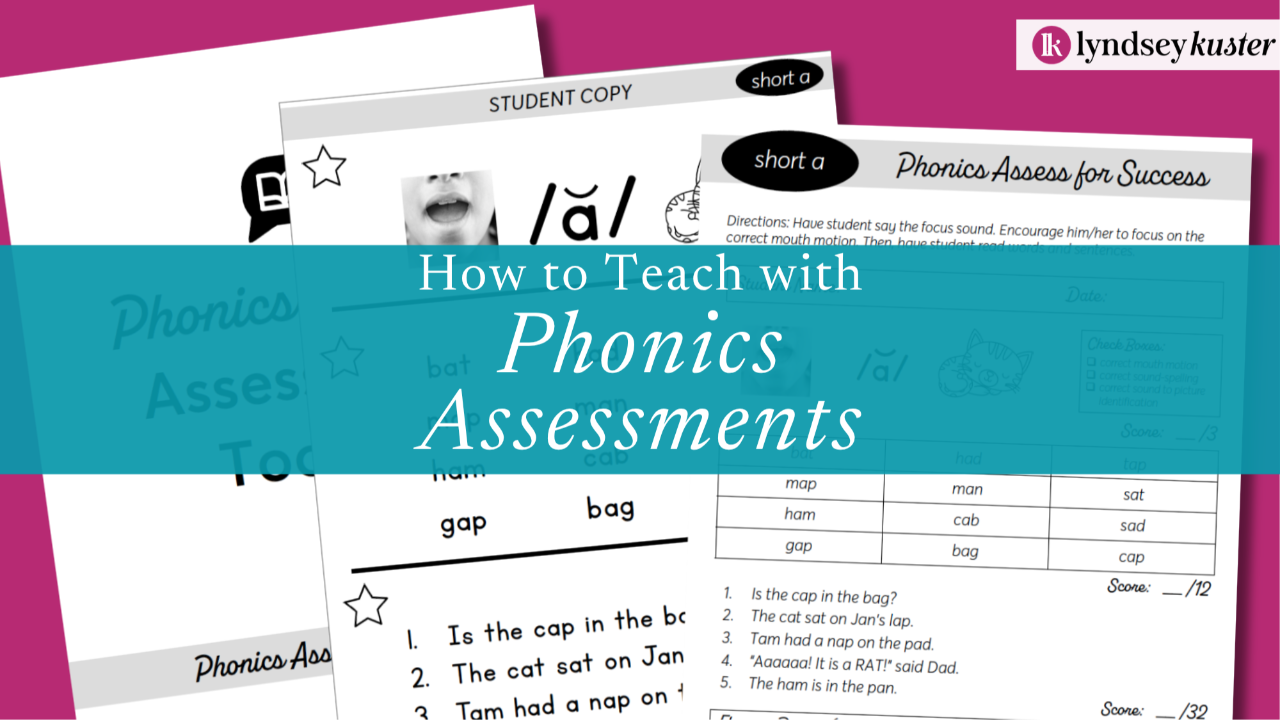
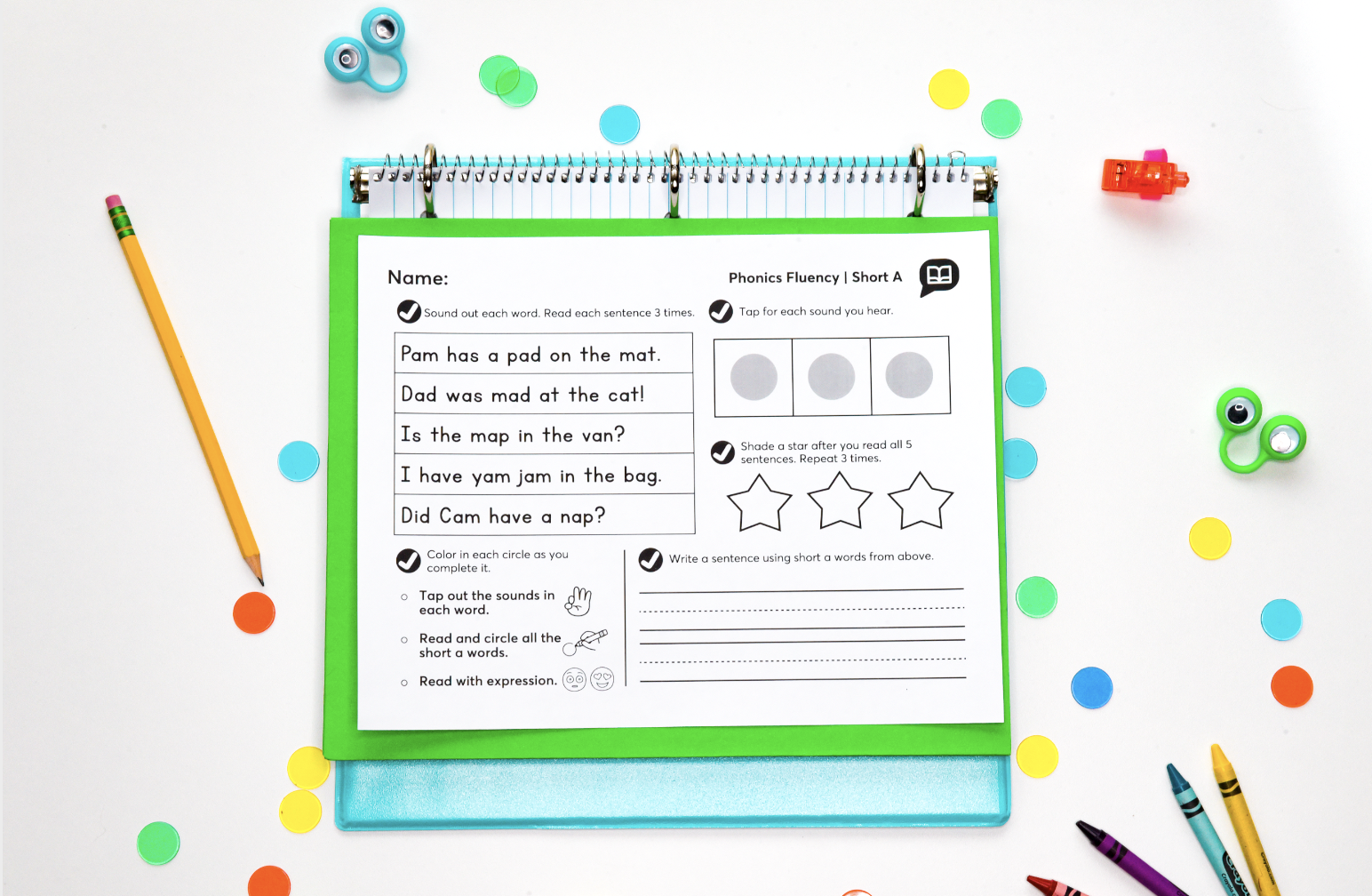
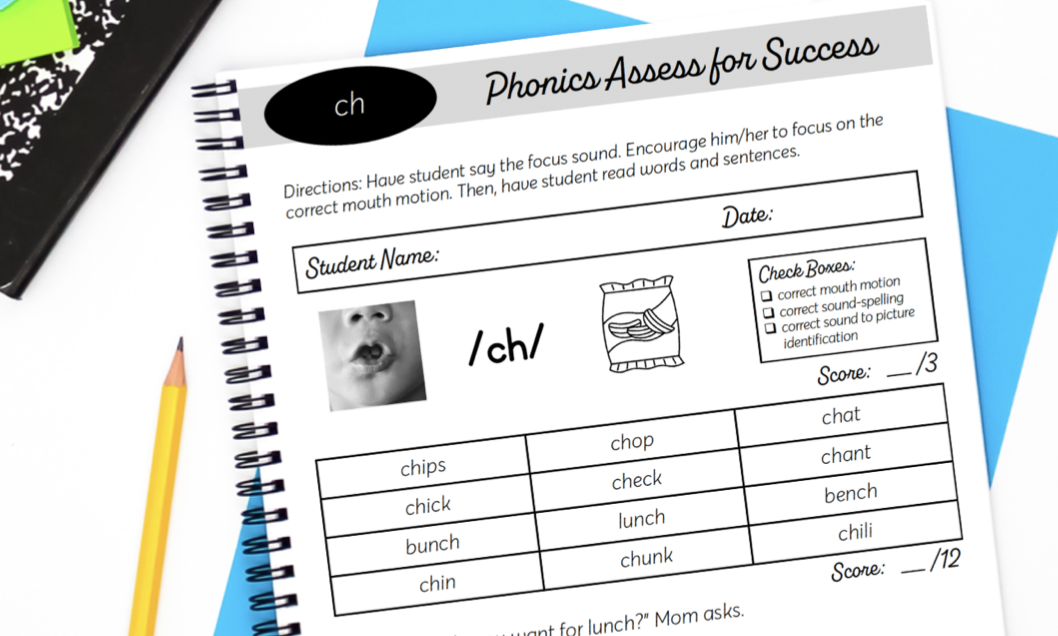
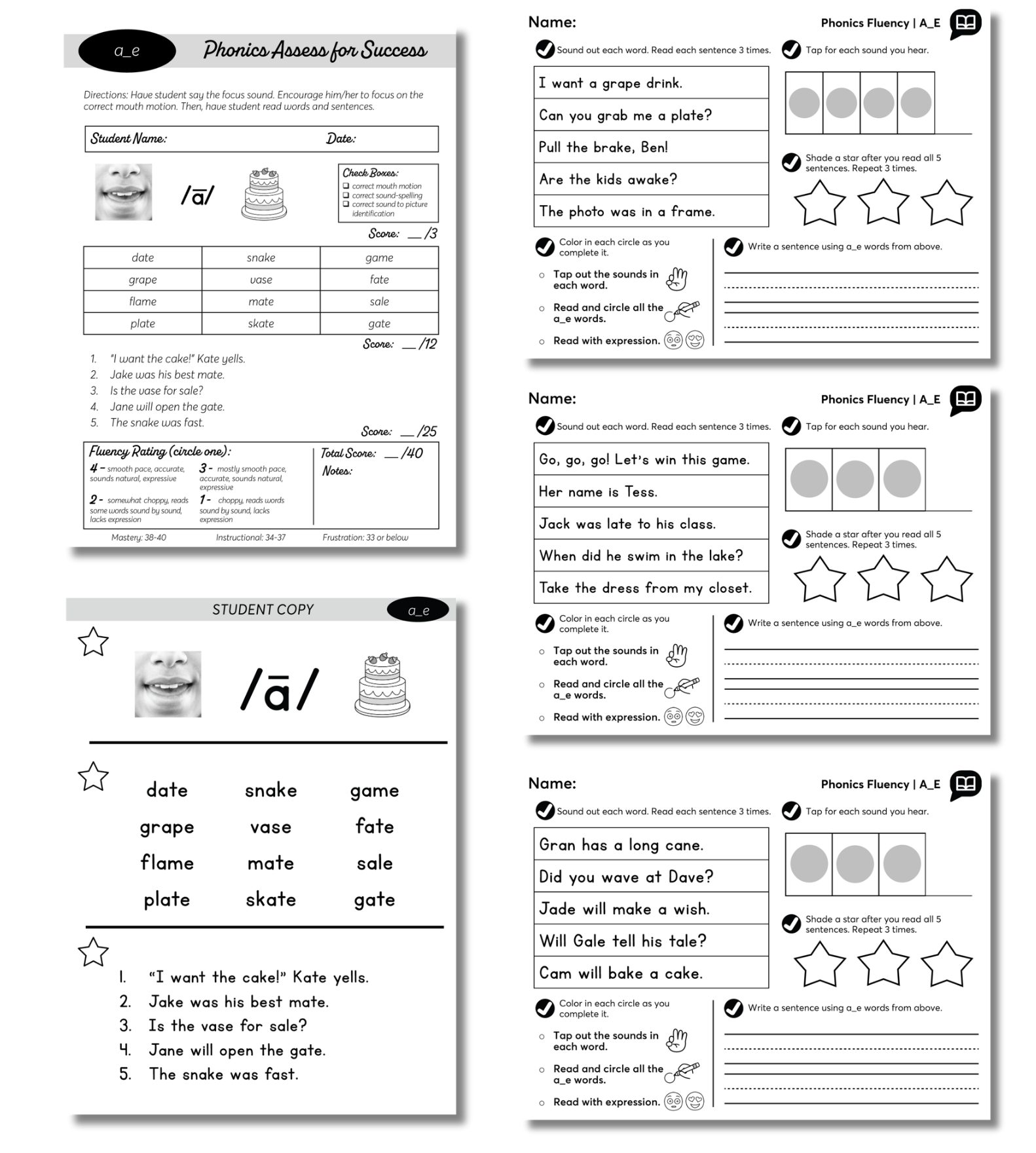
Here’s an example of what this type of assessment can look like in the classroom:
- A word reading section to check decoding
- A sentence reading section to check application and fluency
- A teacher recording sheet to capture exactly what students are doing
- A student copy to keep the process simple and consistent
This structure allows you to see:
✔ What students know
✔ How they are applying it
✔ Where instruction needs to go next
These assessments are designed to give you more than just a score.
They help you see exactly how your students are reading, so you can plan instruction with confidence.
Step 4: Observe and Take Notes
Don’t just mark correct or incorrect.
Pay attention to:
- The sounds students say for each letter
- How they blend sounds together
- Whether they read sound-by-sound or whole word
- Patterns in errors
For example:
- Vowel confusion (e/i, a/o)
- Trouble blending
- Guessing instead of decoding
👉 This is where the real data comes from.
When you assess phonics, you’re not just looking for right or wrong answers.
You’re looking for how students are reading.
This helps you figure out why they’re struggling… not just that they’re struggling.
Pay close attention to:
- Sound-symbol knowledge
Are they saying the correct sound for each letter? - Blending ability
Can they put the sounds together to read the word? - Automaticity
Are they quick and confident, or slow and effortful? - Reading strategy
Are they decoding sound-by-sound, using chunks, or guessing? - Phonics patterns
Are errors tied to a specific skill (like vowels, digraphs, or vowel teams)?
Because students are reading real, decodable words, you can clearly see whether they are applying the phonics skills you’ve taught, not just recognizing or memorizing words.
👉 This is the difference between collecting data… and actually using it
Step 5: Identify Patterns
After the assessment, look for patterns in student responses.
Ask yourself:
- Are errors consistent or random?
- Are they mixing up specific vowels or sounds?
- Are they saying sounds correctly but unable to blend?
- Are they accurate, but slow and not automatic?
- Are errors tied to a specific phonics pattern?
👉 Patterns matter more than percentages
A student with 75% accuracy could need very different instruction depending on why they made errors.
Step 6: Plan Your Instruction
Use what you noticed to guide your next steps:
- Incorrect sounds for letters →
Focus on sound-symbol instruction and review specific graphemes - Can’t blend sounds →
Target phonemic awareness (blending + segmenting) - Consistent vowel confusion →
Reteach and practice specific vowel sounds - Accurate but slow →
Increase repeated reading and decoding practice for automaticity - Errors tied to a pattern (silent e, vowel teams, etc.) →
Teach or reteach that phonics pattern explicitly
Different errors = different instruction
What This Might Look Like in Real Life
A student reads most words correctly…
…but pauses between each sound:
/ c / … / a / … / t /
This tells you:
✔ They know the sounds
❌ They are not automatic yet
Next step:
→ Provide repeated decoding practice to build fluency
Why This Routine Works
This routine works because it keeps assessment simple and purposeful.
Students are:
- Assessed in a low-pressure, one-on-one setting
- Given tasks that show true decoding ability
- Observed for patterns, not just scores
Teachers are able to:
- Quickly identify gaps
- Group students effectively
- Plan targeted instruction
Here are your downloadable phonics assessments:
- Short A Assessments - Free Download (PDF)
- Short E Assessments - Free Download (PDF)
- Other CVC Assessments - Member Only (PDF)
- Beginning and Ending Blends - Member Only (PDF)
- Digraphs - Member Only (PDF)
- Long Vowels - Member Only (PDF)
- Vowel Teams - Member Only (PDF)
- R-Controlled Vowels - Member Only (PDF)
- Diphthongs - Member Only (PDF)
Tips for Using Phonics Assessments in the Classroom
This routine works best when it becomes part of your regular system.
Beginning of Year
Use a diagnostic assessment to determine starting points.
After Each Skill
Use quick skill checks to monitor progress.
Small Group Instruction
Use data to group students and plan targeted lessons.
Progress Monitoring
Reassess to track growth over time.
Final Thoughts
Most phonics assessment data gets underused.
Not because teachers don’t care…
…but because they were never shown what to look for.
When you shift from:
“Did they get it right?” to “What is this telling me about their reading?”
Everything changes.
Phonics assessments don’t need to be complicated.
When you focus on:
- clear purpose
- simple routines
- meaningful observations
They become one of the most powerful tools in your teaching.
The goal isn’t just to collect data.
It’s to use that data to help your students grow.
Want More Literacy Support and Resources?
To gain unlimited access to all of our literacy and writing content, join the Literacy Teacher Community!
Here you will find hundreds of literacy and writing lessons, a community of teachers for support, and literacy and writing materials that are always up to date with the latest research.
Simply click the image below to get all of our lessons and resources.
If you’d like access to the resources I share about in this blog post, along with all of my other literacy and writing resources, you can find everything inside Literacy All-Access.
Inside the membership, you’ll find a wide range of structured, engaging literacy resources designed to support your phonics instruction—from decodable passages and targeted practice activities to small group tools and lesson supports—so you can spend less time creating and more time teaching.