How to Use Sentence Pyramids for Fluency in a Science of Reading Classroom
A step-by-step routine for building fluency, accuracy, and confidence with decodable sentences
If your students can read words… but struggle to read full sentences smoothly, you’re not alone.
This is a super common gap.
Students may be able to decode individual words, but when those words are placed into a sentence, they:
- Slow way down
- Lose meaning
- Guess or skip words
- Read without fluency
In a Science of Reading classroom, we want students to move from word-level decoding → connected, fluent reading.
That’s exactly what sentence pyramids help with.
Below is a step-by-step routine you can use in your classroom.
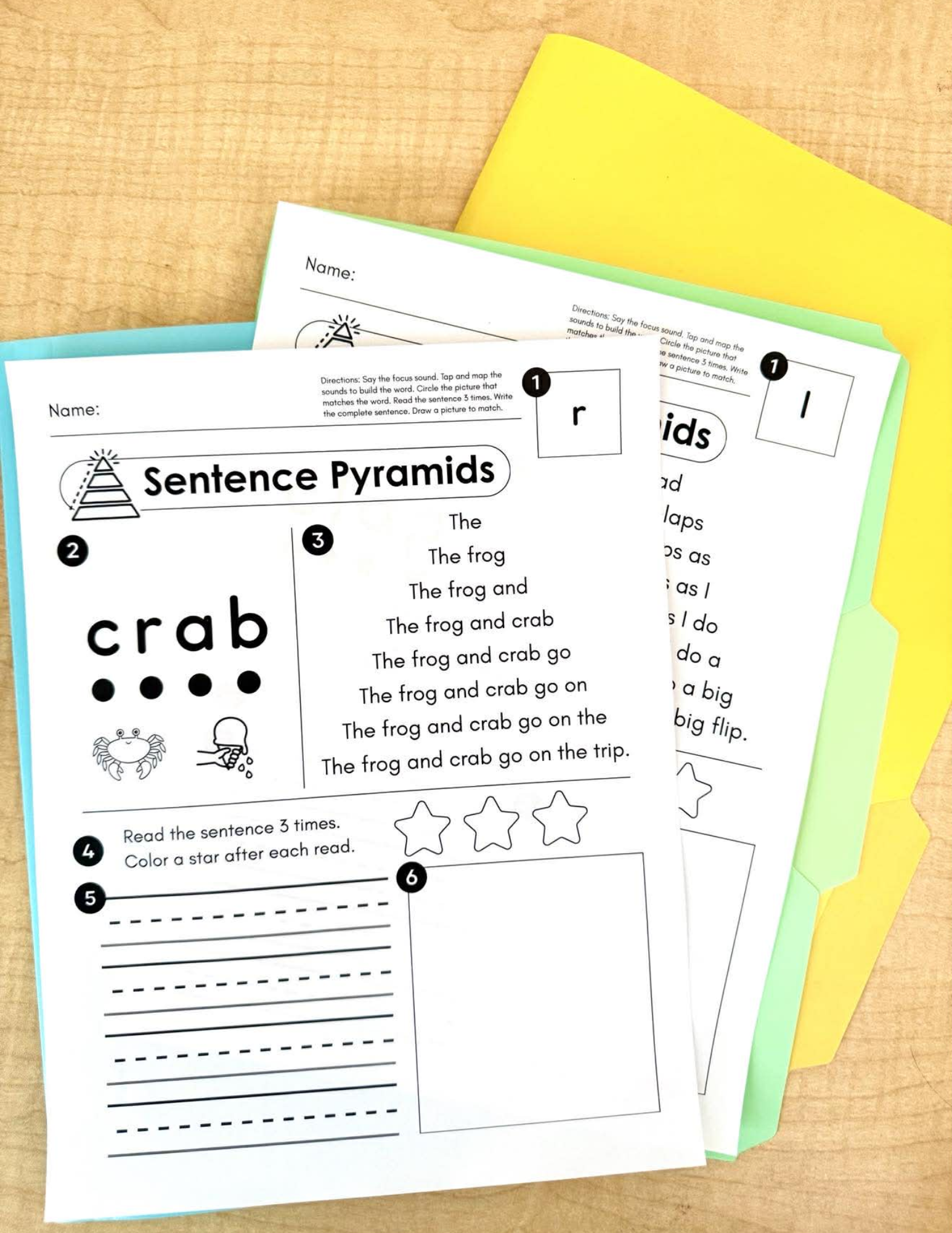
Sentence Pyramid Learning Objective
Students will read and build sentences word-by-word to improve fluency, accuracy, and comprehension.
Materials Needed
Here are the materials you will need for this activity:
- Sentence pyramid sheet (aligned to your phonics skill)
- Dry erase markers or pencils
- Highlighters or crayons
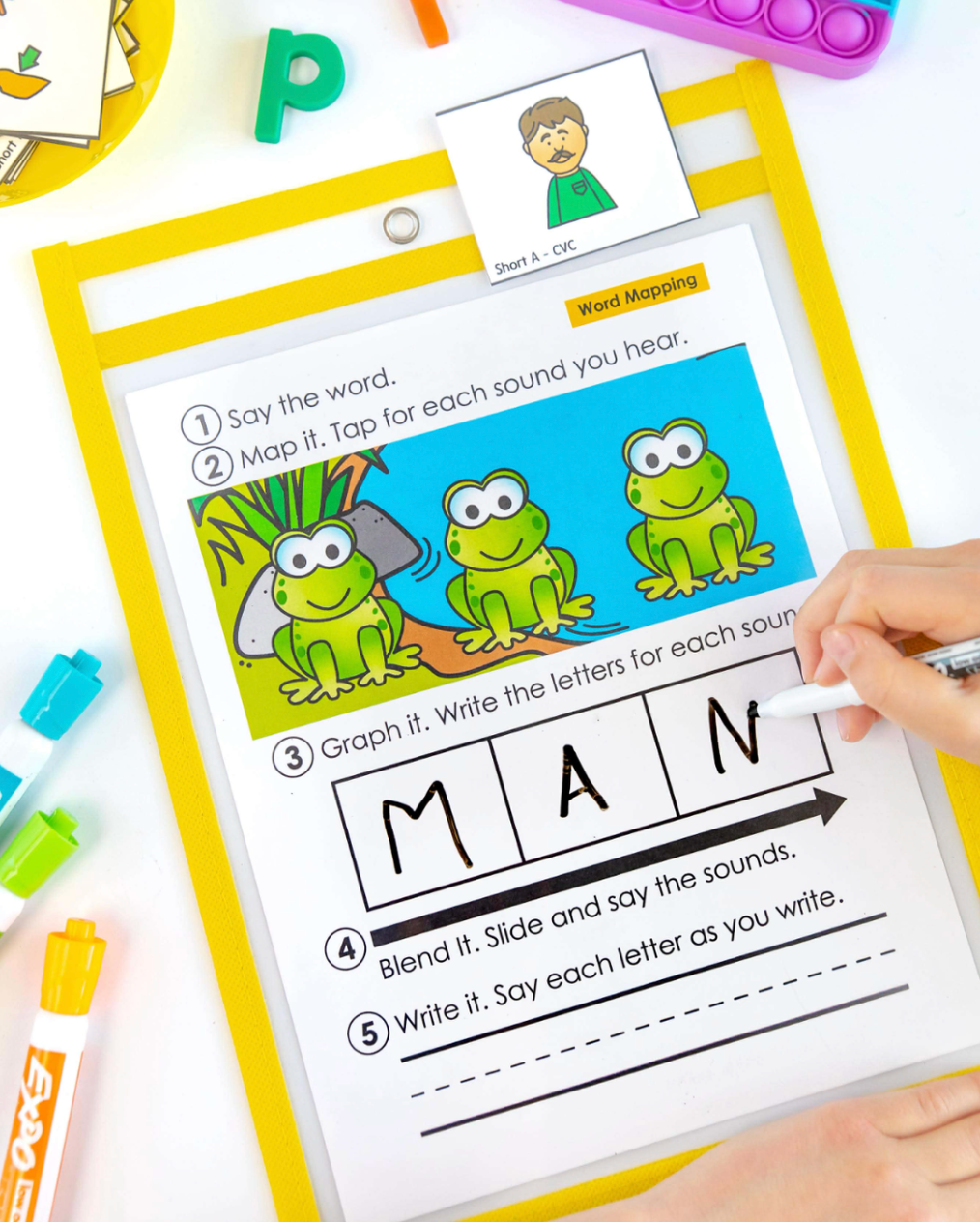
- Optional: word mapping mats (for support)
Optional:
- Pocket chart
- Sentence strips
- Decodable word lists
What Are Sentence Pyramids?
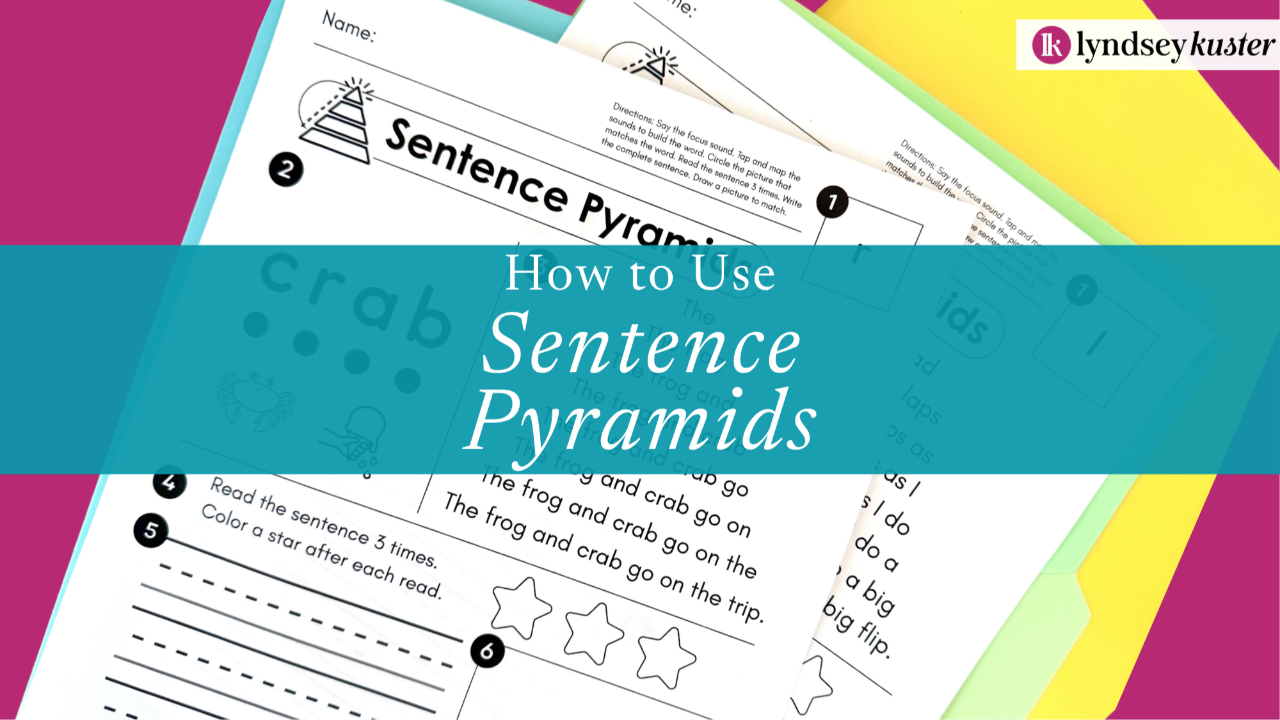
Sentence pyramids are a structured reading routine where students build a sentence one word at a time.
Instead of reading the full sentence all at once, students read:
- One word
- Then two words
- Then three words
- Until they reach the full sentence
This gradual build supports:
- Fluency
- Confidence
- Accuracy
- Comprehension
It allows students to successfully read longer sentences without feeling overwhelmed.
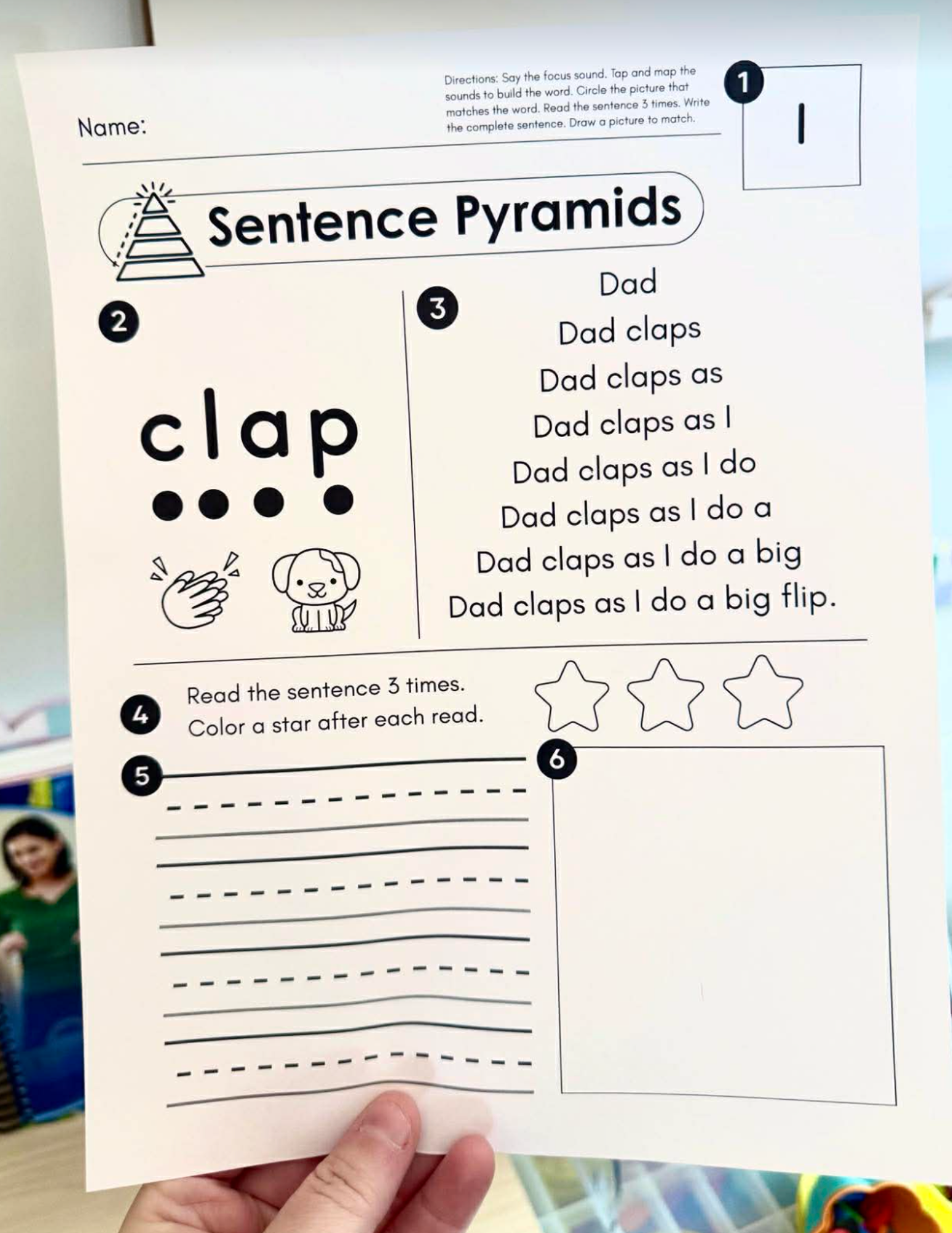
Here Are Your Materials for This Routine
You can use the free materials below to try this routine with your students today.
- CVC Sentence Pyramids – Free Download (PDF)
- Beginning and Ending Blends Sentence Pyramids – Free Download (PDF)
- Digraph Sentence Pyramids – Member Only (PDF)
- Long Vowel Sentence Pyramids – Member Only (PDF)
- Silent E Sentence Pyramids – Member Only (PDF)
- Vowel Teams Sentence Pyramids – Member Only (PDF)
- R-Controlled Vowel Sentence Pyramids – Member Only (PDF)
- Advanced Phonics Pattern Sentence Pyramids – Member Only (PDF)
Sentence Pyramid Procedure
Step 1: Introduce the Focus Skill (1–2 minutes)
Start by reviewing the phonics skill used in the sentence.
You might say:
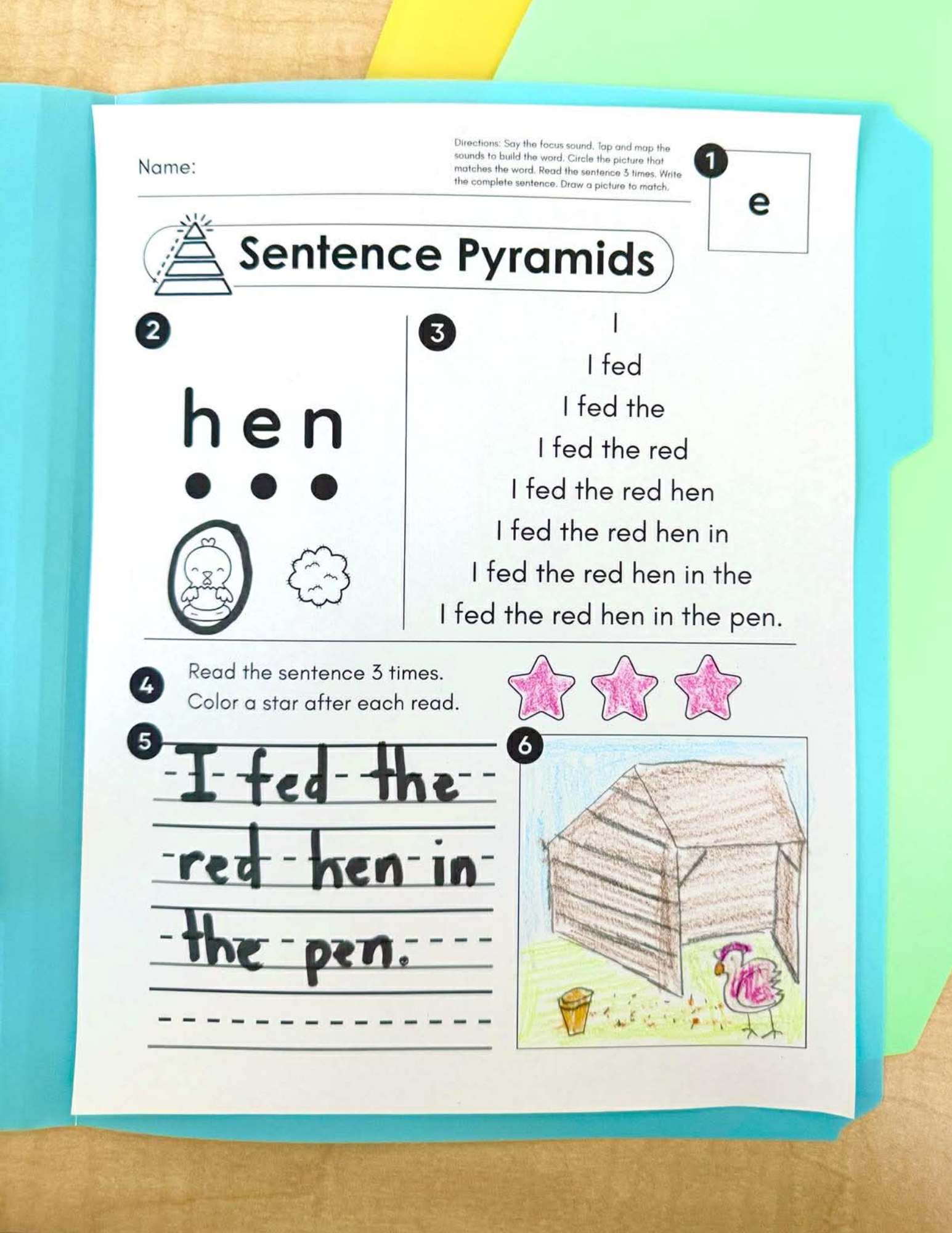
“Today we are focusing on short e. Let’s say the sound together: /e/.”
Have students:
- Say the sound
- Read a few words from the sentence (ex: hen, fed, red)
This prepares them for success before reading.
Step 2: Tap and Map the Focus Word (2–3 minutes)
Choose one word from the sentence (like hen).
Have students:
- Tap each sound
- Map it (if needed)
- Blend the word
Example:
/h/ /e/ /n/ → hen
This reinforces decoding before moving into sentence reading.
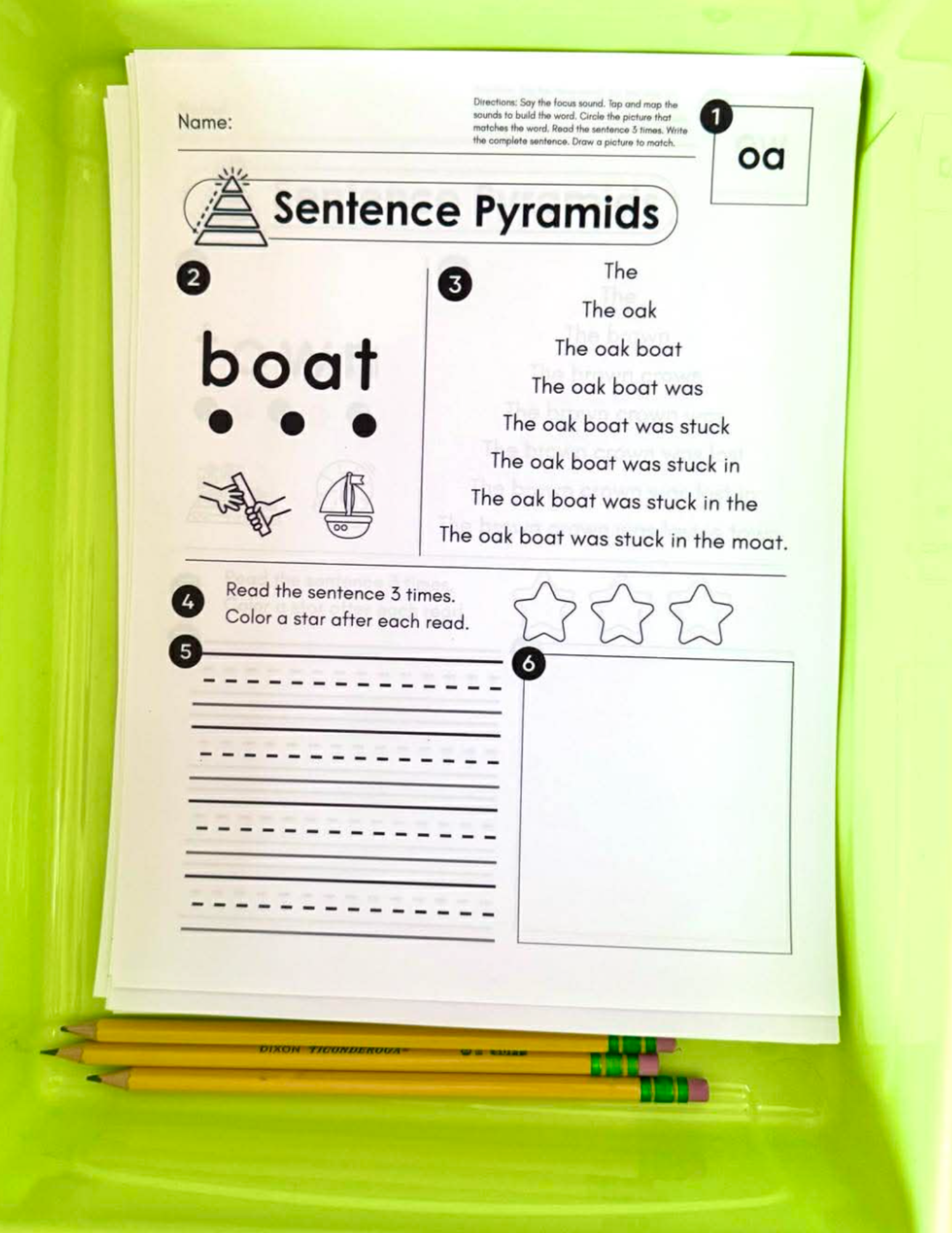
Step 3: Build the Sentence (3–4 minutes)
Now begin the pyramid.
Read each line together:
- I
- I fed
- I fed the
- I fed the red
- I fed the red hen
Continue until the full sentence is read.
Have students:
- Read chorally
- Echo read
- Whisper read
This repetition builds fluency naturally.
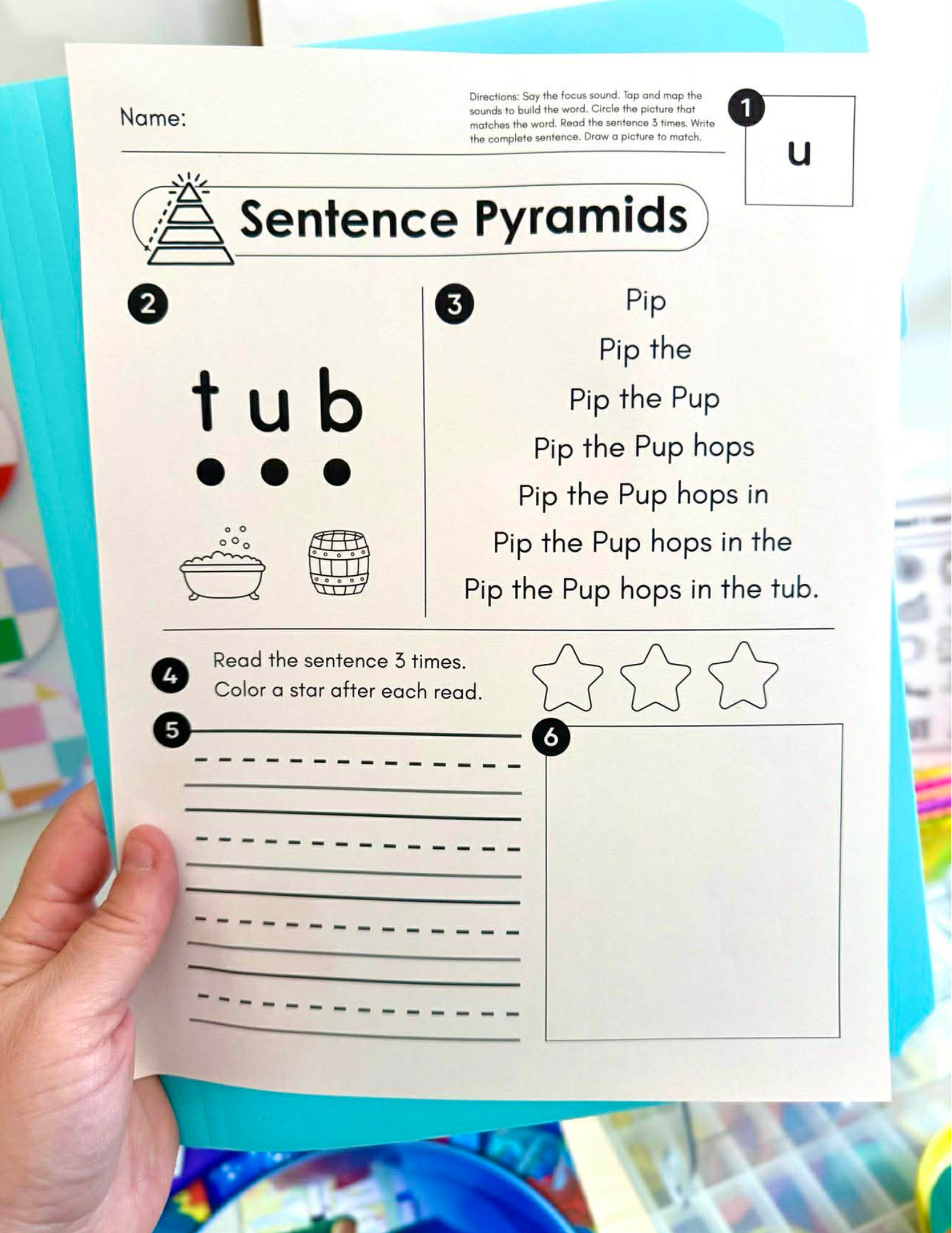
Step 4: Reread for Fluency (2–3 minutes)
Have students read the full sentence multiple times.
You can say:
“Now let’s read the whole sentence 3 times.”
Students can:
- Color a star after each read
- Track with their finger
- Try to read smoother each time
This builds automaticity and confidence.
Step 5: Write the Sentence (2–3 minutes)
Have students write the full sentence.
They should:
- Say each word as they write
- Focus on spacing and correct spelling
This connects reading to writing.
Step 6: Draw and Discuss Meaning (Optional – 1–2 minutes)
Have students draw a picture to match the sentence.
Then ask:
- “What happened in this sentence?”
- “Who is in the sentence?”
This ensures comprehension, not just decoding.
Why This Routine Works
Sentence pyramids align with structured literacy and Science of Reading practices.
Students are:
- Building sentences in manageable chunks
- Practicing repeated reading for fluency
- Strengthening decoding within connected text
- Linking reading and writing
Because the sentence grows gradually, students experience success at every step.
Tips for Using This Routine in the Classroom
This routine works well in a variety of settings.
Whole Group
Project a sentence pyramid and read together as a class.
Small Group
Use targeted pyramids aligned to your phonics skill.
Intervention
Slow the pacing and provide extra support with mapping.
Centers or Independent Work
Students can complete pyramids independently with repeated reads.
Here Are Your Materials for This Routine
You can use the free materials below to try this routine with your students today.
- CVC Sentence Pyramids – Free Download (PDF)
- Beginning and Ending Blends Sentence Pyramids – Free Download (PDF)
- Digraph Sentence Pyramids – Member Only (PDF)
- Long Vowel Sentence Pyramids – Member Only (PDF)
- Silent E Sentence Pyramids – Member Only (PDF)
- Vowel Teams Sentence Pyramids – Member Only (PDF)
- R-Controlled Vowel Sentence Pyramids – Member Only (PDF)
- Advanced Phonics Pattern Sentence Pyramids – Member Only (PDF)
Final Thoughts
Fluency doesn’t come from reading random texts or guessing words.
It comes from controlled, repeated practice with decodable text.
Sentence pyramids give students a clear pathway from:
👉 decoding individual words
👉 to reading full sentences smoothly
And that’s where real reading begins.
Want More Literacy Support and Resources?
To gain unlimited access to all of our literacy and writing content, join the Literacy Teacher Community!
Here you will find hundreds of literacy and writing lessons, a community of teachers for support, and literacy and writing materials that are always up to date with the latest research.
Simply click the image below to get all of our lessons and resources.
If you’d like access to the resources I share about in this blog post, along with all of my other literacy and writing resources, you can find everything inside Literacy All-Access.
Inside the membership, you’ll find a wide range of structured, engaging literacy resources designed to support your phonics instruction—from decodable passages and targeted practice activities to small group tools and lesson supports—so you can spend less time creating and more time teaching.