Why Your Students Need Nonsense Words (And Why Skipping Them Is Holding Readers Back)
A step-by-step nonsense word routine to strengthen decoding, blending, and phonics transfer
If you’ve heard mixed messages about nonsense words, whether they’re actually backed by the Science of Reading or even worth using, let’s clear it up.
Because there’s a lot of noise around this.
And the truth is, nonsense words are a powerful, research-based way to help students build real decoding skills.
Many students can read familiar words correctly because they have seen them before. But that does not always mean they are truly decoding. In a Science of Reading classroom, we want to know whether students can look at a new word, apply a phonics skill, and read it accurately.
That is exactly what nonsense words help us see.
Below is a step-by-step routine you can use in your classroom.
Nonsense Word Routine
Learning Objective
Students will apply phonics skills to decode unfamiliar words by using sound-symbol knowledge and blending.
Materials Needed
Here are the materials you will need for this activity:
- Nonsense word list aligned to your phonics skill
- Pointer, pencil, or dry erase marker
- Pocket chart, small group board, or printed page
Optional:
- Highlighter
- Timer for repeated practice
What Is a Nonsense Word Routine?
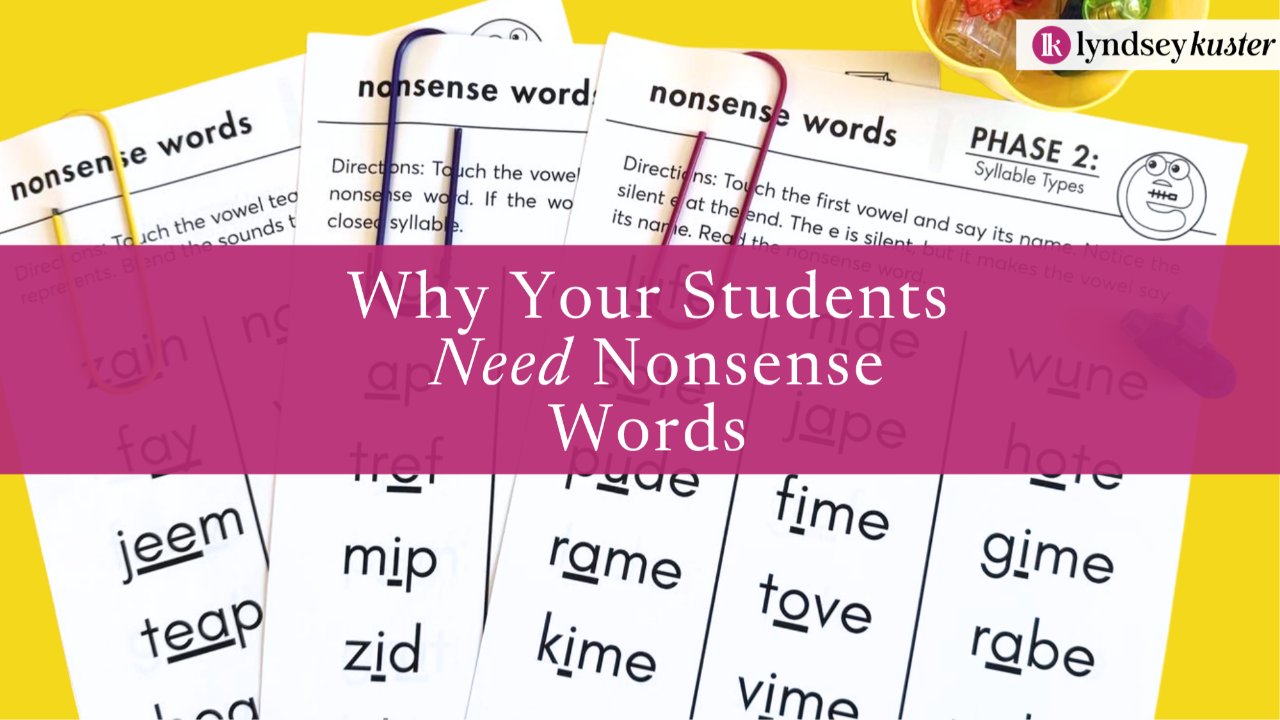
A nonsense word routine is a structured phonics activity where students read made-up words that follow real phonics patterns.
Because the words are unfamiliar, students cannot rely on memory, context, or pictures. They must look at the letters, connect them to sounds, and blend the word.
This makes nonsense words a powerful tool for checking whether students are truly applying a phonics skill.
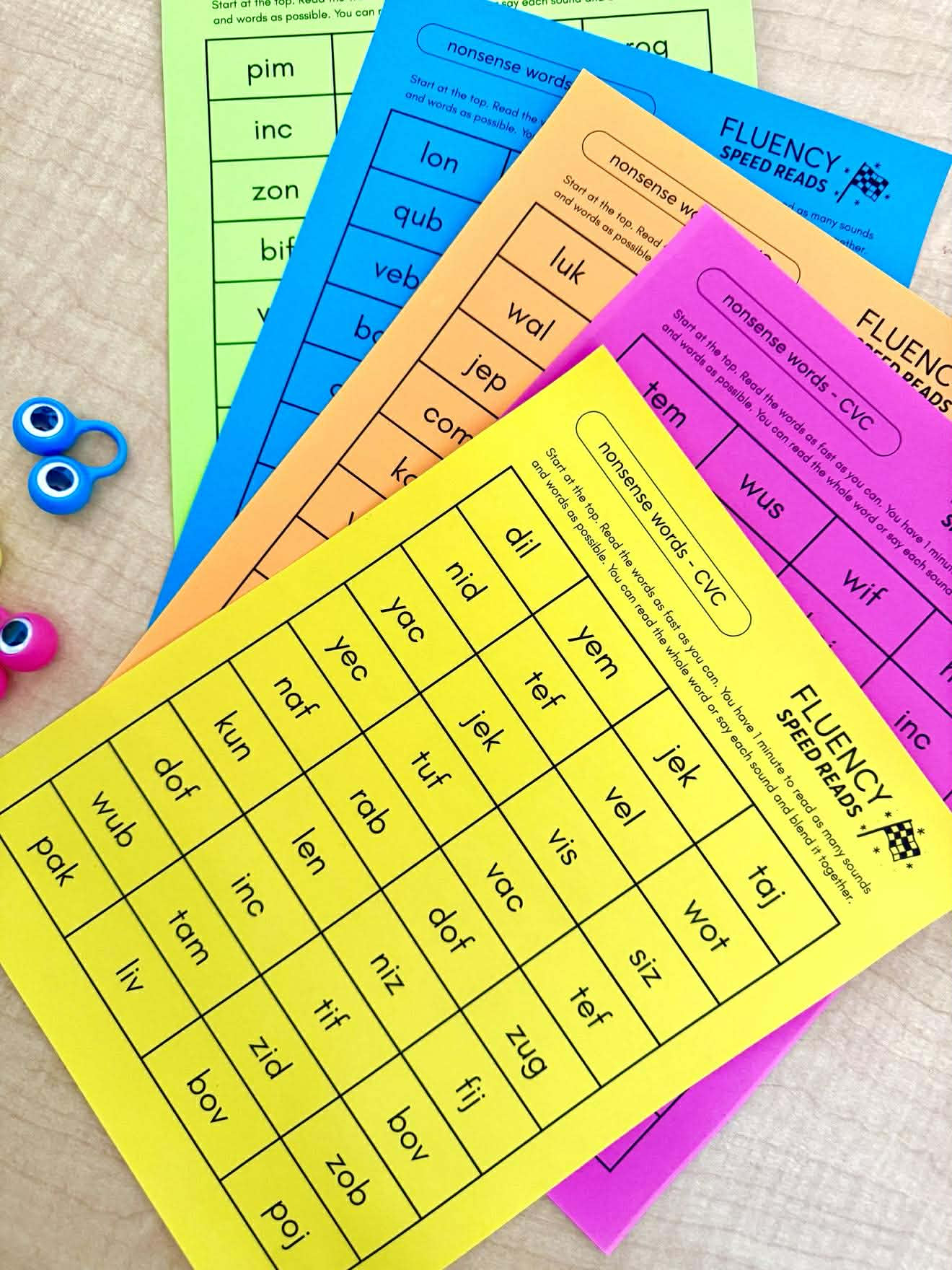
📥 Here are your downloadable resources for teaching with nonsense words:
- Nonsense Word Lists – Free Download (PDF)
- Closed Syllable Nonsense Words – Member Only (PDF)
- Open Syllable Nonsense Words – Member Only (PDF)
- Silent E Nonsense Words – Member Only (PDF)
- Vowel Team Nonsense Words – Member Only (PDF)
- R-Controlled Vowel Nonsense Words – Member Only (PDF)
- Consonant + LE Nonsense Words – Member Only (PDF)
Nonsense Word Routine Procedure
Step 1: Introduce the Phonics Skill
Start by reviewing the phonics pattern you want students to practice.
This might be:
- closed syllables
- open syllables
- silent e
- vowel teams
- r-controlled vowels
- consonant + le
Teacher:
- Briefly review the target sound or pattern
- Model what to notice in the word
Students:
- Say the sound or pattern aloud
- Get ready to look for it in words
Step 2: Model How to Read a Nonsense Word
Choose one nonsense word and model the process.
Teacher:
- Point to each grapheme
- Say each sound
- Blend the sounds together
- Read the whole word smoothly
For example:
“/m/ /a/ /t/ … mat”
or
“Let’s look at each part and blend it together.”
Students:
- Watch and listen
- Repeat the modeled word if needed
Step 3: Read the Nonsense Words Together
Now read a short set of nonsense words with students.
Teacher:
- Point to each word
- Guide students through sound-by-sound reading
- Support blending as needed
Students:
- Read each word aloud
- Focus on accuracy first
- Use their sounds to read the whole word
This is the step where you are reinforcing true decoding, not memorization.
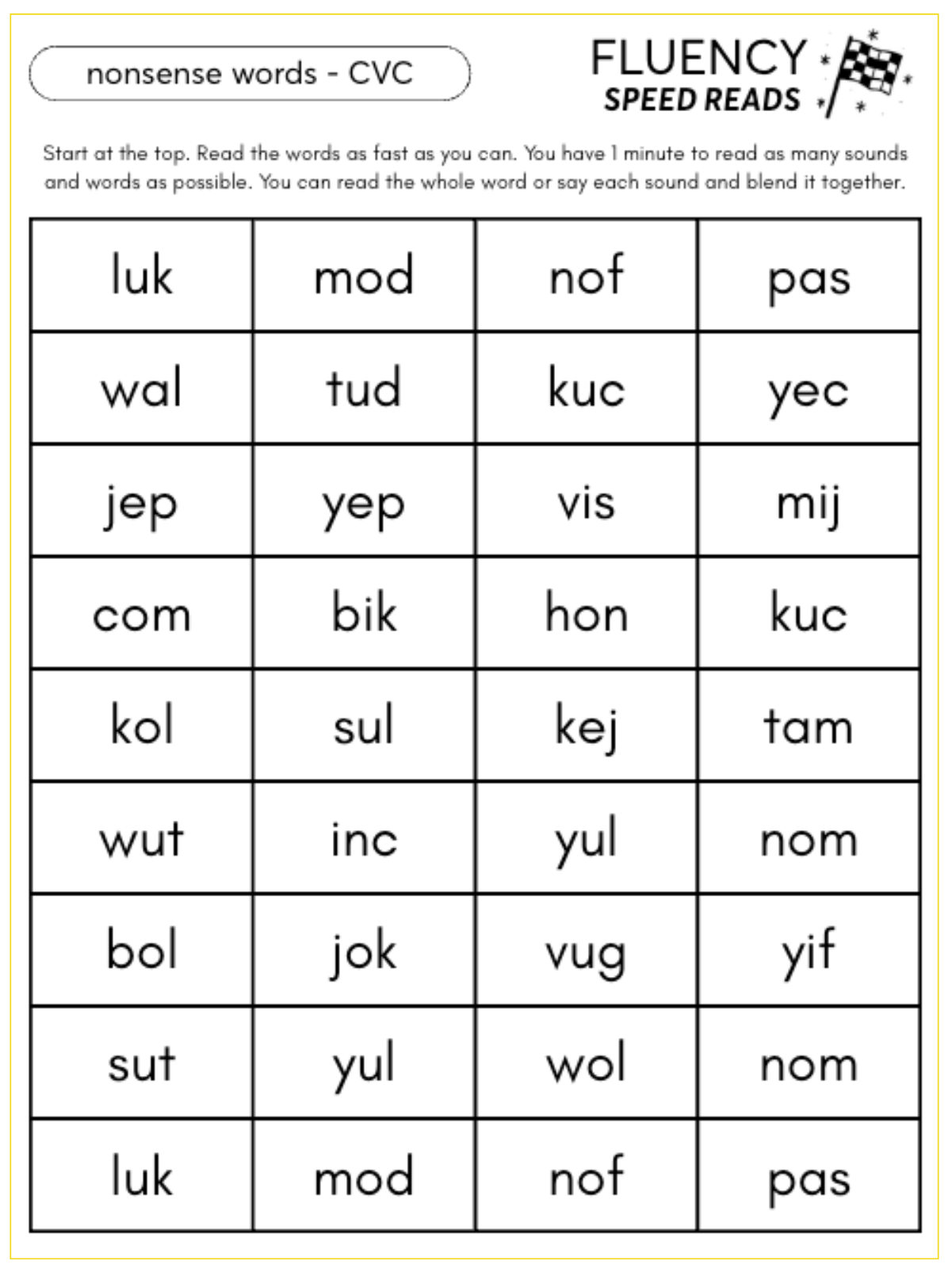
Step 4: Have Students Read Independently
Once students have practiced with support, have them read a few nonsense words on their own.
Teacher:
- Listen closely
- Notice whether students are using the phonics skill correctly
- Watch for guessing, skipping, or sound confusion
Students:
- Read each word independently
- Apply the target phonics pattern
This step helps you quickly identify who is secure and who still needs support.
Step 5: Compare to Real Words
After students read nonsense words, connect the skill back to real words.
Teacher:
- Show a few real words with the same pattern
- Ask students what they notice
Students:
- Read the real words
- Compare the pattern across both real and nonsense words
This helps students transfer the phonics skill into authentic reading.
Step 6: Use Nonsense Words as a Quick Check
End the routine with a short skill check.
Teacher:
- Give 3 to 5 nonsense words
- Ask students to read them without support
Students:
- Read the words independently
- Show whether they can truly apply the skill
This can be used during:
- small groups
- intervention
- warm-ups
- progress monitoring
Why This Routine Works
This routine works because it removes memorization and forces students to rely on the alphabetic code.
In a structured literacy classroom, we want students to do more than recognize familiar words. We want them to apply phonics knowledge to new words they have never seen before.
Students are:
- practicing sound-symbol connections
- blending through unfamiliar words
- applying phonics skills instead of relying on memory
- building transfer to real reading
Nonsense words help reveal whether a student is truly decoding, which is why they are such a valuable tool in explicit phonics instruction.
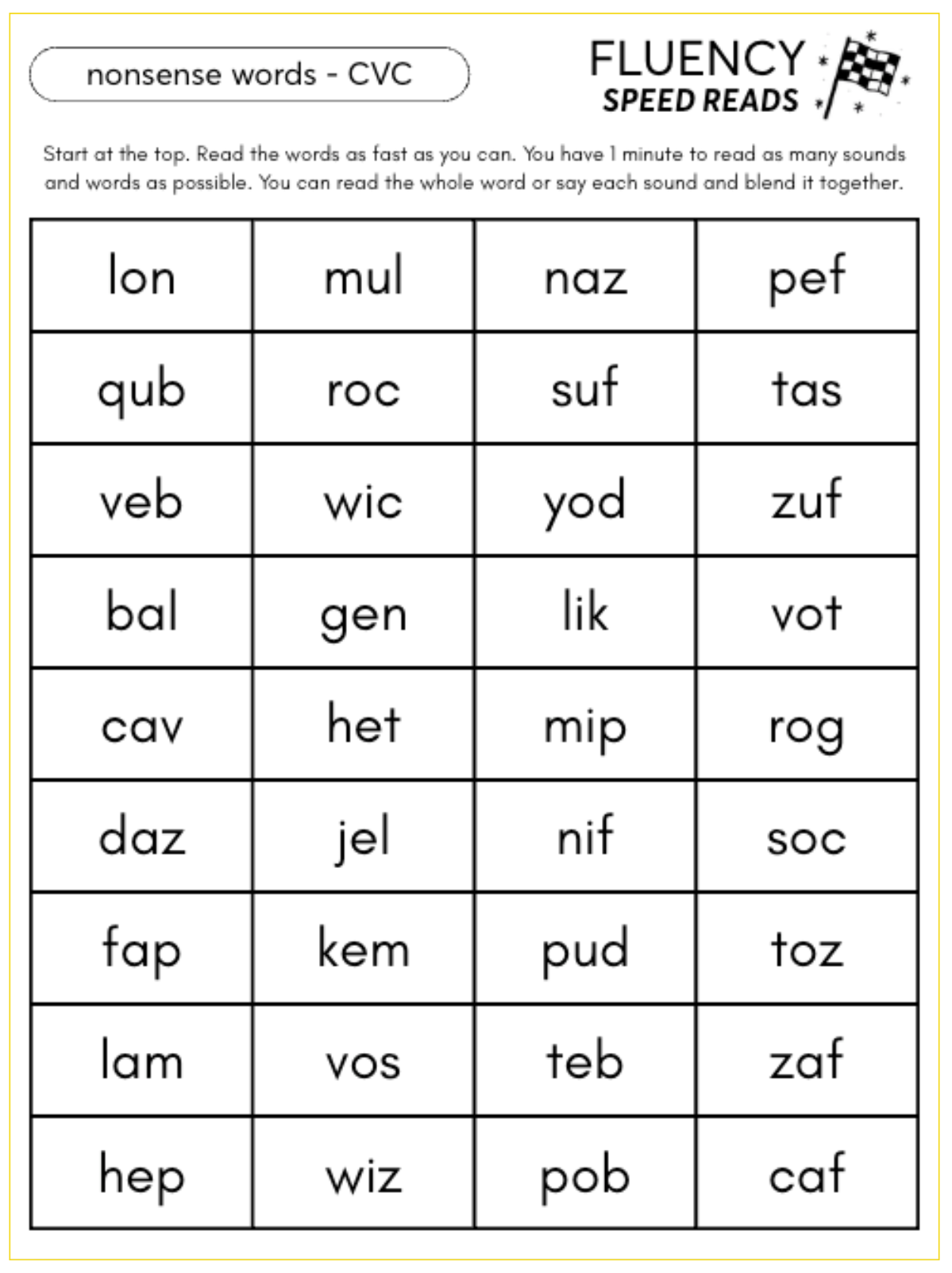
Tips for Using This Routine in the Classroom
This routine works well in a variety of settings.
Whole Group
Use a few nonsense words as part of your phonics lesson warm-up or review.
Small Group
Target a specific phonics skill and listen closely to each student’s decoding process.
Intervention
Use nonsense words to identify where a student is breaking down, whether in sound recognition, blending, or pattern application.
Centers or Independent Work
Once students know the routine, they can practice reading aligned nonsense words independently or with a partner.
Final Thoughts
Nonsense words are not meant to replace real reading.
They are meant to strengthen it.
When students can decode a nonsense word, it tells us they are doing the real work of reading: looking at the letters, matching them to sounds, and blending through the whole word.
That is exactly the kind of practice that helps students become flexible, accurate readers.
📥 Here are your downloadable resources for teaching with nonsense words:
- Nonsense Word Lists – Free Download (PDF)
- Closed Syllable Nonsense Words – Member Only (PDF)
- Open Syllable Nonsense Words – Member Only (PDF)
- Silent E Nonsense Words – Member Only (PDF)
- Vowel Team Nonsense Words – Member Only (PDF)
- R-Controlled Vowel Nonsense Words – Member Only (PDF)
- Consonant + LE Nonsense Words – Member Only (PDF)
Want More Literacy Support and Resources?
To gain unlimited access to all of our literacy and writing content, join the Literacy Teacher Community!
Here you will find hundreds of literacy and writing lessons, a community of teachers for support, and literacy and writing materials that are always up to date with the latest research.
Simply click the image below to get all of our lessons and resources.
If you’d like access to the resources I share about in this blog post, along with all of my other literacy and writing resources, you can find everything inside Literacy All-Access.
Inside the membership, you’ll find a wide range of structured, engaging literacy resources designed to support your phonics instruction—from decodable passages and targeted practice activities to small group tools and lesson supports—so you can spend less time creating and more time teaching.